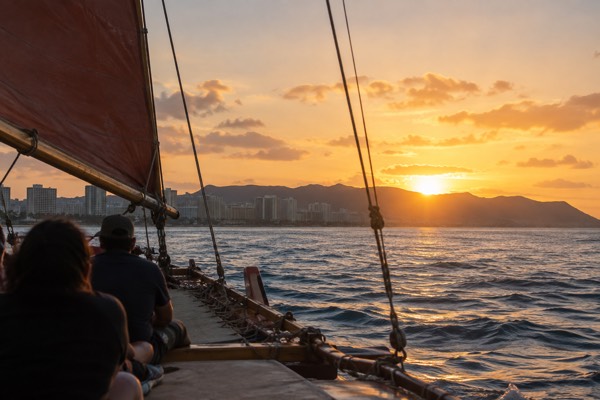
What Is The Golden Hour In Oahu?
A direct, sourced answer to what the golden hour in Oahu is, with month-by-month sunset times, why tropical light behaves differently, and where to catch it.
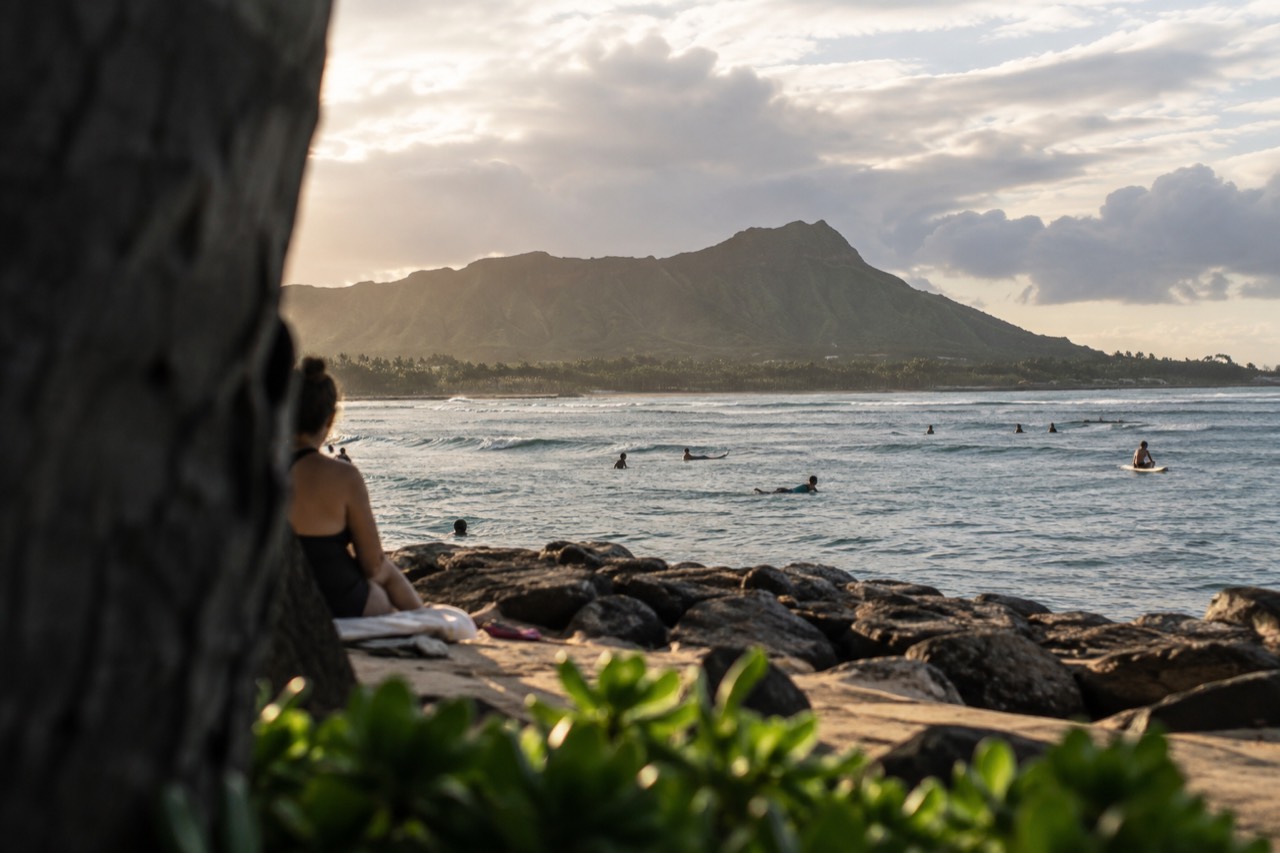
What Is The Golden Hour In Oahu?
The golden hour in Oahu is the period shortly before sunset, and shortly after sunrise, when the sun is low enough in the sky that its light travels through more atmosphere and arrives warm, soft and directional instead of harsh and overhead. On Oahu the practical version is shorter than the name suggests: because the island sits deep in the tropics, the sun drops at a steep angle, so the light that lingers for ninety minutes in Seattle can compress into forty minutes or less outside Waikīkī.
That compression is the single most useful thing to understand, and the rest of this article is built around it. The times below come from US Naval Observatory calculations for Waikīkī coordinates, and the month-by-month table gives you the actual clock times to plan around. If you have come here for one number: on a June evening the latest sunset of the whole year is 7:17 p.m., and on a December evening it is 5:55 p.m. Everything else follows from that swing.
What Time Is Golden Hour In Oahu?
Golden hour on Oahu begins roughly 45 to 60 minutes before sunset and fades about 20 to 30 minutes after it, with the window shifting across the year because sunset moves from about 5:55 p.m. in late December to 7:17 p.m. in early July. Sunrise-side golden hour runs the mirror image. Unlike at higher latitudes, the transition is quick, so arriving on time matters more here than at home.
The reason for the speed is latitude. Honolulu sits near 21 degrees north, close enough to the equator that the sun's path crosses the sky at a steep angle rather than skimming along the horizon. In a northern city at 50 degrees, the sun grazes the horizon for a long stretch and the warm light lingers. On Oahu the sun is still bright and fairly high at 6 p.m. in summer, then drops through the golden band quickly, and the sky goes from gold to blue-grey in a quarter hour.
A practical planning rule that fits the data: treat the last 45 minutes before published sunset as your shooting or viewing window, and treat the 20 minutes after sunset, when the sky facing the sun goes pink and then violet, as a bonus worth staying for. People who pack up the moment the sun touches the ocean routinely miss the better half of the show, because the strongest colour on Oahu often arrives five to ten minutes after the sun itself is gone.
If you want the light without doing the timing maths yourself, a guided loop that crosses the island in a single day gives you a driver who works around the clock times while you watch from the window. Two options that suit that approach:
Why Is Golden Hour So Short On A Tropical Island Like Oahu?
Golden hour is short on Oahu because the island's low latitude makes the sun set at a steep angle, so it passes through the low-sun band quickly rather than sliding sideways along the horizon the way it does in northern Europe or Canada. The same geometry means Oahu's day length barely changes across the year. There are no long summer evenings here, at any time of year.
That last point surprises people. Sunset in Honolulu never gets later than about 7:17 p.m., observed on 5 July, and never earlier than the late-December times around 5:55 p.m. Day length runs roughly 13 hours 26 minutes in June against 10 hours 51 minutes in December, a swing of about 2 hours 35 minutes. A visitor arriving from London or New York in June expects a 9 p.m. sunset and instead finds the sky fully dark by 7:45. Plan dinner reservations, beach evenings and any night activity around that reality, not around mainland summer habits.
The same steep-angle geometry shortens the sunrise side. The latest sunrise of the year, 7:11 a.m. on 15 January, is only about 80 minutes later than the earliest, 5:50 a.m. on 21 June. Morning golden hour therefore exists year-round and is arguably the more reliable of the two on Oahu, because the windward and east-facing coasts catch it cleanly and the typical trade-wind weather is calmer at dawn than at dusk.
One caveat the data itself flags: the earliest sunset of the year does not fall on the winter solstice. It lands in late November, a few weeks before 21 December, because of the way clock time and solar time drift apart. The difference is only a few minutes, but if you are scheduling around the very darkest evening, late November is it.
When Is Sunset On Oahu, Month By Month?
Sunset on Oahu runs from about 5:55 p.m. at the winter solstice to 7:17 p.m. in early July, with sunrise moving between 5:50 a.m. and 7:11 a.m. across the same span. The table below gives solstice and mid-summer reference points computed for Waikīkī coordinates by the US Naval Observatory. For golden hour planning, subtract about 45 minutes from the sunset time to know when to be in position.
The four sampled dates below are the ones that bracket the year: the summer solstice, the day of the latest observed sunset, the day of the latest observed sunrise, and the winter solstice. Interpolate between them for the rest of the calendar.
| Date | Sunrise | Sunset | Notes |
|---|---|---|---|
| 21 Jun 2026 | 5:50 a.m. | 7:16 p.m. | Longest day, about 13 h 26 m |
| 5 Jul 2026 | 5:54 a.m. | 7:17 p.m. | Latest sunset of the year |
| 15 Jan 2026 | 7:11 a.m. | 6:11 p.m. | Latest sunrise of the year |
| 21 Dec 2026 | 7:04 a.m. | 5:55 p.m. | Shortest day, about 10 h 51 m |
Read that table as a range, not four isolated points. Between June and December sunset slides back a couple of minutes a day at first, then faster around the equinoxes, then slows again. If you are visiting in, say, October, expect a sunset near 6:15 p.m. and a golden hour that starts around 5:30. In March the numbers are close to the October mirror, with sunset near 6:45 p.m.
The day-length swing of roughly 2 hours 35 minutes between longest and shortest day is genuinely small by mainland standards. Somewhere like Seattle swings by more than seven hours between solstices. The practical consequence for visitors is that Oahu's evening rhythm barely changes: dinner crowds, beach hours and tour schedules run nearly the same shape in January as in July, just shifted by the clock.
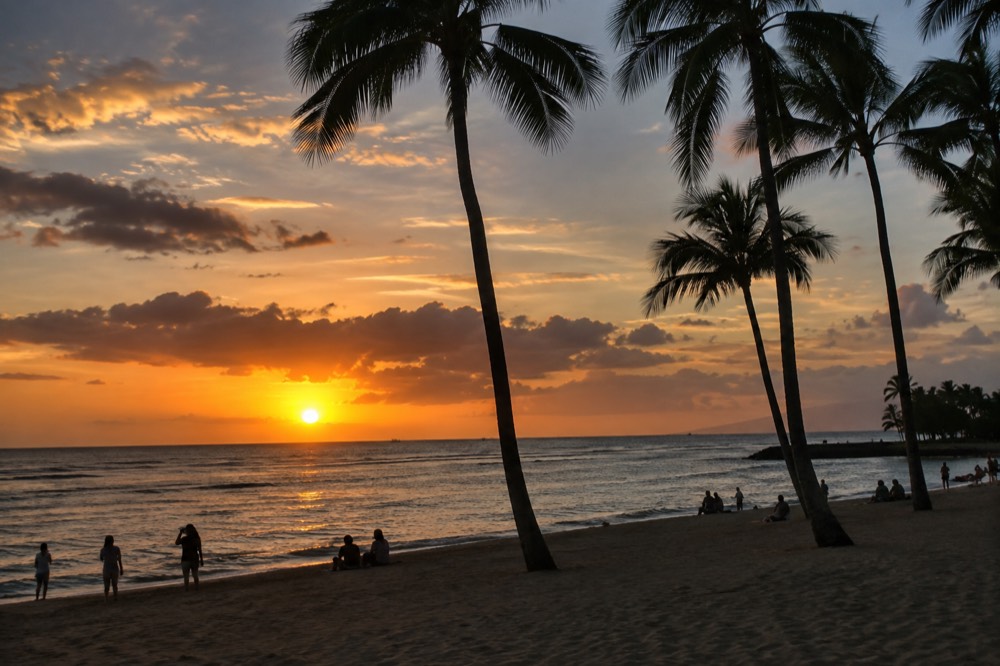
Where Are The Best Golden Hour Spots On Oahu?
The best golden hour spots on Oahu split by which shore you face: west-facing beaches like Ko Olina and the Waiʻanae coast catch the sun setting directly into the ocean, south-facing Waikīkī and Ala Moana get the warm side light, and east-facing Kailua and Waimānalo are sunrise places rather than sunset places. Choosing the right shore for the right hour matters more than choosing a specific beach.
The table below groups the options by what the light actually does there. All of these have their own guide pages on this site if you want depth on access, parking and facilities. The full index of guides sits on Oahu Travel Guide.
| Shore | What golden hour does there | Representative spots |
|---|---|---|
| West (leeward) | Sun sets directly into the ocean; strongest colour | Ko Olina lagoons, Waiʻanae coast, Mākua-type west-facing beaches |
| South | Warm side light on the skyline and Diamond Head | Waikīkī, Ala Moana Beach Park, Diamond Head's exterior slopes |
| East (windward) | Sunrise golden hour over the ocean | Kailua Beach Park, Waimānalo Beach, Lanikai |
| North | Dusk side light on the country coast | Sunset Beach, Haleʻiwa, Laniakea |
| Mountain view | The Koʻolau range glows pink from the west side in the last 30 minutes | Tantalus Lookout, leeward vantage points |
The Koʻolau mountain range also lights up dramatically from the west side in the last half hour before sunset, which is why the mountain-view row exists in the table. Two notes of caution from the access research. First, Lanikai has no public parking lot at all: the residential streets carry no-parking restrictions with towing enforcement, and the nearest legal option is the Kailua Beach Park lot, so a Lanikai sunrise needs an early start and a walk. Second, some of the classic lookout spots are subject to change: Nuʻuanu Pali Lookout has been closed for storm repairs following Hurricane Lowell, per the DLNR notice dated 9 September 2026, and any plan built around it should be re-checked the week you travel.
For a fuller run-down of where the light lands, our best sunset spots on Oahu guide covers the viewing locations in detail, and the Oahu photography spots and golden hour guide does the same for camera work specifically.
How Do You Plan Around Golden Hour On An Oahu Trip?
Planning around golden hour on Oahu means anchoring each day to the sunset time for your dates, then working backwards: be at your chosen shore 45 minutes before, stay 20 minutes after, and let dinner follow rather than precede it. In winter that puts golden hour near 5:15 p.m., which collides with rush hour and tour return times. The season you visit in changes the logistics more than the light quality.
The winter collision is the one people underestimate. A late-December sunset around 5:55 p.m. means the best light happens while buses from full-day tours are still on the road back to Waikīkī, and while Kamehameha Highway on the North Shore is at its most congested. If a winter sunset over the western ocean is the priority, either stay on the leeward side for the evening or pick a south-shore spot close to where you are staying, rather than gambling on a long drive.
Summer is easier. With sunset near 7:15 p.m. you can finish a full day of activity, eat early or late, and still reach a beach with an hour to spare. The trade-off is crowds: everyone else has worked out the same arithmetic, and the popular west-facing spots fill in the last hour before sunset in June and July.
If you would rather have someone else absorb the timing problem, a guided scenic tour exists for exactly this. The half-day lookouts tour from the roster runs in the afternoon window and hits elevated viewpoints around Honolulu, which pairs naturally with a sunset you watch on your own afterwards:
What About Sunrise Golden Hour On Oahu?
Sunrise golden hour on Oahu runs from about 30 minutes before the sun clears the horizon until 30 minutes after, which means being in position between roughly 5:20 a.m. in June and 6:40 a.m. in January. The east-facing windward coast, Kailua, Waimānalo and the Lāʻie end of the island, gets the direct-ocean version. Dawn is also the calmer, cooler and less crowded end of the day on Oahu.
The trade winds that build through the afternoon are typically lightest at first light, so the ocean surface is at its glassiest and the air at its clearest in that first hour. Photographers who want reflections on wet sand or clean sightlines to the Koʻolau ridges get both more reliably at dawn than at dusk. The cost is simply the alarm clock: a June sunrise shoot means a 5 a.m. wake-up, and in January you get a gentler 6:15 start.
The windward coast is where the direct sunrise happens. Kailua Beach Park and Waimānalo face open ocean to the east, so the sun comes out of the water. The same no-parking warning for Lanikai applies doubled at dawn, because the streets are dark and the walk from Kailua's lot is longer than it feels at 5:30 a.m.
One honest limitation of any sunrise plan: Hawaii's typical morning pattern includes passing showers on windward slopes, and the Mānoa valley area records extraordinary rainfall, with the Lyon Arboretum station measuring an annual normal of 150.96 inches against the airport's 16.41 inches, per the NOAA 1991-2020 climate normals. A sunrise drive toward the valleys may meet clouds that the coast never sees. Stay on the coastal side of the ridges for the reliable light.
What Is The Golden Hour In Oahu?
The golden hour in Oahu is the window of warm, low-angle light that runs roughly 45 minutes before sunset to 20 minutes after, and its mirror image around sunrise, with sunset times ranging from about 5:55 p.m. in late December to 7:17 p.m. in early July.
Because Oahu sits near 21 degrees north, the sun crosses that low band faster than it does at higher latitudes, so the island's golden hour is shorter and more abrupt.
That verbatim framing is worth restating because it is the question people actually type. The short answer to the search query is the one above; the useful answer is the planning one. Know your date's sunset time, pick the shore that faces the right way, be in place 45 minutes early, and stay 20 minutes late. If you are travelling with a partner who does not share your enthusiasm for standing on sand doing nothing, the 20 minutes after sunset are the part that converts sceptics, because that is when the sky does its most dramatic work.
For a day built around catching both ends of the light, the most-booked circle island tour is the roster's strongest fit: it runs as a full-day loop around the island, so the itinerary naturally sweeps from one shore to another and hands you back to Waikīkī with the evening free.
If you are weighing a full loop against a shorter scenic option, the Byodo-In circle island variant adds the temple at Kāneʻohe and runs longer, while the Go City pass bundles dozens of paid attractions if your trip is activity-dense. All three appear together below so you can compare them side by side.
Common Questions About The Golden Hour In Oahu
Most questions about the golden hour in Oahu come down to three things: what the clock says, which shore to stand on, and how fast the light fades. Sunset runs between about 5:55 p.m. and 7:17 p.m. across the year, the west coast gets the sun setting into the ocean while the east coast is for sunrises, and the tropical sun drops through the golden band in roughly 40 to 60 minutes.
The details below fill in the rest.
What is the golden hour in Oahu?
The golden hour in Oahu is the period of warm, low-angle light beginning roughly 45 minutes before sunset and fading about 20 minutes after it, plus the mirror window around sunrise. Because Oahu sits near 21 degrees north, the sun passes through this band quickly, so the effect is shorter and more abrupt than at higher latitudes.
What time is sunset in Oahu?
Sunset ranges from about 5:55 p.m. at the winter solstice to 7:17 p.m. in early July, the latest sunset of the year. In spring and autumn it falls between those extremes, near 6:15 p.m. in October and 6:45 p.m. in March. Check a sunset calculator for your exact travel dates, since the time shifts by a couple of minutes a day for much of the year.
Does Oahu have long summer evenings?
No. The day length on Oahu swings only about 2 hours 35 minutes between the longest and shortest days of the year, roughly 13 hours 26 minutes in June against 10 hours 51 minutes in December. Sunset never gets later than about 7:17 p.m., so there is no equivalent of a 9 p.m. mainland summer sunset.
Which side of Oahu is best for sunset?
The west-facing leeward coast, including the Ko Olina lagoons and the Waiʻanae coast, faces the setting sun directly over the ocean. South-facing Waikīkī and Ala Moana get warm side light on the skyline and Diamond Head. The east-facing windward coast is the sunrise side, not the sunset side.
Is sunrise or sunset better on Oahu?
Both work, but dawn is typically calmer, cooler and less crowded, because the trade winds are lightest in the early morning. Sunrise golden hour on the windward coast gives direct light over open ocean. Sunset gives the west coast its colour show and larger crowds, especially in summer.
How long after sunset does it stay light on Oahu?
Count on about 20 to 30 minutes of usable twilight after the sun disappears, with the strongest pink and violet colour often arriving five to ten minutes after sunset itself. Because the sun drops steeply in the tropics, full darkness follows faster than at higher latitudes, so plan to be packed up and moving within half an hour.
The honest summary: golden hour on Oahu rewards punctuality more than luck. The island's light is dramatic almost every evening, the trade-wind pattern scours the air clean more often than not, and the only real mistake is arriving late. Anchor your evening to the published sunset time for your dates, choose the shore that faces the right direction, and give the sky the twenty minutes after the sun goes down, because on this island that is when it earns its name.