What Is The Best Farmers Market In Oahu?
A direct, sourced answer on what the best farmers market in Oahu is, why the KCC market above Waikiki earns the top spot, and which markets are worth a stop on the North Shore and windward side.
The question sounds simple, and the honest answer is simple too, but only after you decide what "best" means. A market you can walk to from a Waikīkī hotel room is a different proposition from one worth an hour of driving on a Saturday morning. Oʻahu has both, and the island's agricultural side is one of the things most visitors never see from a resort strip.
This page answers the question directly, then works through the runners-up by side of the island, what belongs in your bag, what a market visit costs, and how to reach one without a car.
What Is The Best Farmers Market In Oahu?
The Kapiʻolani Community College farmers market, on the slopes of Lēʻahi above Waikīkī, is the best single farmers market on Oʻahu for most visitors. It combines local produce, ready-to-eat food stalls and small-batch producers in one walkable setting with a wider range than any other market on the island. Days and hours shift with the semester and the season, so check the college's market page before you go.
The KCC market earns the top spot for a reason that has nothing to do with the produce alone: it is the one market on Oʻahu where a visitor can construct a full morning without needing a second plan. You arrive, you eat something off a griddle, you buy fruit for the beach, you browse crafts and packaged goods that survive a suitcase, and you leave. No other market on the island stacks that many layers into a single stop.
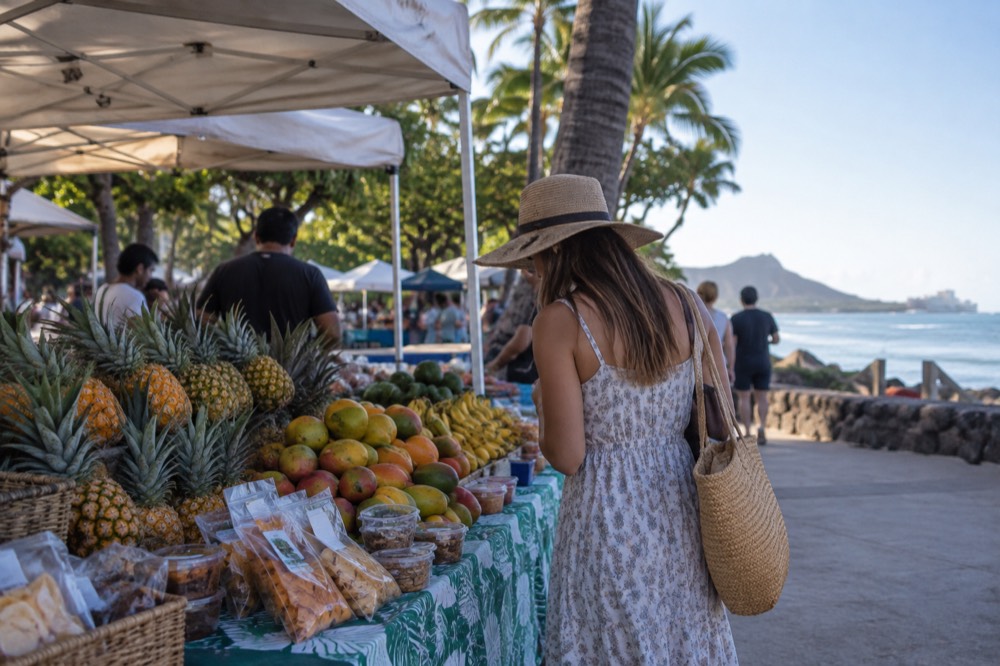
The setting helps. The campus sits below Diamond Head State Monument, which means the backdrop is the ridgeline of Lēʻahi rather than a parking structure. The market has long served Honolulu residents as a genuine weekend routine, not a tourist staging area, and that character shows in the mix of tables. Growers from across the island sell alongside food stalls, and the crowd is a blend of locals doing the week's produce shopping and visitors eating their way through the stalls.
One honest caveat belongs here. Market schedules on Oʻahu change more than most travel content admits. Semester breaks, holidays and weather all move days and hours, and a page that printed a fixed schedule would be wrong within a season. The college's own site, kcc.hawaii.edu, is the source to check for the current week, and it is the same source residents check.
If your trip is anchored in Waikīkī and you have time for exactly one market, this is the one. If you are staying elsewhere or already touring another part of the island, read on, because the runners-up are not consolation prizes.
Why Does The KCC Market Get The Top Spot?
Its size and setting do the work: the KCC market sits on a college campus below Lēʻahi, a short ride from Waikīkī, and it packs produce growers, prepared-food stalls and small-batch producers into a single visit. You can eat breakfast, buy fruit for the beach and pick up gifts without moving the car. That density is what separates it from the smaller neighbourhood markets scattered across the island.
Density matters more than acreage. A market with forty stalls where a third sell food you can eat standing up functions as a breakfast, a grocery run and a souvenir stop at once. A market with eight excellent produce tables and nothing else is a better grocery run and a worse morning. The KCC market is the strongest all-rounder, which is what "best for most visitors" actually measures.
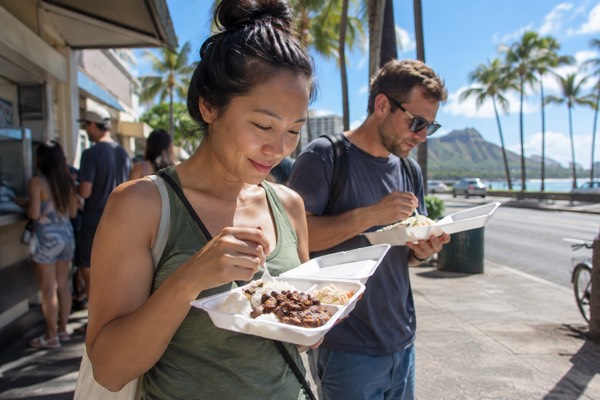
The food stalls deserve their own sentence or two. This is where the market doubles as an introduction to local food: plate lunch, produce turned into drinks, baked goods, and prepared items you would struggle to find on a hotel strip. For a visitor who wants to taste what residents actually eat, without committing to a restaurant reservation, a market stall is the lowest-risk entry point. Portion sizes are generous, prices are posted at the table, and you can watch the food being made.
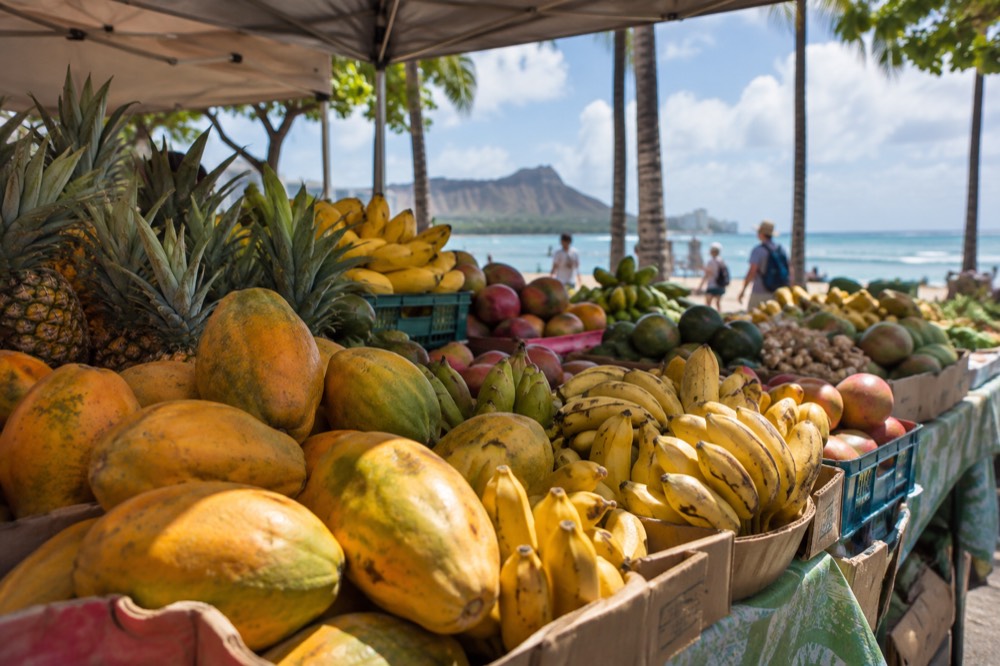
The produce side is genuine rather than decorative. Oʻahu agriculture is real, and it leans on the wet windward and central parts of the island where the rainfall lives. The stalls at KCC draw from that same grower base, which is why the fruit tastes different from the supermarket version of the same crop: it was picked closer to ripe, closer to the market, and closer to your hands.
There is a practical argument too. Because the market sits between Waikīkī and the residential neighborhoods east of it, it slots neatly into a morning before a beach plan. Diamond Head State Monument requires an advance reservation for non-resident entry, so a market morning pairs naturally with a pre-booked hike slot or with Kapiʻolani Regional Park, which sits between the campus and the ocean and asks nothing of you but a towel.
Which Farmers Markets Are Best On The North Shore And Windward Side?
Haleʻiwa on the North Shore and Kailua on the windward side hold the strongest markets outside Honolulu, and both pair best with a beach day rather than standing as destinations on their own. Each leans on the farms and growers around it, so much of the produce is genuinely local rather than resold. Schedules change with the season, so confirm the current day before you build a trip around one.
The North Shore option fits the character of the coast. Haleʻiwa is a small country town, and its market scene reflects that: fewer tables, more direct farm connection, and a pace that matches a morning of shave ice and beach time afterward. If you are already following a North Shore Oahu guide for the day, adding a market stop costs you almost nothing and gives you the town at its most local. The same rule about checking days applies twice over on the North Shore, where a rural market's schedule is more fragile than a city one.
The windward side is where the water is. Kailua and Kāneʻohe sit against the Koʻolau range on the rainy side of the island, and that rainfall is precisely why the produce is good. The verified climate data makes the point bluntly: the Lyon Arboretum station in Mānoa, five miles from Waikīkī, records 150.96 inches of rain a year against 16.41 inches at Honolulu's airport, per the 1991-2020 NOAA normals. Every single month in that wet valley is wetter than the airport's wettest month. Windward farms live inside that gradient, and the tables at a windward market show it.
A Kailua market morning also pairs with the town's real attraction, the beach. The Kailua guide covers the shoreline in detail; the short version for this page is that a market stop before the beach turns a beach day into a full local morning, with fruit for later already in the cooler.
One caution that belongs in any honest Oʻahu market piece: not every stall at every market is a farm. Some vendors resell produce bought wholesale, and that is legal and common at markets everywhere. If buying directly from a grower matters to you, ask the person behind the table where the fruit was grown. The question is normal, expected, and usually gets a straight answer.
| Market area | Character | Strongest for | Pairs well with |
|---|---|---|---|
| KCC campus, Honolulu | Large all-rounder, food stalls and produce | A full visitor morning, breakfast plus shopping | Diamond Head reservation slot, Kapiʻolani park |
| Haleʻiwa, North Shore | Small-town, farm-forward | Produce with a direct grower connection | Beach time, shave ice, a slow town walk |
| Kailua / Kāneʻohe, windward | Neighborhood market in a rainy, green corner | Fruit and greens from wet-side farms | Kailua Beach Park, the Koʻolau scenery |
| Chinatown, downtown | Not a farmers market, but the island's densest fresh-food district | Produce, lei, and prepared food any day of the week | A Chinatown Honolulu guide walk |
The Chinatown row is there for a reason. If your free morning falls on a day when no market runs, Chinatown's markets and produce stalls operate on a daily rhythm rather than a weekly one, and it is the closest thing Oʻahu has to a seven-day answer. It is a different experience, louder and more urban, but it solves the schedule problem better than anywhere else on the island.
What Should You Actually Buy At An Oʻahu Farmers Market?
Ripe local fruit, honey, macadamia products and fresh-made plate lunch are the four buys that repay a market stop on Oʻahu, in roughly that order. Apple bananas, papaya and pineapple travel back to a hotel room better than anything else on the tables. Honey and macadamia products survive a flight home in a carry-on. Everything else on the table is a bonus rather than the point.
Start with the fruit, because it is the thing you cannot replicate at home. Fruit bred for shipping and fruit picked ripe are different products, and the difference is the entire argument for the market. Ask which pieces are ready to eat today versus tomorrow, and buy accordingly; a stallholder will tell you honestly, because they want you to taste the fruit at its best.
Then buy lunch. Plate lunch, the local standard of two scoops of rice, macaroni salad and a protein, appears at many market stalls in forms you will not find on a hotel menu, and it is the most efficient introduction to local food on the island. Eat it at the market on a bench or a curb. This is normal.
For the flight home, think about what survives. Honey, macadamia nuts, roasted coffee, dried fruit and packaged goods all travel well. Fresh fruit generally does not travel to the mainland, and agricultural inspection rules at Hawaii's airports exist for a reason; some fresh items cannot be carried out of the state at all. The safe rule is to eat the fresh fruit on the island and carry home the sealed, shelf-stable things. If in doubt, ask the vendor, who answers the question weekly.
| What to buy | Why it works | Travels home? |
|---|---|---|
| Apple bananas, papaya, pineapple | Picked closer to ripe than supermarket fruit; eat within a day or two | No, eat it on the island |
| Local honey | A genuine taste of place, sealed and shelf-stable | Yes, in checked or carry-on luggage |
| Macadamia products | Light, sealed, and a reliable gift | Yes |
| Oahu-grown coffee | Small-batch roasts you will not find in an airport shop | Yes |
| Plate lunch from a stall | The cheapest honest introduction to local food | No, and it would not want to |
The coffee row deserves a word of caution in the other direction. Some coffee sold in Hawaii is a blend of local and imported beans, and the label says so if you read it. If you want coffee grown and roasted on the island, read the bag or ask, and expect to pay for it. The best coffee on Oahu guide goes deeper if that matters to you.
How Much Does A Farmers Market Visit Cost?
Budget $15 to $25 per person for a satisfying market lunch on Oʻahu, and $10 to $20 more if you are carrying fruit or gifts back to the hotel, though stall prices vary and you should check at the table rather than treat these as fixed figures. Markets are otherwise free to enter. They are one of the cheaper ways to eat well on an island where restaurant meals add up quickly.
The entry line matters more than it sounds. Unlike a luau, a snorkel boat or a paid garden, a farmers market charges nothing to walk in, which makes it the rare Oʻahu activity that scales to any budget. You can spend four dollars on a snack or forty on a bag of groceries and gifts, and both are legitimate visits.
The planning ranges above are honest ranges, not promises. A plate lunch at a stall might come in under the low end; a bag of macadamia products and a jar of honey will run past the high end. The pattern that holds is that market food is cheaper than restaurant food of the same quality, because you are standing in a parking lot or on a lawn rather than paying for a room, a table and a view.
Two spending rules from the Oahu Travel Guide desk are worth repeating here. First, bring a smaller bill layer than you think you need; some stalls take cards and some do not, and the card reader at an outdoor table is not always working. Second, decide your carry-home budget before you arrive, because the packaged-goods tables are where a market stop quietly becomes a shopping trip.
If your market morning sits inside a week of paid attractions, it is worth doing the arithmetic on a pass before you buy individual tickets. The Go City Oahu All-Inclusive Pass covers more than 40 attractions on the island, and for a packed sightseeing week it can undercut pay-as-you-go; for a slow week built around beaches and free mornings like this one, it usually does not.
How Do You Get To The Markets Without A Car?
TheBus reaches markets across Honolulu and the windward side for a $3.25 cash fare, or nothing beyond a $7.50 daily cap once you have tapped a HOLO card enough times in one day, and the airport end of the island connects through the Skyline rail. There is no Waikīkī rail station, so a transfer is part of any rail trip. Check the route that serves your specific market on the morning you travel.
The fare structure is genuinely favorable, and it is verified: TheBus and Skyline share the same fares, a single adult cash ride is $3.25 with no transfers, a HOLO card two-hour pass is $3.00 with transfers included, and charging stops for the day at $7.50. A family that taps twice each has effectively bought an all-day transit pass by lunchtime. For a market trip, where the return leg may carry bags of fruit, that price is hard to beat.
The rail caveat is worth knowing in advance. Skyline now reaches the Daniel K. Inouye International Airport and connects toward Pearl Harbor and the stadium area, but there is no station in Waikīkī, so visitors staying on the beach strip will transfer between rail and bus no matter what. For the KCC market specifically, the practical options are the bus, a rideshare, or the hop-on hop-off trolley network, which is one of the few paid transport products on the island that makes sense for a market-and-sightseeing day.
For the North Shore, transit patience runs thin. The bus does reach the North Shore, but a market morning there is usually part of a full day on Kamehameha Highway, and most visitors combine it with beach stops that are awkward by bus. A circle-island tour with a Haleʻiwa stop, or a rental car, fits that day better than a transit plan, and the car rental on Oahu guide covers the trade-offs if you are deciding.
One last practical note that applies everywhere on this page: go early. Markets thin out in the early afternoon, stalls sell out of the best fruit, and the heat builds. An early market stop also leaves the rest of the day open, which on an island this small is the whole art of planning.
Common Questions About Farmers Markets On Oahu
Most questions about farmers markets on Oʻahu come down to three things: which day the market actually runs, whether the produce at a given table is genuinely local, and how to carry purchases back to a hotel or onto a flight home. Schedules shift with the seasons, some vendors resell wholesale produce, and agricultural rules restrict what fresh items can leave the state. Each answer below addresses one of those directly.
What is the best farmers market in Oahu?
The Kapiʻolani Community College farmers market above Waikīkī is the best single choice for most visitors, because it combines produce, ready-to-eat food and packaged goods in one stop with the widest range on the island. Haleʻiwa and Kailua are the strongest alternatives if your day is already on the North Shore or the windward side. Confirm current days and hours on the market's own page before you go.
Are farmers markets on Oahu open every day?
No. Most run on fixed days of the week, and some run only part of the year. Schedules change with seasons, holidays and campus calendars, so a printed schedule in a travel article goes stale fast. Check the market's own site or social channels for the week you are visiting. If your free morning falls on a day with no market, Chinatown's fresh-food stalls run daily and are the closest substitute.
Can I take fresh fruit home to the mainland?
Generally no, and you should not plan on it. Agricultural inspection rules at Hawaii's airports restrict which fresh items can leave the state, and fruit bought at a market is meant to be eaten on the island anyway. Sealed, shelf-stable goods like honey, macadamia products and roasted coffee travel well and clear inspection without trouble. Eat the papaya on the beach and pack the jar of honey.
Do farmers market stalls on Oahu take cards?
Many do, but not all, and an outdoor card reader is not always working on the day. Carry a layer of small bills and you will never be stuck at a stall holding a papaya. Prices are posted at the table or on a sign, so check before you order rather than after.
Is the KCC market walkable from Waikīkī?
Most visitors do not walk it; the practical options are the bus, a rideshare or a hop-on hop-off trolley, and the trip takes only a few minutes by any of them. The reward for the short ride is a market morning with a Diamond Head backdrop, which is a fair trade. Pair it with a pre-booked Diamond Head reservation slot or Kapiʻolani Regional Park and the morning fills itself.
The short version, then: make the KCC market your default, let Haleʻiwa or Kailua carry the day if you are already on that coast, buy the fruit and eat it there, and carry the honey home. A full rundown of markets island-wide, with the seasonal details this page deliberately avoids printing, sits in the farmers markets on Oahu guide, and it is worth a read before you commit a morning.