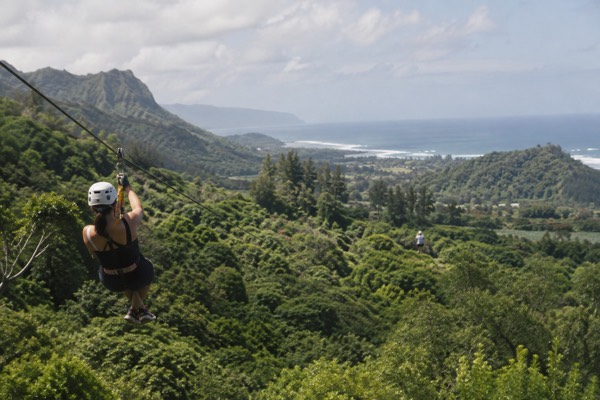
Oahu Ziplining Guide: Courses, Costs And How To Plan A Canopy Tour
Oahu's ziplining is concentrated on the North Shore, where a working farm at Keana Farms carries an eight-line canopy course above banana groves and valley ridges. This guide covers where the lines run, what a session actually involves, and how to plan one without burning a whole day.
Short answer
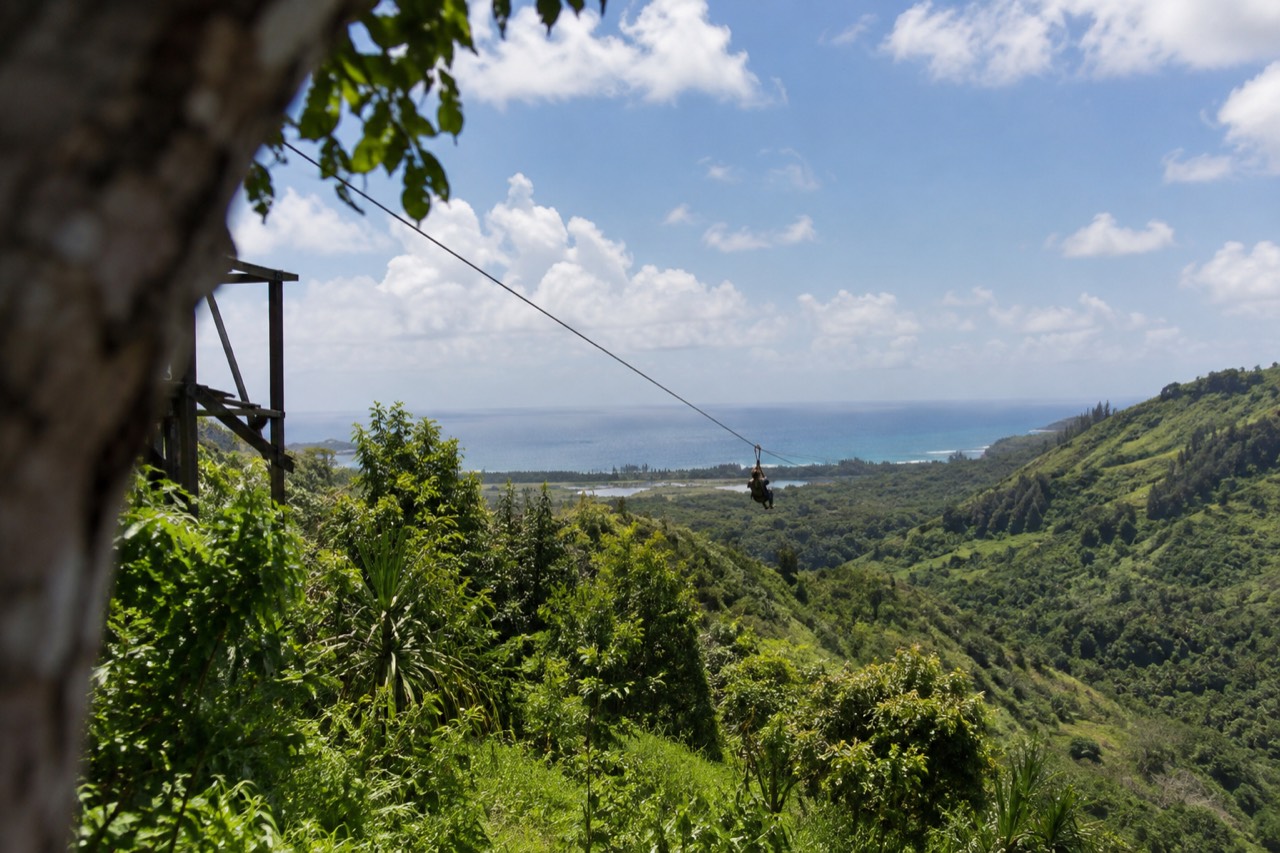
Compare Keana Farms in Kahuku for eight dual lines, Kualoa for a seven-line valley course, and Coral Crater in Kapolei for three or six lines. Keana Farms takes about 2.5 hours plus early check-in and travel. Zipline transport must be selected explicitly; a circle-island sightseeing tour does not include the course.
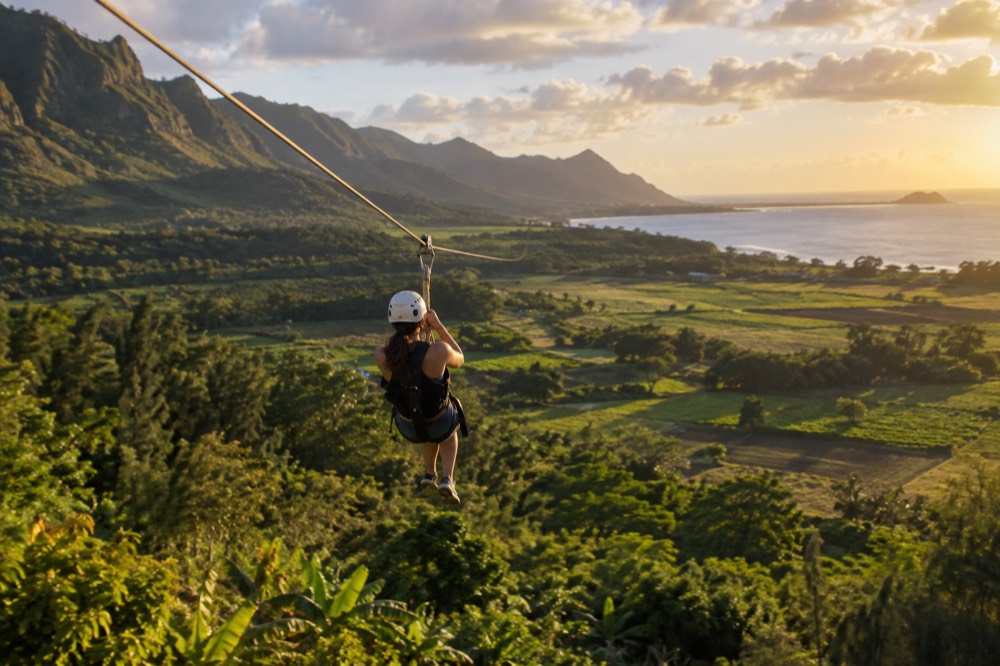
Oahu is not a ziplining island in the way some mainland destinations are, with a dozen competing canopy courses stacked along a single highway. It has a small number of operators, including the eight-line course at Climb Works Keana Farms in Kahuku on the North Shore. The courses differ in setting, length, participation rules and journey. Decide whether ziplining fits your group, then compare the actual course and transport rather than assuming one operator suits everyone.
This guide from Oahu Travel Guide walks through what the experience involves, the practical rules around weight and age, what to wear, how the weather behaves on the windward and leeward sides, and how to fold a zipline session into a broader Oahu itinerary without losing the day.
Where Can You Zipline On Oahu?
The main zipline course on Oahu is the eight-line canopy tour operated by Climb Works at Keana Farms, at 1 Enos Road in Kahuku. The course runs roughly two and a half hours and crosses suspension bridges, treetop platforms and long lines above working farmland. Kualoa Ranch offers seven dual-line sections in Kaʻaʻawa Valley, while Coral Crater in Kapolei offers three- and six-line sessions.
Keana Farms is a working agricultural operation, and the course is built above it rather than carving through it. You ride lines over banana and papaya plantings, cross a valley on dual cables, and finish with the longest runs of the set. The framing matters: this is farmland on the country side of the island, a region of working communities along a two-lane highway, not a purpose-built adventure park next to a resort.
If you want a sense of the terrain before committing, the North Shore Oahu guide covers the stretch of Kamehameha Highway the course sits on, and the Kualoa Ranch guide explains the other big adventure landholding on the island, where movie-site tours and UTV rides run on private property that cannot be visited without a paid guided tour.
Because the course sits out on the North Shore, most visitors reach it as part of a bigger loop rather than driving out for the lines alone. An independent driving day can work around the booking. A circle-island sightseeing tour is a separate outing and does not provide entry or a transfer to the course.
What Does An Oahu Ziplining Session Actually Involve?
The Keana Farms activity is listed at about two and a half hours. Its selected booking asks for arrival 40 minutes early; add your travel separately. You wear a helmet and a full harness with two lanyards, you are clipped to a cable at all times on platforms and bridges, and guides handle the braking on arrival. No experience is needed, and the briefing covers hand positions and body posture before anyone leaves the ground.
The rhythm of a canopy tour is slower than people expect. You walk between lines on gravel and boardwalk paths, you wait on platforms while the pair ahead of you launches, and the lines themselves last anywhere from a few seconds to around half a minute depending on length. The longest lines on the Keana Farms course produce the sustained speed; the shorter ones are scenic connectors.
Weight and age limits exist on every commercial course, and they are set by the operator and its insurance, not by the state. The current figures are stated on the operator's live listing at booking time, and they do change, so check them there rather than relying on a blog number, including this one. The same goes for whether GoPro mounts, personal cameras or selfie sticks are allowed on the lines: many operators restrict loose items, and the rule is the operator's to state.
A few practical notes that apply to any Oahu canopy course:
- Check the session you want before making other fixed plans.
- Arrive early enough for the briefing; late arrivals can lose their slot.
- Long hair must be tied back, and jewellery that dangles is usually asked to come off.
- Closed-toe shoes are the standard footwear requirement, and it is enforced.
How Much Does Ziplining On Oahu Cost?
Pricing is set by the operator and shown on its live listing at the time you book, and this guide deliberately does not print a figure, because course prices on Oahu have moved more than once and stale numbers are worse than none. What is stable is the shape of the cost: a ticket quote for the selected course and party, plus any optional transport, photos or other extras. Keana Farms’ listed ticket includes taxes, equipment and parking. Read the cancellation terms before paying.
Photo packages may be offered separately. Check their current price and what is included rather than assuming photos are part of the ticket.
If the zipline is one item on a longer list, an attraction pass can change the arithmetic. The one-pass-forty-attractions product has its own changing attraction list. Do not assume it covers Keana Farms, Kualoa ziplining or the specific Coral Crater session you want; compare exact inclusions before buying.
For many travellers, though, the honest question is not the per-line cost but the day cost. A canopy tour out on the North Shore eats a morning, and the smart move is to build the rest of the day around the drive you are already making.
What Should You Wear And Bring Ziplining On Oahu?
Wear athletic clothing you would hike in, closed-toe shoes with grip, and nothing loose: no scarves, no dangling jewellery, no skirts, and hair tied back. You will be given a helmet and harness, and you will wear them over your clothes for nearly three hours, so thin layers beat bulky ones. Apply sunscreen before check-in, keep your hands free on the lines, and follow the guide’s instructions; do not improvise by grabbing the cable.
The harness is the part people underestimate. It rides up around the legs and waist, and it is fitted snugly by the guides during the briefing. Shorts are fine, but very short shorts sit badly under a harness for two and a half hours. Leggings or longer athletic shorts are the consistent recommendation.
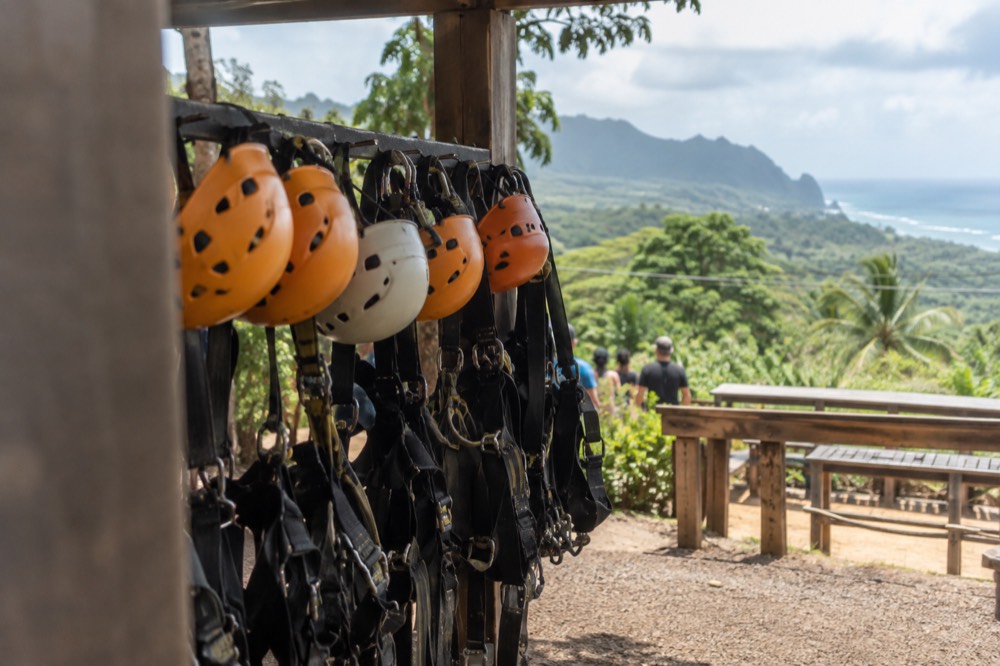
Here is a practical packing table for a canopy morning:
| Item | Bring It? | Notes |
|---|---|---|
| Closed-toe shoes | Required | Trail runners or trainers; sandals and slides are refused |
| Athletic layers | Yes | You wear the harness over them for the full session |
| Sunscreen | Yes, applied early | Platforms are open to sun; reapply at the halfway break |
| Sunglasses with strap | Optional | A retainer strap matters at speed |
| Bug repellent | Yes in summer | The course sits above farmland and standing crop |
| Phone or camera | Operator's rule | Loose items are often restricted on the lines |
| Water | Usually | Ask at check-in; some courses provide it at platforms |
| Hat | No | It will not survive the helmet |
Is Ziplining On Oahu Safe?
Ziplining involves height, moving equipment, uneven ground and weather exposure. Equipment and guide procedures help manage risks but do not eliminate them. Review the selected operator’s physical, size and health restrictions; participation is not suitable for everyone. Courses cancel or pause for high wind and lightning, and a cancellation for weather is a sign the system is working, not a sign of trouble.
The honest framing is that you are doing a moderately physical outdoor activity in a tropical climate, on a working farm, and preparation does not remove every risk. Heat is the big one: the North Shore is hot through the middle of the day, and a 10 a.m. slot feels very different from a 1 p.m. slot. Morning bookings are calmer, cooler and less windy as a general pattern, though conditions vary.
Weather cancellations are handled by the operator, and the refund policy is on the listing. Read it before booking rather than after, especially if you are travelling in the wetter months, which the next section covers properly.
When Is The Best Time Of Year To Zipline On Oahu?
Ziplining on Oahu runs year-round, and the season matters far less than the side of the island and the time of day. The North Shore sees bigger surf and wetter spells in winter, flatter and drier conditions in summer. An earlier session may avoid some midday heat, but calm wind, clear skies and availability are not guaranteed. And rainfall on this island varies enormously over short distances, so the forecast for your hotel may not describe the course at all.
That last point deserves real numbers. Official NOAA climate normals for 1991 to 2020 show Honolulu International Airport on the leeward side receiving 16.41 inches of rain per year, while the Lyon Arboretum station in Mānoa valley, about five miles inland from Waikīkī, records 150.96 inches per year. Every single month at the Mānoa station is wetter than the airport's wettest month. A drizzle-free morning in Waikīkī tells you almost nothing about conditions above a North Shore valley.
For seasonal planning, this is how the year breaks down for a North Shore canopy morning:
| Period | North Shore character | Ziplining takeaway |
|---|---|---|
| December to February | Larger surf on north-facing shores, occasional wet fronts | Mornings still work; watch wind forecasts |
| March to May | Transition season, greening valleys | Arguably the best balance of scenery and calm conditions |
| June to August | Flatter surf, warmer, busier roads | Book the earliest slot; midday heat is real |
| September to November | Late-summer warmth, thinning crowds | Strong shoulder-season choice; check storm advisories |
One more seasonal note: hurricane season in the Central Pacific runs June through November, and storm systems can interrupt outdoor tours for a duration that depends on local conditions and operator decisions. The Oahu hurricane season guide explains how to read advisories without panicking over every system that forms far to the east.
Can You Combine Ziplining With Other Oahu Plans?
Yes, and you should, because the drive out to the North Shore is the expensive part of the trip in time. A morning canopy tour pairs naturally with Haleʻiwa town for lunch, the North Shore beaches in the afternoon, and a return along the windward coast past Kāneʻohe.
If you would rather not drive it yourself, guided circle-island tours cover the same loop with commentary, and the canopy morning can sit on a separate self-drive day.
The pairing question is really a transport question. If you have a rental car, the course, Haleʻiwa and a couple of beach stops make a full and satisfying day, and the car rental on Oahu guide covers the driving side. If you are car-free, the arithmetic changes: a dedicated zipline morning plus transport is awkward by bus, and most car-free visitors either book a day that bundles the lines with transport or split the island across two tour days.
For a car-free Keana Farms visit, select its zipline-with-transport option and confirm the designated pickup. That shuttle returns after the activity; it is not a flexible sightseeing pass.
Keep broader island sightseeing on a separate day if you want time beyond the course.
Plan your Honolulu transport separately from this North Shore outing.
How Does Ziplining Fit Into A First Oahu Itinerary?
Treat ziplining as a half-day anchor on a North Shore day, ideally day three or four of a first visit, after Pearl Harbor and the Honolulu-side sights are done. On a one-week trip, the pattern that works is a morning on the lines, lunch in Haleʻiwa, and beaches or lookouts after.
On trips of three days or fewer, a canopy tour is usually a cut rather than a keep, because the fixed half-day cost crowds out places Oahu is genuinely unrepeatable at.
If you are still shaping the trip, the Oahu itinerary for first-timers sequences the whole island sensibly, and the 3-day Oahu itinerary shows exactly how tight a short visit gets. Families should also read the Oahu with kids family travel guide, since age and weight minimums decide whether the lines are on the table at all.
For the full picture of what else the island holds, see the master Things to Do in Oahu page, which is the site's central index.
Common Questions About Ziplining On Oahu
Most questions about ziplining on Oahu come down to four things: where the course is, what the physical requirements are, what happens in bad weather, and how to reach the North Shore without losing a day. The answers are stable: the main course is at Keana Farms, no experience is needed, operators cancel for wind and lightning on their own refund terms, and visitors need independent transport or a zipline option that explicitly includes pickup.
The details below cover the rest.
Is there more than one zipline course on Oahu?
The eight-line course at Climb Works Keana Farms is the headline product, and a small number of other operators run ziplines as part of ranch and adventure packages elsewhere on the island. Compare Keana Farms in Kahuku, Kualoa in Kaʻaʻawa Valley and Coral Crater in Kapolei by setting and eligibility, as well as the journey.
Do you need experience to go ziplining on Oahu?
No previous zipline experience is required for the courses compared here. Briefing and equipment are provided, but walking, stairs, size limits and health restrictions still apply; check the chosen course.
What are the age and weight limits?
Keana Farms starts at age 5 and height 42 inches; Kualoa starts at age 10 with additional height, weight and harness measurements; Coral Crater starts at age 6 and 40 lb. These are only initial filters. Review all current limits and minor-accompaniment rules before paying.
What happens if it rains?
Light rain usually does not stop a canopy tour, and you will get wet. Courses pause or cancel for high wind and lightning, and the operator decides. Refund and reschedule terms are on the listing; read them before booking rather than after a cancellation call.
Can you zipline on Oahu without a car?
Yes. Keana Farms has a transport option with designated pickup points; Coral Crater also offers selected sessions with Waikiki transport. Choose that option explicitly and confirm pickup. A general circle-island tour is not a zipline transfer.
Is ziplining worth it on a short trip?
On a trip of three days or fewer, usually not, because the half-day cost crowds out places like Pearl Harbor and Hanauma Bay that cannot be substituted elsewhere. On four days or more, a North Shore canopy morning is one of the better uses of a half-day, especially paired with Haleʻiwa and the beaches around it.
Confirm the course, eligibility, check-in and transport early in your planning, and the rest of the day, lunch in Haleʻiwa, a swim, the drive back along the windward side, is the part that makes the whole loop worth the drive. Book the lines before you book the dinner reservations, not after, and the day will assemble itself around them.
Choose Your Oahu Zipline Course
Compare the eight-line farm course in Kahuku, Kualoa’s seven-line valley course, or Coral Crater in Kapolei. Each has its own eligibility and transport rules; selection here does not confirm suitability.
North Shore Eight-Line Zipline
Check every participant’s requirements and choose with or without transport. The Waikiki shuttle has a fixed pickup and return, so do not assume free time in Haleiwa.
Minimum age 5 and height 42 inches; weight limits depend on height and minors need an accompanying adult. Closed-toe shoes are required. Pickup is included only with the transport option and must be confirmed; check the operator’s full requirements.
Compare Two Zipline Day Budgets
Enter USD totals for the same people and date. Add only unbundled travel and extras to option A. Option B must include its tickets, transport and extras already. These are your estimates, not live prices or a combined package.
Select dates and everyone travelling on the provider’s website, then review the final price and booking conditions.