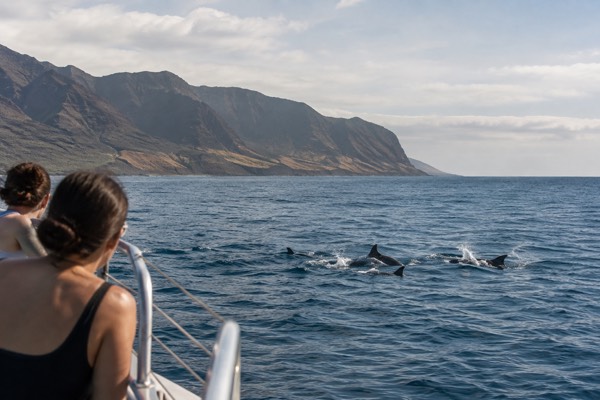
Oahu Dolphin Tours: How To See Spinner Dolphins Without Breaking The Law
Hawaiian spinner dolphins rest in shallow bays by day and feed offshore at night, and a federal rule from 2021 makes swimming with them illegal within 50 yards. This guide covers what dolphin tours on Oahu can legally offer, where they go, and how to pick one.
Short answer
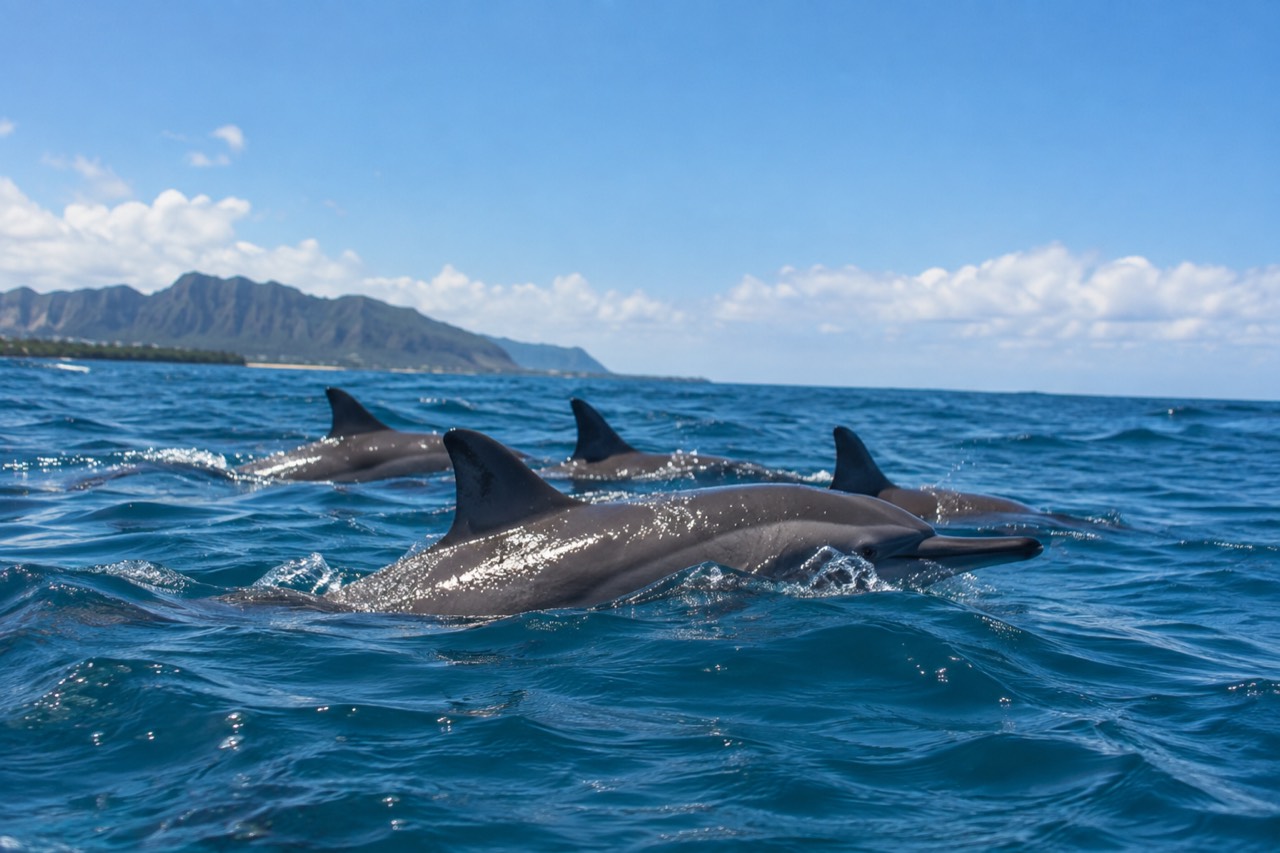
You cannot legally swim with Hawaiian spinner dolphins on Oahu; federal law prohibits approach and swim-with activity within 50 yards. Dolphin tours on Oahu are therefore viewing tours, and the strongest option is a west-side boat trip, where spinner dolphins feed in the morning along the Leeward Coast.
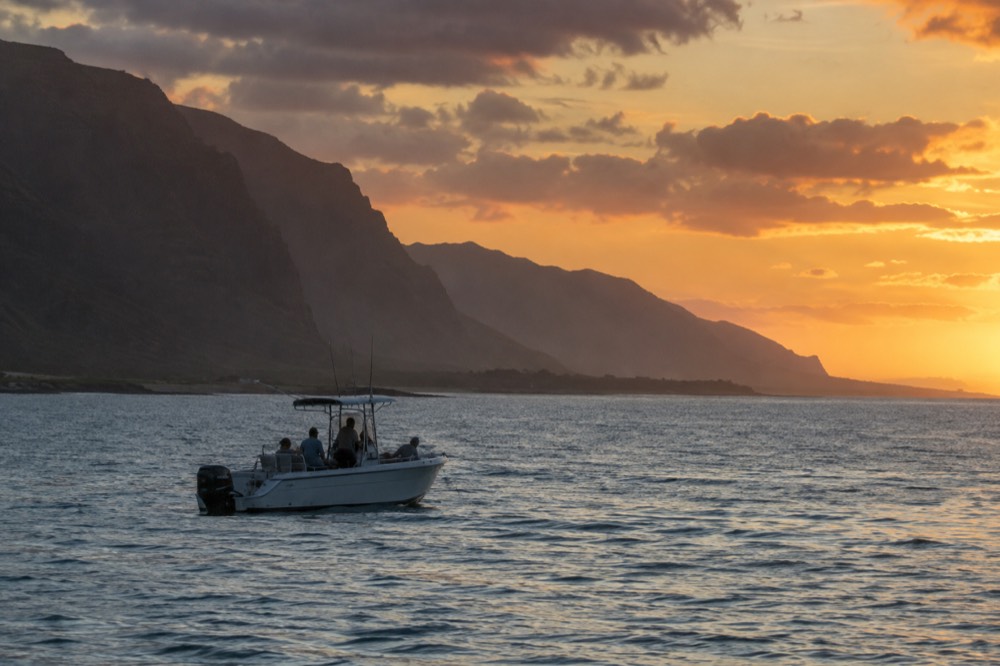
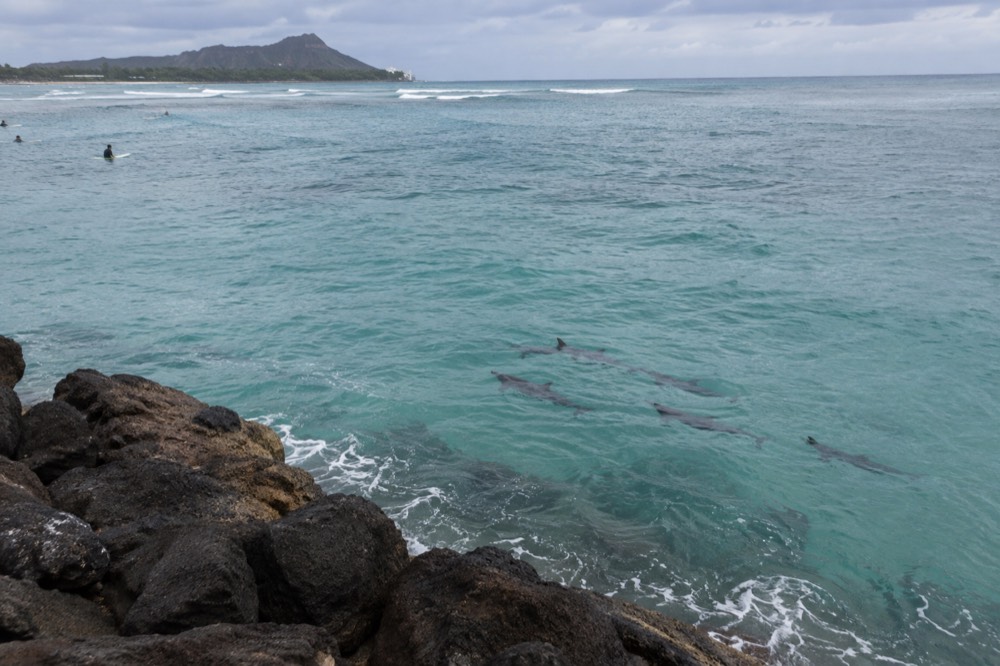
Hawaiian spinner dolphins spend their nights hunting in deep water offshore and their days resting in the shallow, sandy bays along Oʻahu's coasts. That daily rhythm is the reason they are one of the most reliably sighted marine animals on the island, and it is also the reason a federal rule now stands between tourists and the water they swim in. Since 28 October 2021, swimming with, approaching or encircling Hawaiian spinner dolphins within 50 yards has been prohibited under federal law, which reshaped what a dolphin tour on this island can actually sell.
This guide from Oahu Travel Guide walks through what that rule means in practice, where the tours go, and how to choose one that respects the animals.
Can You Swim With Dolphins On Oahu?
No. Swimming with Hawaiian spinner dolphins is prohibited by federal law within 50 yards, a rule that took effect on 28 October 2021 and applies to all waters of the Hawaiian Islands. Tours may observe spinner dolphins from a boat at a legal distance, but they may not drop swimmers into the water near them, encircle them or pursue them. Any product sold today as a dolphin experience on Oahu is a viewing experience, not a swim.
The regulation was years in the making. The National Marine Fisheries Service finalized the rule in September 2021, publishing it on 28 September with an effective date one month later. Its purpose is straightforward: spinner dolphins feed at night in deep offshore water and come into shallow bays specifically to rest, and repeated disturbance during those resting hours harms them. A dolphin that cannot rest during the day is a dolphin whose energy budget is being spent on tourists.
The practical consequence for visitors is that marketing language matters. Some older listings and plenty of third-party blog content still describe "swimming with dolphins in Hawaii" as if it were an ordinary excursion. It is not, and any operator offering to put you in the water next to spinner dolphins is either misdescribing the trip or breaking the law. The honest product is a boat tour that finds dolphins and watches them from a distance, ideally with a crew that explains the rule rather than quietly edging closer than it should.
It is worth being precise about which animals the rule covers. The 50-yard prohibition applies to Hawaiian spinner dolphins specifically. Boaters elsewhere in Hawaiian waters also operate under a 100-yard approach distance for humpback whales, which is likewise law, and recommended distances of 50 feet for Hawaiian monk seals and 10 feet for green sea turtles, which are guidelines rather than statutory distances. A good tour crew distinguishes between these categories out loud, because a guide that calls every distance a law is a guide that has not read the rules.
Where Do Oahu Dolphin Tours Actually Go?
Most Oahu dolphin tours run along the island's west side, launching from Waiʻanae and tracking the Leeward Coast, where spinner dolphins rest near shore on most mornings. A smaller number of boats out of Waikīkī and Kewalo Basin encounter spinner dolphins opportunistically while running snorkel and turtle routes. The west side is the dedicated dolphin product; the south side is everything else with dolphins as a bonus.
The west side owes its reliability to geography. The coastline west of Ko ʻOlina faces deep water relatively close to shore, and the spinner dolphins that fed offshore overnight come back toward the bays around Māʻili, Waiʻanae and Yokohama Bay to rest in the morning. Boats leaving Waiʻanae Boat Harbor in the earlier departures are positioned for exactly that window, before the animals settle deeper into their rest cycle and before the afternoon wind picks up.
The south-shore alternative is a different proposition. Boats out of Kewalo Basin and Waikīkī primarily run turtle snorkels at places like Turtle Canyon, with dolphins seen when they are seen. If dolphins are the reason you are on the boat, the west side is the product built around them; if dolphins are a pleasant surprise on a morning already devoted to snorkeling, the south shore serves that well.
A third category is worth naming honestly because it dominates search results: the big circle-island bus tours. These pass the coastline where dolphins live but see them from a highway, if at all. They are excellent island overviews, and two of the best are listed below, but book one for the island, not for the dolphins.
Prefer to trace the coastline at your own pace? Book a rental car here.
If you are still assembling your overall plan, our master list of things to do on Oahu places dolphin tours in the wider context of the island's wildlife experiences.
The dedicated west-side trip is the one to book if dolphins are the priority. It is a four-hour boat experience focused on finding marine life along the Leeward Coast, and it is the product this site points readers toward most often for this specific question.
Which Oahu Dolphin Tour Should You Book?
Choose by what else you want from the morning, not by price alone. If dolphins are the sole goal, book a dedicated west-side viewing trip out of Waiʻanae. If you want a full day that includes the coastline where dolphins live, a circle-island tour covers the island in one sweep. If you would rather be in the water than on it, a snorkel tour with a turtle guarantee beats any dolphin-branded product.
Here is how the main options compare on the things that actually differentiate them. Durations and operators are as listed by the operator; check the live listing for current availability and departure times.
| Trip | Operator | Duration | What it is |
|---|---|---|---|
| Swim with Dolphins on the West Coast | Indigo Ocean Hawaii | 4 hours | Dedicated boat trip along the Leeward Coast focused on dolphin viewing and snorkeling |
| Waikiki Turtle Canyon Guided Snorkel | Not stated on listing | 2 hours | South-shore snorkel with a turtle guarantee, dolphins seen opportunistically |
| 2-Hour Oahu Whale Watch from Ala Wai Harbor | Not stated on listing | 2 hours | Seasonal whale watch by boat, November to April, humpbacks as the headline |
| Full or Half Day Grand Circle Island Tour | Star of Honolulu Cruises and Events | 6 hours 30 minutes | Guided island circuit by road, coastal scenery, no boat time |
The dolphin-specific pick, the four-hour west-side trip with Indigo Ocean Hawaii, exists for exactly this question, and it is the tour this page's comparison leans on. You can see the west-side dolphin tour in detail on its own page, including what the trip includes and how the operator describes the day.
If the morning you want is a morning on the water with spinner dolphins, this is the trip that delivers it, and the operator's live listing carries free cancellation so a weather shift does not cost you the fare.
Should You Worry About the Dolphin Rule When Booking?
You should check that the operator states its approach distances plainly, and treat any listing that promises in-water dolphin contact as a red flag rather than a bargain. The 50-yard spinner dolphin rule applies to operators, not just to private swimmers, so a lawful tour describes watching from the boat and snorkeling away from the dolphins, not with them. A crew that explains this unprompted is usually a crew that follows it.
The right question to ask any operator is what happens when dolphins appear near a snorkel stop. Lawful practice is to keep swimmers out of the water in the dolphins' immediate vicinity, or to hold the boat at distance and let the encounter stay visual. There is no version of a legal Oahu dolphin tour in which you are placed in the water beside resting spinner dolphins, whatever a headline implies.
How Close Can You Get To Dolphins On Oahu?
For Hawaiian spinner dolphins the limit is 50 yards, and it is federal law covering approach, encirclement and swimming-with. For humpback whales the limit is 100 yards, also law. For Hawaiian monk seals the 50-foot distance and for green sea turtles the 10-foot distance are recommended guidelines, though harassing or taking any of these animals is illegal regardless of distance. These are four different legal categories, not one rule.
That distinction is where a lot of coverage goes wrong, so it is worth a table rather than a paragraph of hedged prose. The distinction also matters to you as a swimmer and snorkeler, not only to the boat.
| Animal | Distance | Status | What it means for you |
|---|---|---|---|
| Hawaiian spinner dolphin | 50 yards | Law, in force since 28 Oct 2021 | No swimming with, approaching or encircling; boats must hold distance |
| Humpback whale | 100 yards | Law | Boats must not approach closer; season runs November through April |
| Hawaiian monk seal | 50 ft (150 ft for a mother with pup) | Recommended guideline | Harassment is illegal under federal and state law regardless of distance |
| Green sea turtle (honu) | 10 ft | Recommended guideline | Give them room, never touch or chase, no flash photos at close range |
The whale distance comes from the Hawaiian Islands Humpback Whale National Marine Sanctuary, which states plainly that visitors should always keep a safe and legal 100 yards from humpbacks and that the animals can be seen from shore and at sea from November through April. If your dolphin trip falls in that window, as many winter trips do, the crew is operating under two separate approach laws at once, and the good ones narrate both.
When Is The Best Time Of Day And Year For A Dolphin Tour?
Morning is the time of day that matters, because spinner dolphins return from offshore feeding toward shallow resting bays in the early hours and settle as the day goes on. Time of year matters less for dolphins than for whales: spinner dolphins live around Oʻahu year-round, while humpbacks are only present November through April. If dolphins are the goal, book an early west-side departure in any month.
The morning logic follows directly from the animals' biology. Spinner dolphins feed at night in deep water, then move inshore to rest in daylight. A boat leaving the harbor at the first departure is on the water during the transition, when pods are more likely to be near the surface and near the bays. By early afternoon the same pods have often consolidated into tight resting groups that a lawful boat will not disturb, and the Leeward Coast's wind builds, which makes the surface choppy and the sighting window worse.
Seasonality splits by animal. Spinner dolphins do not migrate away from Oʻahu; the same coastal populations are present across the calendar, and tour operators run year-round. Humpbacks are the seasonal variable, present November through April per the sanctuary's own guidance. A winter dolphin trip therefore has a genuine chance of humpbacks as a second act, which is why some operators sell winter departures as combined wildlife watches.
If your trip falls inside the humpback window, or you want the fuller picture, our Oahu whale season guide covers the lawful approach distances and what a dedicated whale watch involves.
What Is The Difference Between A Dolphin Tour And A Whale Watch On Oahu?
A dolphin tour is a shorter, usually morning, boat trip focused on resident spinner dolphins along a known stretch of coast. A whale watch is a seasonal trip, December through May on most listings, targeting migrating humpbacks with spotters and wider search patterns. In winter the two products overlap heavily, and several operators sell one boat trip that may reasonably see both.
The distinction is mostly one of timing and expectation rather than route. Dolphin trips hug the coast where the resting bays are, because that is where the resident animals are. Whale watches range farther, because humpbacks move through open water and a sighting depends on scanning, reporting and sometimes luck. Dolphin sightings are closer to a pattern; whale sightings are closer to a hunt.
The seasonal product among our listings makes the point cleanly: the Waikiki catamaran whale watch runs its schedule from December to May, per the operator's own product overview, which tracks the sanctuary's November-to-April presence window with the usual operational lag at either end. In the middle of that window, a south-shore boat looking for whales has a real chance of passing spinner dolphins on the way out, and a west-side dolphin boat has a real chance of being flagged toward a humpback. Crews generally go where the morning is best.
If you are choosing between the two as your one big boat day, decide which animal you would rather miss. Dolphin-focused trips rarely fail to find the conditions where spinners rest; whale-focused trips can have slow mornings in a bad week. Our Oahu snorkeling guide rounds out the third option, which is a trip built around what is underwater rather than what surfaces.
What Should You Bring And Wear On A Dolphin Tour?
Bring reef-safe sunscreen applied before boarding, a hat, polarized sunglasses, a light layer for the wind, and motion-sickness medication taken in advance if you are prone. Wear a swimsuit under clothes if the trip includes a snorkel stop, and bring a dry bag for phones rather than relying on boat storage. Leave drones at the hotel; they are restricted in many of the coastal areas these boats operate from.
The west side deserves special mention on wind. The Leeward Coast is called that for a reason, but the afternoon breeze still builds reliably, and a four-hour trip that starts calm can end blustery. Morning departures dodge the worst of it, which is one more reason the early boats see more.
Reef-safe sunscreen is not a suggestion in Hawaii; state law restricts the sale of sunscreens containing oxybenzone and octinoxate, and operators increasingly stock and expect mineral alternatives. Apply it at the dock rather than on the boat, both because it works better after absorption and because nobody wants it washing off your hands into the fish habitat.
On the drone point, be direct with yourself: a dolphin encounter is the single most tempting drone subject on the island, and it is also one of the most heavily restricted. Drone use is prohibited in Hawaii state parks without a written permit and restricted in Honolulu city parks, and flying at marine animals adds a harassment question on top of the airspace question. Watch with your eyes.
Common Questions About Oahu Dolphin Tours
Most questions about dolphin tours on Oahu come down to three things: the federal 50-yard rule that ended swim-with products, the west side's morning window where resident spinners rest, and the overlap with whale season from November through April. Get those straight and the rest is schedule and budget, and the honest answer for almost everyone is a morning west-side viewing trip booked with free cancellation in case of weather.
Can you swim with dolphins on Oahu?
No. Federal law has prohibited swimming with, approaching or encircling Hawaiian spinner dolphins within 50 yards since 28 October 2021. Every lawful dolphin product on Oahu is a boat-based viewing experience.
Where do dolphin tours on Oahu go?
Most dedicated dolphin tours launch from Waiʻanae on the island's west side and run along the Leeward Coast, where spinner dolphins rest near shore in the morning. South-shore boats out of Waikīkī and Kewalo Basin see dolphins opportunistically on snorkel routes.
When is the best time to see dolphins on Oahu?
Early morning, in any month. Spinner dolphins feed offshore at night and rest in shallow bays during the day, so the first departures overlap the window when pods are near the surface. Unlike humpbacks, which are present November through April, spinner dolphins live around Oʻahu year-round.
How close can a boat get to spinner dolphins?
50 yards, by law, and the same rule prohibits encirclement and intercepting the animals' path. Humpback whales carry a separate 100-yard legal approach distance. Monk seal and turtle distances are guidelines, though harassment of any protected marine animal is illegal.
Is a dolphin tour or a whale watch better on Oahu?
For a guaranteed pattern of sightings, the dolphin trip: resident spinners rest in known bays year-round. For spectacle, the winter whale watch. From November through April many boats encounter both on one departure, so the choice matters least in midwinter.
Are dolphin tours on Oahu ethical?
A lawful tour that holds 50 yards, lets resting pods stay resting and snorkels away from the dolphins is a reasonable way to see them. Read the listing's own description of how it handles encounters before booking, and treat any promise of in-water dolphin contact as a red flag.
Book the morning boat, hold the distance the law asks for, and let the dolphins do what they came into those bays to do, which is sleep. The rest of your planning can start from our things to do on Oahu overview and work outward from there.