Dole Plantation On Oʻahu: What A Visit Actually Involves
Dole Plantation sits in Wahiawā, in the middle of Oʻahu, and most visitors arrive for about two hours: a walk through the gift shop, a serving of Dole Whip, and one paid activity such as the Pineapple Express train or the plantation garden tour. Whether that is worth the drive depends almost entirely on where it sits in your day, because the plantation is not near anything else on a first-time itinerary.
Short answer
Dole Plantation is a commercial visitor attraction in Wahiawā, central Oʻahu, roughly on the route between Waikīkī and the North Shore. Entry to the grounds and gift shop is free; the maze, train ride, garden tour and Dole Whip cost extra, with current prices on the operator's own site. Allow two hours, and pair it with a North Shore day rather than making it a destination on its own.
Dole Plantation sits in Wahiawā, in the middle of Oʻahu, and most visitors arrive for about two hours: a walk through the gift shop, a serving of Dole Whip, and one paid activity such as the Pineapple Express train or the plantation garden tour. Whether that is worth the drive depends almost entirely on where it sits in your day, because the plantation is not near anything else on a first-time itinerary.
Dole Plantation is not a working plantation in the sense most visitors imagine, and it is not a museum with a story told start to finish. It is a retail and activity complex built around Hawaii's pineapple industry history, set on the central plain where that industry actually grew. That is not a criticism. It simply changes what you should expect, and what you should plan around.
This guide covers the practical questions: where the plantation is and how to reach it, what the activities on site actually involve, what a visit costs and how those costs are structured, how long people stay, and whether it earns a place in your itinerary at all. Where a figure is stable and verified, it is stated.
Where Is Dole Plantation On Oʻahu?
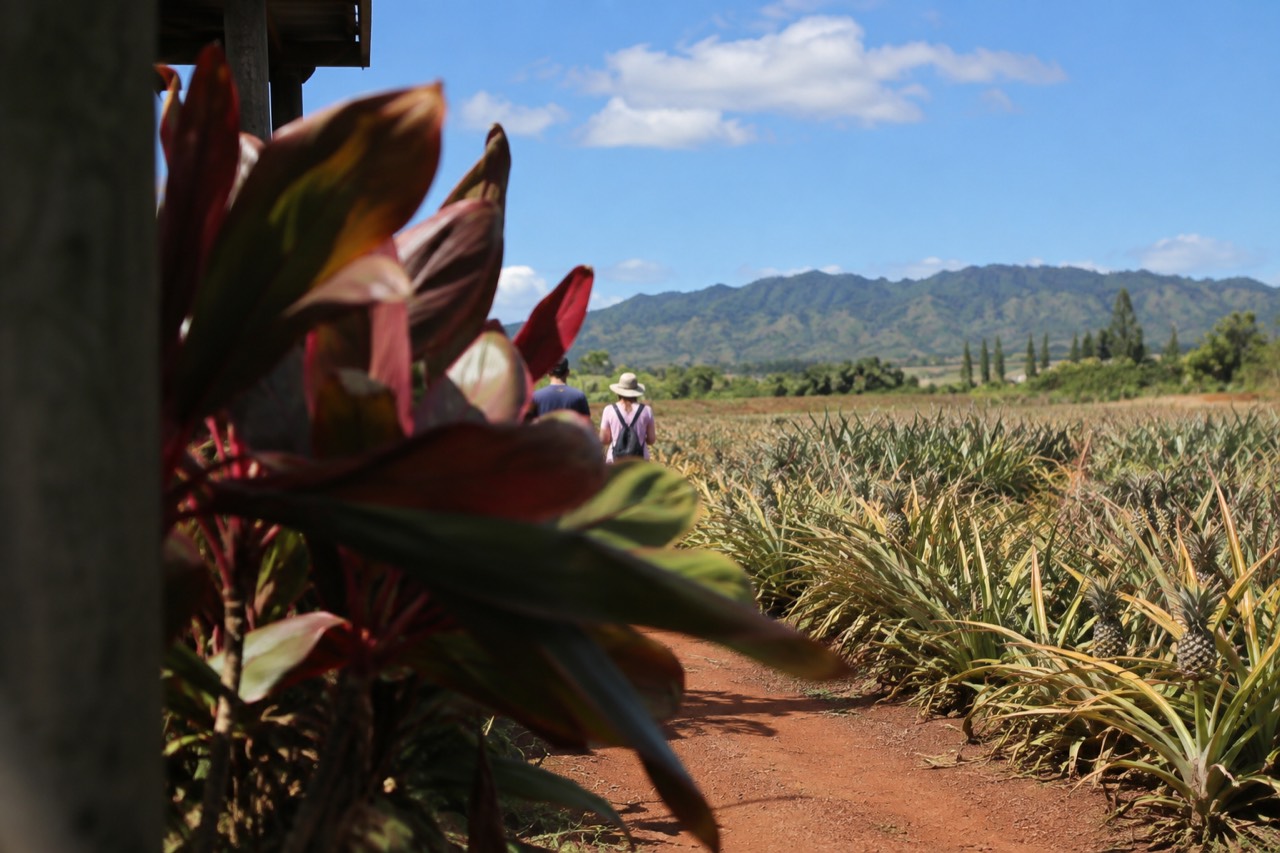
Dole Plantation is in Wahiawā, in the central plain of Oʻahu between the Waiʻanae and Koʻolau mountain ranges, on the corridor connecting Honolulu and Waikīkī to the North Shore. It sits just off Kamehameha Highway, the same two-lane road most visitors drive to reach Haleʻiwa. That location is the single most important fact about it: almost nobody reaches the plantation without also committing to the drive north.
Geography is the reason this stop exists in so many itineraries. The central plain is the bottleneck of the island. If you are driving from Waikīkī to the North Shore, you pass within a short distance of the plantation, and the temptation to stop is real, especially with children in the car and a long stretch of highway ahead.
Two practical notes for the area around the stop. First, Wahiawā is a working town, not a resort area; plan fuel, food and restroom stops with that in mind. Second, the DLNR notice dated 9 September 2026 lists Wahiawā Freshwater State Recreation Area as closed until further notice following Hurricane Lowell, so do not build a swim stop into the same leg of the trip. Check the DLNR State Parks notices before you drive, because storm-related closures are a moving situation.
How Do You Get To Dole Plantation From Waikīkī?
There is no realistic transit route from Waikīkī to Dole Plantation for a day visitor; the practical options are a rental car, a ride-hail, or a guided circle-island or North Shore tour that includes the stop. TheBus serves the corridor but the journey involves transfers most visitors will not accept for a two-hour stop.
If you are not driving yourself, a tour is the honest answer, and several of the island's most-booked products include the plantation.
The transit numbers, for anyone determined to try: TheBus charges $3.25 for an adult cash single ride with no transfers, while a HOLO card gives you two hours of unlimited transfers on TheBus and Skyline for $3.00, with a $7.50 daily cap. Those fares are excellent for Honolulu and for parts of the windward coast. They are not good for the central plain from Waikīkī, because the network is built around the urban core, and the plantation sits beyond it.
For most visitors the decision is between driving and being driven. Driving gives you control of timing, which matters because the plantation's peak crowding is predictable: late morning through mid-afternoon, when the tour buses from Waikīkī arrive in waves. Being driven, on a circle-island or North Shore itinerary, trades that control for a seat, a commentary, and no parking decisions on Kamehameha Highway.
If driving yourself appeals, the Oahu Travel Guide car rental and parking coverage walks through the rental decisions and the parking rules that catch visitors out, and the North Shore day trip from Waikīkī page lays out the same corridor with the plantation in its sequence.
What Is There To Do At Dole Plantation?
The plantation has four main paid activities: the Pineapple Express, a train ride through the surrounding fields; the Plantation Garden Tour, a walking route through themed garden areas; the Pineapple Garden Maze, a large walk-through maze; and tasting stops, most famously the Dole Whip soft serve. Entry to the grounds, the gift shop and the pineapple-cutting demonstrations is free, and each paid activity is ticketed separately.
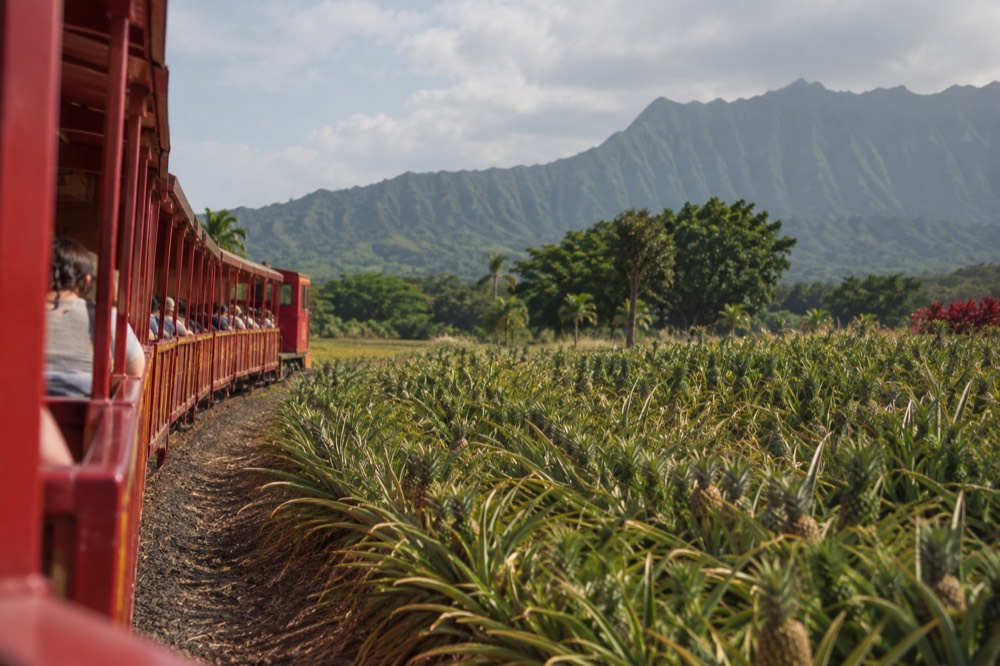
The train is the activity most visitors choose, and it is the one that gives the stop its name. It runs a loop through the working landscape around the complex, with a recorded narration about pineapple cultivation and the industry's history in Hawaii. It is short, seated, shaded and suitable for small children, which is exactly why it outsells everything else on site.
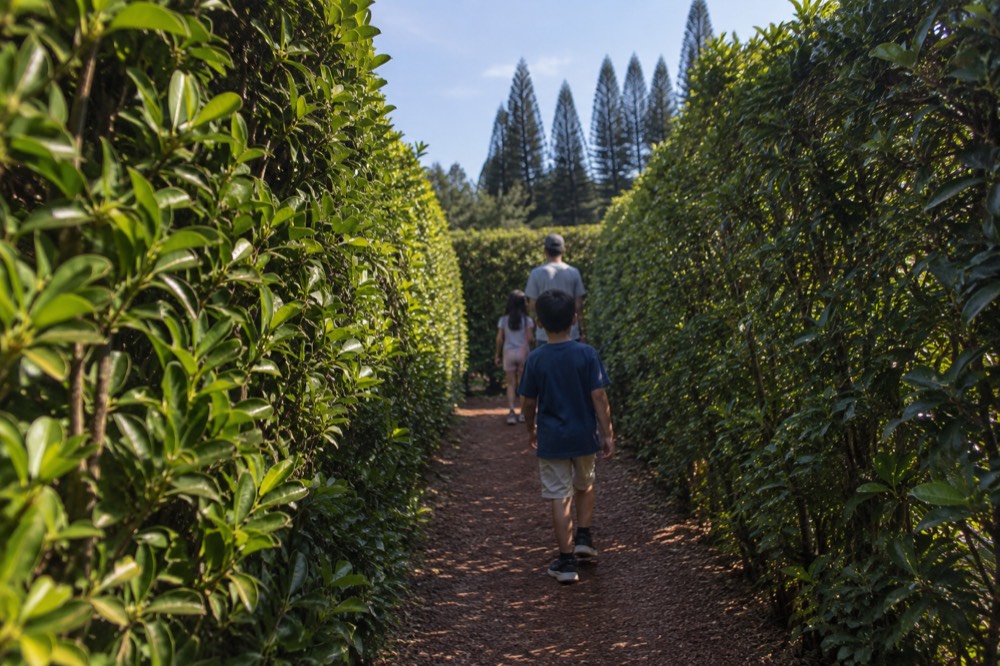
The maze is the plantation's headline claim: a very large walk-through maze laid out in the shape of a pineapple, with stations to find along the way. It is genuinely easy to spend longer inside it than you planned. With young children it is the strongest activity on the site; with teenagers or adults-only groups it depends entirely on your tolerance for walking in circles.
The garden tour is the quietest option and the one most overlooked. It is a self-paced walk through labeled plantings, and it is the closest thing on site to an educational experience about what actually grows in Hawaii. If your interest in the stop is botanical rather than novelty, this is where your money is best spent.
Dole Whip deserves its own sentence, because for a meaningful share of visitors it is the reason for the stop. The soft serve is sold at the plantation, and the queue at peak times reflects that. It is a dessert, not an experience, but it is a reliable one.
How Much Does Dole Plantation Cost?
Entry to the plantation grounds is free, and you pay per activity: the train, the maze and the garden tour each carry their own ticket, with combination bundles discounting two or three bought together. Current prices are published on the operator's own site and change often enough that printing them here would mislead you, so check the official Dole Plantation page before you budget.
Attraction pricing in Hawaii moves with the seasons, with fuel costs and with demand, and a price typed into an article is a price that goes quietly wrong. The verified figures elsewhere on this site, such as Hanauma Bay's $25 non-resident entry or Diamond Head's $5 per person plus $10 per vehicle, come from official government pages checked against primary sources. Dole Plantation is a private commercial operator, and its prices live on its own listing, which is where you should read them.
What is stable and worth planning on is the structure. The table below shows how the spend is built.
| Spend item | How it is charged | Who typically pays it |
|---|---|---|
| Grounds, gift shop, demonstrations | Free entry | Everyone |
| Pineapple Express train | Per person, per ride | Most visitors, especially families |
| Pineapple Garden Maze | Per person | Families with children |
| Plantation Garden Tour | Per person | Visitors with a botanical interest |
| Combination bundles | Per person, discounted vs buying separately | Families doing two or three activities |
| Dole Whip and food | Per serving | Almost everyone |
Two budget notes. First, the gift shop is large and effective, and it is the exit route for every activity, so give children a budget before you enter rather than after. Second, if you are buying activities for a family, the bundle pricing is usually where the value sits, but only if you will genuinely do all the activities in it; a bundle with a maze ticket you never use is not a saving.
How Long Should You Spend At Dole Plantation?
Most visitors spend between 90 minutes and two hours on site: one paid activity, a Dole Whip, and a pass through the gift shop. Families with children in the maze should budget closer to three hours, because the maze reliably runs longer than its map suggests. Anything under an hour means you have used the stop as a restroom and ice cream break, which is a legitimate choice.
The timing decision is really a North Shore decision. The plantation is on the way to Haleʻiwa, Waimea and the rest of the North Shore, and the Haleʻiwa town guide covers what waits at the far end of the same drive. The two stops work as a pair: the plantation for the structured, paid, child-friendly hour, and Haleʻiwa for the unhurried, walkable, food-and-shave-ice hour.
Peak timing is worth respecting. The tour buses arrive late morning and the maze and train queues are longest from then through mid-afternoon. Early morning and late afternoon are calmer, but the trade-off is what you give up at either end: an early arrival pushes your North Shore time into the hottest part of the day, and a late arrival risks the gift shop and food counters closing around you. Check the day's hours on the operator's page before committing to a late plan.
| Arrival window | What it is like | Best for |
|---|---|---|
| Opening to late morning | Quietest; short queues | Families who want the maze without a wait |
| Late morning to mid-afternoon | Busiest; tour groups arrive in waves | Visitors who want demonstrations and full food service |
| Late afternoon | Calming again; services may wind down | Ice cream and gift shop stops only |
Is Dole Plantation Worth Visiting?
For families with children between roughly four and twelve, Dole Plantation is worth the stop, because the maze and train are built precisely for that age group and free entry means you can spend as much or as little as the visit earns. For adults on a short first trip, it is worth it only as a scheduled break on a North Shore or circle-island day, not as a destination.
The honest case against is easy to state. The plantation is commercial, the pineapple industry it celebrates is far smaller in Hawaii today than its marketing suggests, and a visitor expecting a deep historical experience will leave disappointed. If your Oʻahu time is three days or fewer, every hour at the plantation is an hour not spent at Hanauma Bay, Pearl Harbor, or the windward coast, and those three outrank it without much argument.
The honest case for is just as easy. It is one of the few places on the island purpose-built for young children, the grounds are free to enter, and the Dole Whip queue is a genuine institution. On a rainy central-Oʻahu afternoon, an indoor-leaning stop with covered areas and a gift shop earns its slot. The rainy day activities on Oʻahu page keeps a longer list of options in that weather.
One cultural note that most coverage skips: the pineapple story is a labor story as much as an industry story, and the plantation's own presentation is the place to hear it rather than a summary here. Treat the narration as marketing with history inside it, and read further if the industry's actual past interests you.
Should You Visit Dole Plantation On A Tour Or Drive Yourself?
Driving yourself gives full control of timing and costs, and suits visitors comfortable with the two-lane Kamehameha Highway and rural parking. A guided tour costs more per person but removes every driving, parking and sequencing decision, and the plantation appears as a stop on several of the island's most-booked circle-island itineraries. The deciding factor is not price but whose clock your North Shore day runs on.
The circle-island structure is worth understanding before you choose. A full circle-island day covers the south and east coasts, the windward side, the North Shore and the central plain in one loop, and the plantation typically appears in the final third, when the group is heading back toward Honolulu. That placement is deliberate: it is a low-energy, seated, ice-cream stop at the point in the day when energy is lowest.
The half-day and shorter scenic options skip the loop entirely and focus on a single coast. If your heart is set on the North Shore specifically, a North Shore-focused product or a self-drive will serve you better than a full circle-island itinerary that spends its morning elsewhere.
For comparison, the table below shows how the two approaches differ in practice.
| Factor | Self-drive | Guided circle-island day |
|---|---|---|
| Timing control | Total; you choose every stop's length | Fixed; stops run on the tour's clock |
| Cost structure | Car rental, fuel, parking, per-person tickets | One per-person price covering transport and itinerary |
| Driving load | You drive the two-lane highway both ways | You ride; a professional handles the road |
| Who it suits | Confident drivers, families with car seats, repeat visitors | First-timers, tired travelers, anyone avoiding a rental |
| Plantation stop length | As long as you like | Usually 45 to 75 minutes |
Whichever way you go, book the activities you actually want rather than the biggest bundle, and remember that a tour's plantation stop is usually 45 to 75 minutes, which is enough for the train or the ice cream but not both plus the maze.
If a shorter, cheaper taste of the guided experience appeals before you commit to a full loop, the Kualoa Ranch film-locations tour is a 90-minute option on the windward side that runs on the same logic of letting someone else handle the logistics.
What Should You Know Before You Go?
Bring sun protection and water, because the maze and the train platforms are largely unshaded and the central plain runs hotter than Waikīkī. Check the operator's page for the day's hours before you drive, since hours shift seasonally and around holidays. Set a gift shop limit with children before you enter rather than at the register, and arrive early or late to miss the tour bus waves.
The central plain deserves a specific warning that coastal guides do not. Wahiawā sits inland between the two mountain ranges, and its weather runs hotter and drier than the windward coast. The airport-side leeward coast averages about 16 inches of rain a year, and the plain around the plantation is closer to that than to the green windward valleys. Sunscreen, hats and water are not optional on the maze.
If you are pairing the stop with the North Shore, remember the highway is two lanes and the working towns along it carry real traffic. Park legally, keep the travel lanes clear, and do not treat shoulders or residents' driveways as overflow. The stop is a good place to reset children before the last leg of driving, which is precisely why so many tours schedule it there.
For visitors who would rather skip the driving question altogether, the longer circle-island itineraries below cover the plantation, the North Shore and the windward coast in one booked day, with a temple stop on the windward side built in.
The same operators run variations with different stop lengths and different windward-side inclusions, so compare the itineraries below against your own priorities before choosing one.
Common Questions About Dole Plantation On Oʻahu
Most questions about Dole Plantation come down to three things: whether the stop is worth the detour, what it costs, and how it fits a North Shore day. The short answers are that families with young children get the most from it, that entry is free with each activity priced separately on the operator's own page, and that it works best as a scheduled stop on the drive north rather than a standalone destination.
Is Dole Plantation worth visiting?
For families with children roughly four to twelve, yes: the maze and train are built for that age group and entry to the grounds is free. For adults on a short first trip, it is worth it only as a break on a North Shore day, not as a destination in itself.
How much does Dole Plantation cost?
Entry to the grounds, gift shop and demonstrations is free. The train, maze and garden tour each carry a separate per-person ticket, with bundles discounting combinations. Current prices live on the operator's official page and change often enough that you should check them there rather than rely on any article.
How long do you need at Dole Plantation?
Plan on 90 minutes to two hours: one paid activity, a Dole Whip and the gift shop. Families doing the maze should budget closer to three hours, and a quick restroom-and-ice-cream stop can be done in under an hour.
Can you get to Dole Plantation by public transport from Waikīkī?
Not realistically for a day visitor. TheBus serves the corridor but the journey involves transfers and time that most visitors will not accept for a two-hour stop. A rental car, a ride-hail or a guided circle-island tour that includes the stop are the practical options.
What is Dole Whip and can you only get it at Dole Plantation?
Dole Whip is a pineapple-flavored soft serve, and the plantation is its most famous serving spot, with a queue to match at peak times. It is also served at other locations on Oʻahu, so you can taste it without driving to Wahiawā if the plantation does not fit your plans.
Is Dole Plantation a real working plantation?
It is a visitor attraction built around Hawaii's pineapple industry history, set on the central plain where that industry grew, with some working landscape around it. It is not a museum and not a full-scale commercial plantation today. Expect activities and retail rather than a deep historical program.
If the plantation fits your plans, it fits as one hour inside a bigger day, and the things to do in Oahu page is where that bigger day gets built. Choose the activities you will actually do, check the operator's page for prices and hours the week you travel, and give the maze more time than the map suggests it needs.