Where Do Locals Eat In Oahu?
A direct, sourced answer to where locals eat in Oahu: the neighborhoods, the dishes and the habits that shape how Hawaii residents actually dine on the island.
Oahu locals eat in the neighborhoods where they live and work: plate lunch counters in Kalihi and Kaimuki, noodle shops and markets in Chinatown, food trucks and shrimp trucks on the North Shore, and farmers markets on weekends. The restaurants inside Waikiki hotels are mostly for visitors, and residents will tell you so without hesitation. The short version is that the food locals love is casual, generous, cross-cultural and cheap by comparison, and it sits a ten minute drive or a short bus ride from the resort strip.
That answer comes with a cultural footnote worth understanding before you order anything. The food of Oahu is the food of a plantation history: Japanese, Chinese, Korean, Filipino, Portuguese and Puerto Rican cooking all arrived with workers brought to the islands' sugar and pineapple fields, and they merged into something locals call "local food". It is its own cuisine, not a Hawaiian one and not an Asian one. Ordering it well means knowing a few names.
What Kinds Of Food Do Oahu Locals Actually Eat?
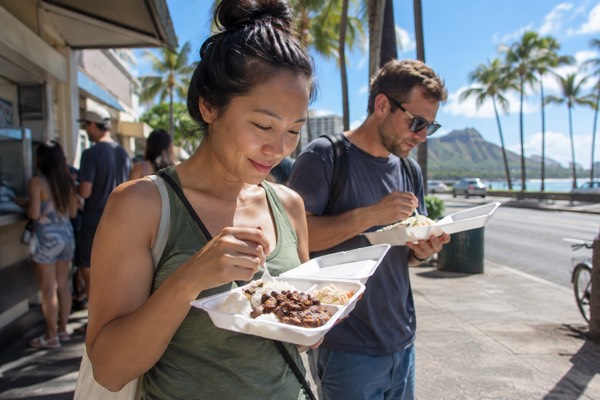
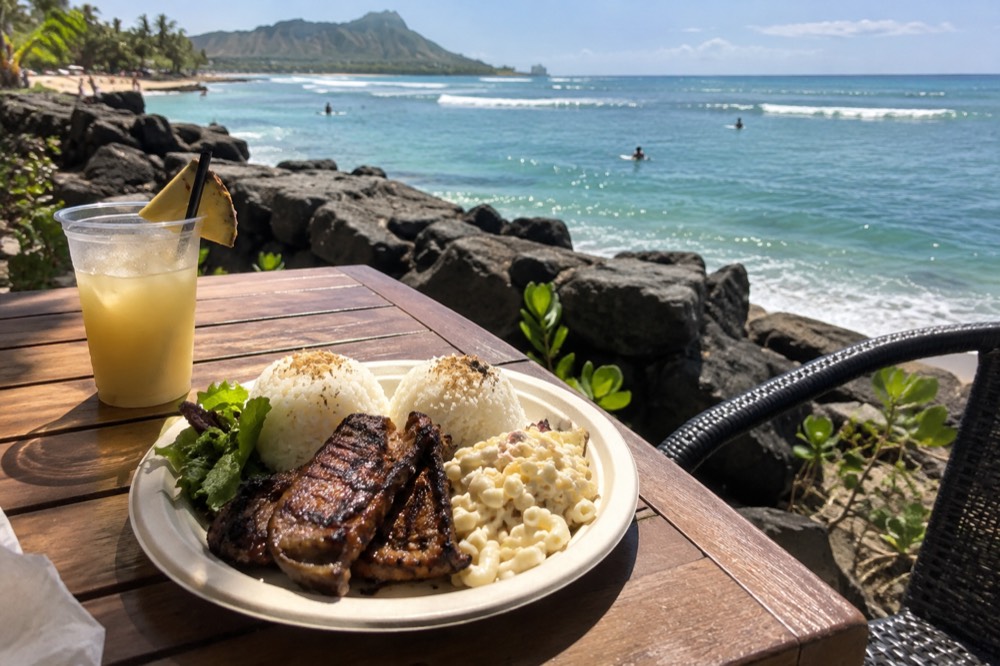
The backbone of local eating is the plate lunch: two scoops of rice, a scoop of macaroni salad and a hot main such as chicken katsu, kalua pork or garlic shrimp. Around it sits a whole local cuisine: poke by the pound, saimin noodles, spam musubi from convenience stores, loco moco breakfasts and shave ice for dessert.
None of it is fancy, most of it is takeout, and all of it reflects the island's plantation-era mixing of many cooking traditions.
The plate lunch is the place to start because it explains everything else. It is filling, it is portable and it grew out of the lunches plantation workers carried into the fields. The macaroni salad is not an afterthought here; locals judge a plate lunch spot partly on its mac salad, and asking for extra is normal. The mains rotate through the same broad family of dishes: katsu, teriyaki, curry, kalua pork, shoyu chicken and whatever the fish counter got that morning.
Poke deserves its own sentence or two. Cubed raw fish seasoned with shoyu, sesame, onion and sometimes limu, it was a local snack and a party food long before it appeared on mainland menus. On Oahu it is still sold by the pound in supermarket seafood cases, which is exactly where locals buy it, and the supermarket version is often the benchmark rather than the restaurant version. Saimim is the local noodle soup, softer and sweeter than ramen, with ham, egg and green onions, and it is the island's comfort food in a bowl.
Then there is the breakfast tier. Loco moco, a scoop of rice topped with a hamburger patty, fried egg and brown gravy, is a diner and plate lunch staple. Spam musubi, a slice of grilled spam on rice wrapped in nori, is the grab-and-go item sold at every convenience store on the island, and locals eat them at a volume that surprises first-time visitors. Shave ice, finely shaved ice with syrup, is the dessert, and the North Shore town of Haleiwa is its historic home base.
| Dish | What it is | Where locals get it |
|---|---|---|
| Plate lunch | Two scoops rice, macaroni salad, a hot main | Neighborhood counter spots, takeout windows |
| Poke | Cubed raw fish, shoyu and sesame seasoned | Supermarket seafood cases, by the pound |
| Saimin | Soft local noodle soup with ham and egg | Noodle shops, diners, late-night spots |
| Loco moco | Rice, hamburger patty, fried egg, gravy | Plate lunch and breakfast spots |
| Spam musubi | Grilled spam on rice, wrapped in nori | Convenience stores, everywhere |
| Shave ice | Finely shaved ice with syrup and toppings | Haleiwa and neighborhood stands |
If you want a structured first taste of this food without doing the research, a guided option exists: the Honolulu food tour that works neighborhoods away from Waikiki, run by Hawaii Free Tours, walks visitors through local eating with a guide doing the ordering. Check availability if that appeals.
Want a guided taste of these neighborhoods? Book a Honolulu food tour here.
Which Oahu Neighborhoods Do Locals Eat In?
Locals eat where they live: the dining rooms and counters of Kaimuki, Kalihi, Chinatown, Waipahu, Kāneʻohe and Haleiwa, not the Waikiki resort corridor. Kaimuki on the edge of Honolulu is the island's best known local dining neighborhood, Kalihi holds the working-class plate lunch and noodle spots, Chinatown has the markets and lunch counters, and the North Shore towns have the food trucks and shrimp trucks.
Kaimuki is the neighborhood locals recommend most often when visitors ask where to eat. It sits on the slopes above Waikiki, a short ride away, and its main drag mixes old diners, plate lunch institutions, bakeries and some of the island's most loved shave ice and dessert stops. It feels like a real neighborhood because it is one, and parking a few streets off the main road and walking is the local habit.
Kalihi, between downtown and the airport, is where the food is least dressed up and most directed at residents. This is working Honolulu: plate lunch windows, Filipino bakeries, noodle shops and markets that open early and close when the lunch rush ends. If you are staying near the airport on your last day, this is a good place to spend it.
Chinatown, adjacent to downtown Honolulu, is the island's oldest food district and still its densest. The markets here sell the produce, fish and specialty goods that cooks across the island use, and the surrounding blocks hold noodle houses, dim sum counters and bars that fill after work. Our Chinatown Honolulu guide covers the district in detail, including its walking-tour options and its night scene.
The North Shore is a different rhythm entirely. In Haleiwa and the country towns along the two-lane highway, the eating is done at food trucks, shave ice stands and the famous shrimp trucks, and the North Shore shrimp trucks guide explains which style of shrimp plate came from which truck family. The honest caveat: these towns are small residential communities carrying heavy visitor traffic, so park legally, skip the peak of midday, and treat the place like the working town it is.
Are Oahu Farmers Markets Where Locals Really Shop?
Yes, weekend farmers markets are among the most genuinely local food spaces on Oahu, and residents shop them for produce, prepared foods and plate lunches sold by the vendors themselves. The KCC Saturday market near Diamond Head is the best known, but neighborhood markets across the island draw far more residents than visitors, and the prepared food stalls are often run by the same families cooking at home.
The market culture here is worth understanding. Vendors sell everything from apple bananas and Kāneʻohe-grown greens to fresh poke, malasadas and full plate lunches, and the crowd on a Saturday morning is overwhelmingly local. The KCC market near the Diamond Head side of Waikiki has become a visitor fixture too, which is fine, but the neighborhood markets in places like Kailua, Mililani and Wahiawā are where the ratio flips back toward residents. Our farmers markets on Oahu guide lists the markets by day and area so you can slot one into an itinerary.
A market is also the cheapest legitimate way to eat local food. A plate from a market vendor costs less than a resort breakfast, the money goes to a small operator, and you can talk to the person who cooked it. Bring a reusable bag, and if you are buying produce to take back to a rental with a kitchen, this is where to do it. Arrive early for the best produce, bring cash for small vendors, and expect lines at the popular food booths.
Is There A Food Tour That Shows You Local Eating?
There is, and for visitors who want local food without a rental car or hours of research, the off-the-beaten-path food tour run by Hawaii Free Tours is the strongest option on the island. It runs about three hours, it works neighborhoods away from Waikiki, and it is built around the plate lunch, market and snack stops locals actually use rather than resort dining. Booking in advance is wise on peak weeks.
A food tour solves a real problem for short-stay visitors. Local food on Oahu is distributed, not concentrated: the good spots are scattered across neighborhoods, many have no web presence at all, and a first-time visitor driving themselves will default back to the strip. A guided walk collapses that research into one afternoon, and a guide can also explain what each dish is and where it came from, which is half the value. Cancellation terms are on the operator's live listing.
The alternative is the self-guided route, which is genuinely viable if you have a car and a little patience. Pick one neighborhood per day, eat one plate lunch, one market snack and one dessert, and let the rest of the day happen around it. Our best food on Oahu guide is the full treatment if you want to plan it yourself.
How Do Locals Eat When They Are Not Eating Out?
A large share of local eating happens at home and at gatherings, not in restaurants: family parties built around kalua pork, chicken long rice and poke, potlucks where everyone brings a dish, and supermarket runs for poke and plate lunch rather than cooking from scratch. This is why supermarket seafood cases and convenience store musubi are such a big part of the food landscape on the island.
The gathering food deserves a word because it explains the restaurant food. Kalua pork, the smoked shredded pork cooked in an imu, an underground oven, anchors nearly every local celebration, alongside chicken long rice, lomi salmon, poi and haupia. A lūʻau, in its original sense, is this kind of feast, and the commercial lūʻau shows visitors a staged version of it. If you attend one, understanding that the real thing is a family event, not a dinner show, changes how you watch.
Supermarkets are the other half of the answer. The seafood cases here are serious, selling poke by the pound in a dozen styles, and the deli sections plate out local mains. Locals grab lunch there between errands, and a visitor can too, for less than the cost of a sit-down meal anywhere near a hotel. For a visitor, the practical takeaway is that the supermarket is a legitimate place to eat lunch on Oahu, and no local will find that strange.
What About Food Trucks And Shrimp Trucks?
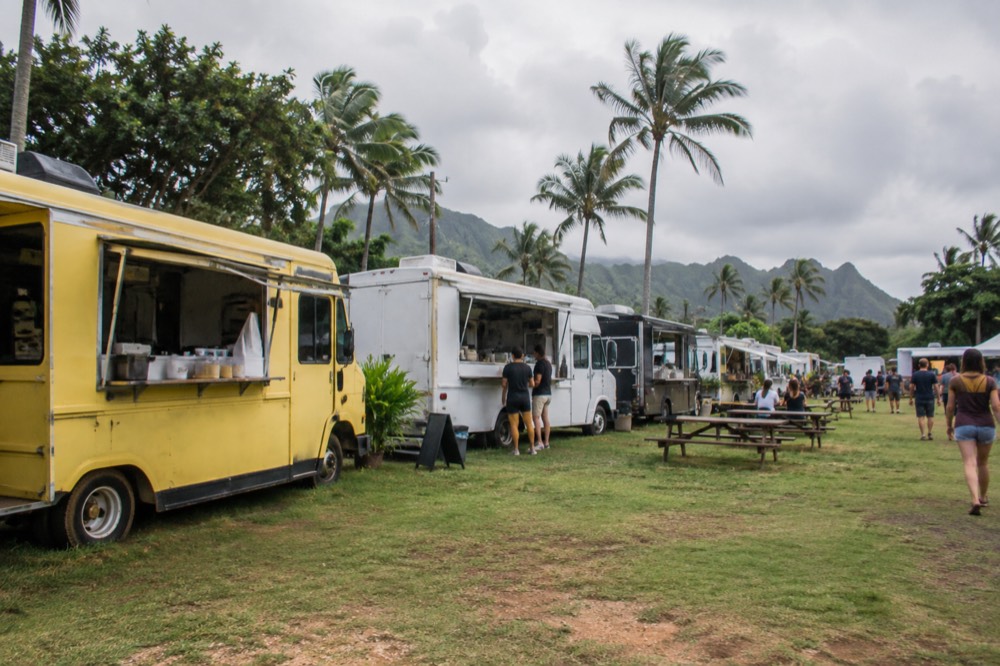
Food trucks are a core part of local eating on Oahu, especially on the North Shore and the windward side, where trucks serve garlic shrimp, plates, shave ice and snacks from lots along the highway. The shrimp trucks are the most famous example, and they are genuinely popular with residents as well as visitors. The etiquette is simple: order at the window and eat at the picnic tables.
The garlic shrimp plate is the North Shore signature, a half pound of shell-on shrimp in butter and garlic over rice, and it came out of the truck families that set up along Kamehameha Highway. It is messy by design; locals peel with their hands and do not apologize for it. The food is meant to be eaten fresh, so treat lunch as a midday commitment rather than a 3 p.m. afterthought.
Beyond shrimp, the trucks on the island cover everything from acai bowls to Korean fusion to fresh fruit, and the good lots cluster where the surf breaks are, because that is where the midday crowd is. Our food trucks on Oahu guide maps the truck scene by region, and it is worth reading before a North Shore day, since trucks move and hours shift with the season. One practical note: the most popular lots run out of food in the afternoon.
How Do You Get To These Neighborhoods Without A Car?
TheBus reaches every food neighborhood on this list, and the fare structure makes eating around the island cheap: an adult cash ride is $3.25 with no transfers, but a HOLO card gives two hours of unlimited transfers for $3.00 and caps at $7.50 per day. Skyline uses the same fares and reaches the airport, though it has no Waikiki station, so a transfer is required from the resort strip.
The practical version of this: load a HOLO card on arrival, tap on and off, and the system stops charging you at $7.50 for the day. Kaimuki, Chinatown and downtown are direct or one-transfer rides from Waikiki, and even the North Shore has bus service along Kamehameha Highway if you are not in a hurry. A car is faster for a North Shore food crawl, but for a Kaimuki and Chinatown day the bus is the better deal, and hotel parking in Waikiki is expensive enough that skipping the rental for a day saves real money.
Should A Circle Island Tour Be Part Of A Food Trip?
A circle island tour is a surprisingly good fit for a food-focused trip, because the full-day loop through Haleiwa and the country towns puts you in the places this article is about without you doing the driving. The most-booked circle island day on our roster runs about six and a half hours and stops in the North Shore towns where the shave ice and shrimp trucks sit.
It does not replace a real meal crawl, but it shows you the geography that produced the food.
A circle island tour is a sightseeing product that happens to pass through the food towns. You will get a stop in Haleiwa and a taste of the North Shore, but the long lunch with three trucks and a shave ice dessert is a different day. A Byodo-inclusive variant runs longer with more stops, and some visitors solve this by taking the loop early in the week to scout, then driving back to whichever stop they liked most. The full picture of the island, including where to eat in every region, lives in our Things to Do in Oahu roundup.
Common Questions About Where Locals Eat In Oahu
Most questions about local eating on Oahu come down to three things: leaving the Waikiki strip, knowing a handful of dish names before you order, and getting the timing right, because the best counters sell out by early afternoon. The food itself is casual and cross-cultural, the neighborhoods are a short bus ride from the resorts, and none of it requires inside knowledge beyond this page.
Where do locals eat in Oahu?
In their own neighborhoods: plate lunch spots and diners in Kaimuki and Kalihi, markets and noodle counters in Chinatown, food and shrimp trucks on the North Shore, and farmers markets on weekends. Waikiki's restaurants serve visitors; locals eat a ten minute drive or bus ride away.
What is a plate lunch?
Two scoops of rice, a scoop of macaroni salad and a hot main such as chicken katsu, kalua pork or garlic shrimp. It is the standard local lunch, sold at counter spots and takeout windows across the island, and it grew out of the field lunches of the plantation era.
Is poke a local food or a tourist food?
Local, and deeply so. It was a local snack and party dish long before it spread to the mainland, and residents still buy it by the pound from supermarket seafood cases. The supermarket version is the everyday benchmark, not the restaurant version.
Do locals really eat spam musubi?
Yes, daily. It is the island's standard grab-and-go item, sold at every convenience store, and locals eat it as a snack, a breakfast or a car lunch without ceremony. Try one before you judge it.
Are the North Shore shrimp trucks worth the drive?
For most visitors, yes: the garlic shrimp plate is one of the island's signature meals, and the truck lots are part of the experience. Go at lunchtime, expect to pay cash-friendly casual prices, eat at the picnic tables, and park legally in the lots rather than the highway shoulder.
Can you eat like a local without a car?
Yes. TheBus reaches Kaimuki, Chinatown, Kalihi and the North Shore, a HOLO card caps at $7.50 per day with transfers included, and Skyline shares the same fares. A guided food tour is the other car-free route, since it handles the logistics for you.
The pattern underneath all of this is simple and worth keeping: on Oahu, the closer the kitchen is to a hotel lobby, the less likely a local is eating there. Ride a few stops down the road, order the plate lunch, buy the supermarket poke, and you will be eating the way the island actually eats. The Oahu Travel Guide has a full best food on Oahu guide if you want the complete restaurant-by-restaurant treatment for your trip.