What Not To Miss On Oahu?
A direct, sourced answer on what not to miss on Oahu, from Pearl Harbor and Diamond Head to Hanauma Bay and the North Shore, with reservation rules and planning facts.
Oʻahu took 5,679,047 visitors by air in 2025, and almost every one of them asked the same question in the rental car or the hotel lift: what should we absolutely not miss? The island is small enough that the honest answer is a short list, not a long one. Five places carry the weight of an Oahu trip, and each has a reservation rule, a closure day or a fee structure that trips up travelers who only read the first page of a search result.
What Not To Miss On Oahu?
If you have limited time on Oahu, the five stops that consistently matter most are Pearl Harbor and the USS Arizona Memorial, Diamond Head State Monument, Hanauma Bay Nature Preserve, the windward coast from Kāneʻohe to Kailua, and the North Shore around Haleʻiwa and Waimea.
Each has a booking rule attached: the Arizona program needs a recreation.gov ticket, Diamond Head requires a non-resident reservation, and Hanauma Bay releases slots only two days ahead at 7 a.m.
That list is deliberately short. Oahu rewards depth over breadth, and the mistake most first visits make is treating the island as a checklist of twenty stops reachable by car in a day. The reservation systems are the real constraint, not the driving. You cannot simply turn up at Diamond Head and pay at the gate, and you cannot decide on Tuesday morning to snorkel Hanauma Bay that afternoon.
Here is the shortlist with the planning note that actually decides your day:
| Stop | What it is | The planning catch |
|---|---|---|
| Pearl Harbor National Memorial | The USS Arizona Memorial program and the free visitor centre | Tickets are released on recreation.gov; a $1 non-refundable management fee applies per ticket |
| Diamond Head (Lēʻahi) | The crater hike above Waikīkī | Reservations required for non-residents, for entry and parking, card only |
| Hanauma Bay | The island's most famous snorkelling preserve | Closed Mondays and Tuesdays; reservations open two days ahead at 7 a.m. HST |
| Windward coast | Kāneʻohe Bay, Kailua and the beaches east of it | No Skyline station and no simple bus ride; most people drive or book a tour |
| North Shore | Haleʻiwa town, Waimea and the winter surf | A working two-lane highway community; park legally and expect weekend crowds |
One thing worth knowing before you build the itinerary: the island's rain does not fall evenly, and it shapes which of these stops works on a given day. The official climate normals put Honolulu airport at 16.41 inches of rain a year, while the Lyon Arboretum in Mānoa, about five miles inland, records 150.96 inches. Every single month in that valley is wetter than the airport's wettest month. A grey morning in Waikīkī can be a downpour at Mānoa Falls and bright on the leeward coast, so it pays to check the sky, not the forecast icon, before committing to a side of the island.
For travelers who want the highlights handled by someone else rather than stitched together from four booking systems, these are the tours that map most closely onto the list above.
If you would rather plan it yourself, the sections below take each stop in turn, with the rules as they stand now rather than as they were before the pandemic changed everything.
Why Is Pearl Harbor The One Stop Almost Everyone Keeps?
Pearl Harbor National Memorial is the one stop on Oahu that carries weight beyond scenery, and the USS Arizona Memorial program is free, reserved through recreation.gov with a $1 non-refundable management fee per ticket. The visitor centre is open daily from 7 a.m. to 5 p.m. and closes only on Thanksgiving, Christmas and New Year's. Bags of any kind are prohibited, and storage near the entrance carries a small fee.
The memorial is a war grave. 1,102 sailors and Marines remain in the ship below the white structure that spans it, and the National Park Service asks for the silence that fact deserves. It is not an attraction in the theme-park sense. What it is, plainly, is the most consequential single place on the island for many visitors, and the reason people book a Honolulu trip months out.
The practical mechanics are simpler than the rumours suggest. The program is free, the park itself is fee-free, and the reservation system exists to manage capacity rather than to charge you. Parking is $7 per day, paid by mobile app or QR code. Reserve as early as the system allows. If the reserved slot does not work out, the visitor centre's museums and grounds are substantial in their own right and need no ticket at all.
Beyond the Arizona, the harbor complex holds the USS Missouri, the USS Bowfin submarine and the Pearl Harbor Aviation Museum, each ticketed separately. A fuller walk-through of the whole complex, the Missouri included, is in our Pearl Harbor and USS Arizona Memorial guide, and the battleship gets its own page in the USS Missouri Battleship Museum guide.
Wondering whether a guided half-day is worth it for the logistics alone?
Do You Need A Reservation For Diamond Head?
Yes, if you are not a Hawaii resident you need a reservation for both entry and parking at Diamond Head State Monument, and there are no on-site sales. The rule has been in force since 12 May 2022. Entry costs $5 per person plus $10 per non-resident vehicle, payment is credit card only, and the monument is open 6 a.m. to 6 p.m. daily with last entry at 4:30 p.m.
Residents enter free with state ID.
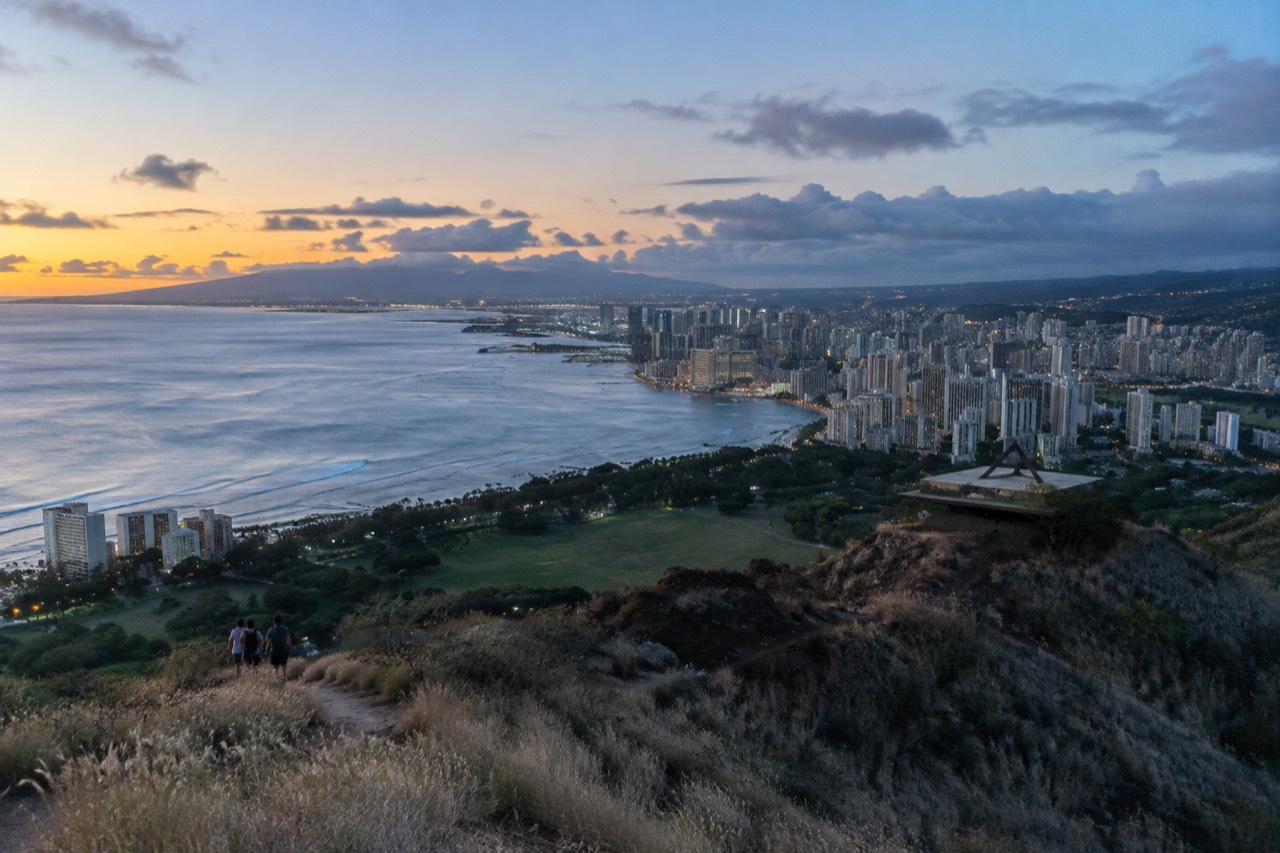
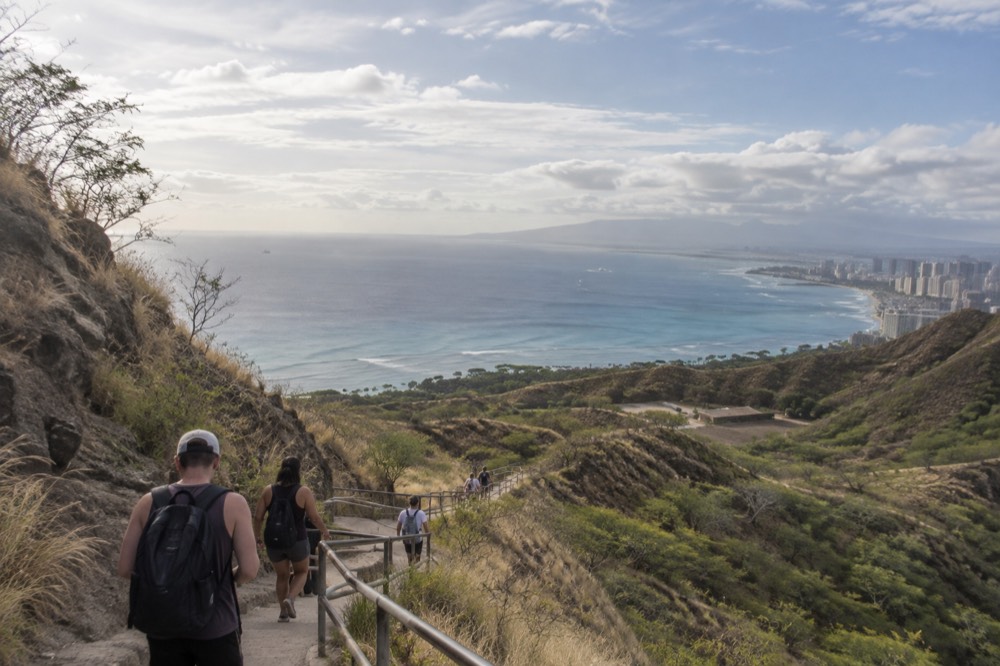
Lēʻahi, the Hawaiian name for the crater most maps signpost as Diamond Head, is the walk that anchors half the postcard photographs of Honolulu. The trail gains roughly 170 metres from the crater floor to the summit, much of it on switchbacks and stairs, and the payoff is the view down the coast toward Waikīkī and, on a clear morning, across to Molokaʻi and Lānaʻi in the distance. It is a state monument inside a dormant volcanic cone, not a casual beach stroll, and the concrete stairs near the top are steep enough that sensible footwear matters more than fitness.
The reservation detail is where a large share of competing content is simply wrong. Guides published before May 2022 describe turning up and paying cash at the gate. That world is gone. Non-residents book in advance, residents walk in free with ID, and the parking fee is separate from the person fee, so a couple arriving in a rental car pays for two people plus the vehicle. Children three and under enter free. Commercial vehicles pay a separate schedule, which is one reason the shuttle-and-ticket tour products exist at all.
Timing matters more than most people expect. The crater has almost no shade, and the trail is far better at 6:30 a.m. than at 11 a.m. in any month. The monument closes on Christmas and New Year's Day, and the gates lock at 6 p.m. If the reservation system shows nothing for your dates, a ticket-included tour is the legal workaround, since operators hold commercial allocations. Our full Diamond Head State Monument guide covers the trail itself in detail.
What Makes Hanauma Bay Worth The Planning?
Hanauma Bay is a marine life conservation area inside a flooded volcanic crater, and it is the best snorkelling most visitors will ever do from a beach, but it is closed on Mondays and Tuesdays and reservations open only two days ahead at 7 a.m. HST. Non-resident entry is $25 plus a 2.35% online service fee, children 12 and under are free, and Hawaii residents enter free with no reservation at all.
The bay works because it has been managed hard. Entry is capped, everyone out by 4 p.m., and the entry window runs 6:45 a.m. to 1:30 p.m. First-time visitors watch a short orientation film about the reef before going down to the sand, which is a small ask given what the place protects. The reef sits in shallow, sheltered water inside the bay's arms, which is why the fish density feels closer to an aquarium than to open coast, and why the preserve can close on two weekdays a week without the reef suffering. Other pages covering the same trip are gathered on Oahu Travel Guide.
The reservation rhythm is the part to internalise. Slots open two days ahead at 7 in the morning, Hawaii time, phrased by the city as: on Monday at 7 a.m. you can begin reserving a time slot for Wednesday. That means you are booking from your hotel, not from home before the flight, and it means the slots for a Saturday go on sale Thursday morning. Set an alarm. Parking is $3 for non-residents, $1 for residents, cash only, and it sells out as a separate constraint.
If you miss the window, the honest alternatives are the island's other snorkelling sites, and our Oahu snorkeling guide and best snorkeling spots on Oahu pages rank them properly. A shuttle-and-entry tour from Waikīkī is the other route, since operators hold their own allocations, but book it before you leave home rather than expecting walk-up availability. The bay's own page in our Hanauma Bay Nature Preserve guide has the full fee table and the orientation details.
What About The North Shore And The Windward Coast?
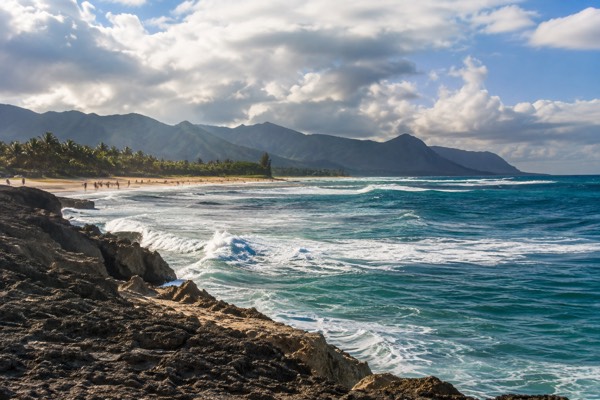
The two halves of Oahu away from Honolulu are the windward coast, green and wet with Kāneʻohe Bay and the Kailua beaches, and the North Shore, a string of working country towns around Haleʻiwa, Waimea and Sunset Beach where the surf runs big in winter and small in summer. Neither is a single stop. Each is a half-day of driving, and the mistake is trying to see both plus Honolulu in one day.
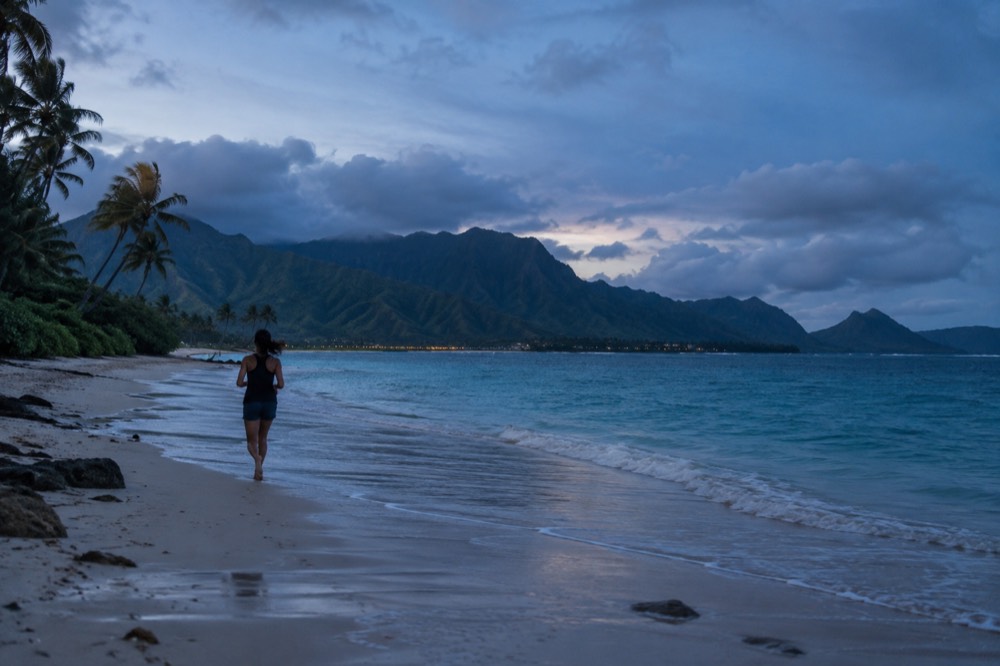
The windward side is the island's postcard: the Koʻolau mountains drop almost vertically into the bay, Mokoliʻi sits offshore near Kualoa, and the beaches from Kailua to Waimānalo run for miles with sand that needs no filter. Kualoa Ranch sits in the middle of it, and the honest note is that the valleys and the famous film sites are private land you can only visit on a paid guided tour; the visitor centre and café are open to anyone. Byodo-In Temple sits against the cliffs nearby and is one of the quietest, most photogenic hours on the island.
The North Shore is a different proposition. Haleʻiwa is a real town with real traffic on a two-lane highway, and the summer-winter inversion is the fact that makes or breaks a visit. Surf runs out of phase by shore around the whole island: north-facing shores peak in winter, south-facing shores peak in summer, and the daily National Weather Service surf forecast publishes all four aspects at once. In September, the south shore can be running larger than the north shore, the exact opposite of the post-Thanksgiving pattern. Winter is when the North Shore earns its reputation, and it is also when you should not swim at spots that are calm in July.
Two cultural notes that cost nothing to honour. Laniakea Beach, known for the honu that graze near shore, is a residential stretch of highway with an ongoing road project changing the parking arrangement, so check the current situation before you go, give the turtles their recommended 10 feet of space, and never stop in a travel lane. And the heiau above Waimea, Puʻu o Mahuka, is a temple, not a ruin for climbing; stay on the marked paths. Our North Shore Oahu guide and Haleiwa town guide carry the detail for both areas, and the best beaches on Oahu overview ranks the swimming options by season.
One closure to know about as of this writing: the DLNR notice dated 9 September 2026 keeps Nuʻuanu Pali State Wayside and Kaʻena Point State Park's Mokuleʻia and Keawaʻula sections closed for storm repairs after Hurricane Lowell. Do not build an itinerary around either until you have checked the DLNR notices page, because this is a moving situation.
Can You See Oahu's Highlights In A Single Day?
Yes, but only as a loop, and only if you accept that a one-day pass over Oahu means choosing between the North Shore and the windward coast rather than doing both properly. A circle island day covers the south shore lookouts, the windward coast, Kualoa or Byodo-In, and Haleʻiwa before returning over the middle of the island. It is the most-booked tour format on the island for exactly this reason.
The arithmetic is blunt. The island is small, but every side of it is a different climate, and the reservation stops, Diamond Head and Hanauma Bay, cannot be added to a loop without wrecking the schedule. The honest one-day plan is the loop: out along the windward coast in the morning when the light is on the mountains, Kualoa or Byodo-In around midday, the North Shore and Haleʻiwa in the afternoon, and back to town before the evening rush. Save Diamond Head and Hanauma Bay for separate half-days, each with its own early start.
If you would rather not drive it yourself, the two strongest guided versions of the loop take different angles on the same road.
The full-day grand circle tour is the most-booked format for a reason: it compresses the loop into one guided day with Haleʻiwa town built in, and it is the version to pick if you want the geography explained rather than just driven. Travelers who want the quieter stops, Byodo-In Temple in particular, tend to prefer the hidden-gems variant, which trades some of the big-name lookouts for the temple and the less obvious windward stops.
For a longer trip, the pass products change the economics considerably, especially for families who plan to hit several paid sites in a week.
If your list of paid sites is running long, book an attraction pass here.
Getting around without a car is possible but changes the plan. TheBus and Skyline share one fare structure: $3.25 cash for a single bus ride with no transfers, a $7.50 daily cap on a HOLO card, and a $90 monthly cap. Skyline now reaches the airport and serves the Pearl Harbor visitor centre via the Hālawa Aloha Stadium station, but there is no Waikīkī station, so a transfer is always part of the trip. The TheBus Oahu guide and do you need a car on Oahu pages cover the trade-offs, and the 1 day Oahu itinerary turns all of this into an hour-by-hour plan.
Common Questions About What Not To Miss On Oahu
Most questions about what not to miss on Oahu come down to three things: reservations, closure days and the island's split weather. The Arizona program needs a recreation.gov ticket, Diamond Head needs a non-resident reservation, Hanauma Bay needs a 7 a.m. booking two days out and shuts Mondays and Tuesdays, and the rain falls nine times heavier in the valleys than at the airport. Get those four mechanics right and the rest is easy.
What not to miss on Oahu?
Pearl Harbor and the USS Arizona Memorial, Diamond Head, Hanauma Bay, the windward coast from Kāneʻohe to Kailua, and the North Shore around Haleʻiwa and Waimea. If you have only one day, do the circle island loop and save Diamond Head and Hanauma Bay for their own half-days, since both require reservations you cannot make at the gate.
Is the USS Arizona Memorial free?
Yes. The park is fee-free and the memorial program itself is free; the only charge is a $1 non-refundable management fee per ticket when you reserve on recreation.gov. Parking is $7 per day. Bags of every kind are prohibited inside, and storage near the entrance costs a small fee that varies, so check before you go rather than assuming a number.
Can you just show up at Diamond Head?
Not as a non-resident. Since 12 May 2022, out-of-state visitors need an advance reservation for entry and, if driving, for parking, with no on-site sales. It is $5 per person plus $10 per vehicle, credit card only. Hawaii residents enter free with ID. If reservations are gone for your date, a ticket-included tour is the remaining legal route in.
Why is Hanauma Bay so hard to book?
Because slots open only two days ahead, at 7:00 a.m. HST, and the bay closes on Mondays and Tuesdays. A Saturday visit goes on sale Thursday morning. Non-resident entry is $25 plus a 2.35% service fee, children 12 and under are free, and residents enter free without a reservation. Book the moment slots open or use a tour operator that holds its own allocation.
When can you see whales and big surf on Oahu?
Humpback whales are in Hawaiian waters from November through April, per the national marine sanctuary, and the legal approach distance is 100 yards. Big north shore surf peaks in winter, while south-facing shores peak in summer; the two run out of phase, so check the National Weather Service surf forecast for all four shore aspects rather than assuming one number describes the island.
How many days do you actually need?
Five comfortable days cover the list without rushing: one for Pearl Harbor and Honolulu, one for Diamond Head and the south shore, one for Hanauma Bay plus the east side, one for the North Shore, and one spare day for weather. Three days works if you book the circle island tour and accept skipping a couple of stops. Our how many days do you need in Oahu guide runs the full comparison.
Whatever you keep and whatever you cut, book the reservation stops before you book anything else. The beaches will still be there on a rainy Tuesday; the 7 a.m. Hanauma Bay release window will not wait for a slow morning.