Oahu Events Calendar: What Is On, Week By Week And Season By Season
Oahu does not have one events calendar, it has several layered on top of each other: weekly fixtures that run all year, seasonal windows that open and close with the ocean, and the quiet closure days that catch out visitors who plan around them.
Short answer
The Oahu events calendar is built from weekly fixtures, seasonal windows and closure days. The Aloha Stadium Swap Meet runs Wednesday, Saturday and Sunday, Waikiki puts on a Friday night fireworks sail, humpback whales pass from November through April, and Hanauma Bay closes Mondays and Tuesdays while Waimea Valley closes Mondays.
Oahu took 5,679,047 visitors by air in 2025, preliminary DBEDT figures show, down roughly 2% on the 5,794,854 recorded in 2024. That is a lot of people trying to work out what is on during their week, and the honest answer is that there is no single master calendar. What exists instead is a stack of schedules: things that happen every week regardless of season, things that only run inside a seasonal window, and a set of closure days that quietly decide which parts of your itinerary are possible on a given date.
For the full list of places and activities, start with things to do in Oahu, then come back here to slot them into the right days. If you are still deciding how long to stay, our how many days do you need in Oahu planner pairs well with this calendar, because the number of days you have determines how many weekly fixtures you can realistically catch.
Sorting out where to stay for the week. Book an Oahu hotel here.
What Is The Oahu Events Calendar, Really?
The Oahu events calendar is not one published schedule but three layers stacked together: weekly fixtures such as the Aloha Stadium Swap Meet on Wednesday, Saturday and Sunday, seasonal windows such as humpback whale season from November through April, and fixed closure days such as Hanauma Bay shutting Mondays and Tuesdays and Waimea Valley shutting Mondays. Planning on Oahu means checking all three layers against your dates, because the closure layer is the one that breaks itineraries.
Most visitors plan around the first two layers and forget the third. That is understandable, because a closure day is not an event in any normal sense, but on an island where the headline nature preserve is shut two days out of seven, it functions exactly like one. If your trip runs Monday to Friday and you had pencilled in Hanauma Bay for Tuesday, the calendar has already decided against you.
The second thing worth understanding is that Oahu's seasons are driven by the ocean, not by the weather in any mainland sense. Air temperatures barely move across the year, and harbour water readings run from a mean of 78.0°F in February to 82.7°F in August. What changes dramatically is what the ocean is doing: which shore is holding surf, whether whales are present, and whether the trade winds are blowing.
Which Annual And Seasonal Events Anchor The Oahu Year?
The biggest recurring draws are tied to the ocean's calendar rather than a promoter's: humpback whales pass through Hawaii from November through April, per the Hawaiian Islands Humpback Whale National Marine Sanctuary, and the island's surf runs out of phase by shore, with south-facing shores peaking in summer and north-facing shores peaking in winter. On land, the Polynesian Cultural Center runs its villages and evening show on the days it is open, closing Sundays and Wednesdays.
The whale window is the single most useful seasonal fact on the island. The sanctuary states it plainly: from November through April, visitors can see whales from shore and at sea. Outside that window, a whale-watching tour is not a sensible buy, and inside it, you can sometimes watch from the beach for free. Our Oahu whale season guide covers the legal approach distance, which is 100 yards and is law, not advice.
The surf calendar matters even to non-surfers, because it decides which beaches are safe for swimming. The National Weather Service surf forecast publishes Oahu by shore aspect, and on a September day in 2026 the south shore was running 4 to 6 feet while the north shore sat at 1 to 3 feet, the exact inversion of the winter pattern. If you are travelling in winter and your hotel faces north, the water in front of you may be closed-out surf while the south shore is calm.
Cultural events run all year, with the lūʻau as the anchor. These are commercial shows rather than festivals, running nightly or near-nightly, so they slot into any week. Our best luau on Oahu comparison breaks down the main options, including a lūʻau inside Waimea Valley, which pairs the show with a walk through the valley if you time it right.
A circle-island tour is the standard way to see the seasonal highlights in a single booked day, which matters if your dates only allow one excursion outside Waikiki.
What Happens Every Week On Oahu?
The reliable weekly fixtures are the Aloha Stadium Swap Meet, which runs Wednesday, Saturday and Sunday according to the City's own Skyline station guide, and the Friday night fireworks sail out of Waikiki, which several operators run as a scheduled product each Friday evening. Add to those the nightly lūʻau shows and the daily reservation slots at Hanauma Bay and Diamond Head, and a visitor can fill a week without ever chasing a one-off event.
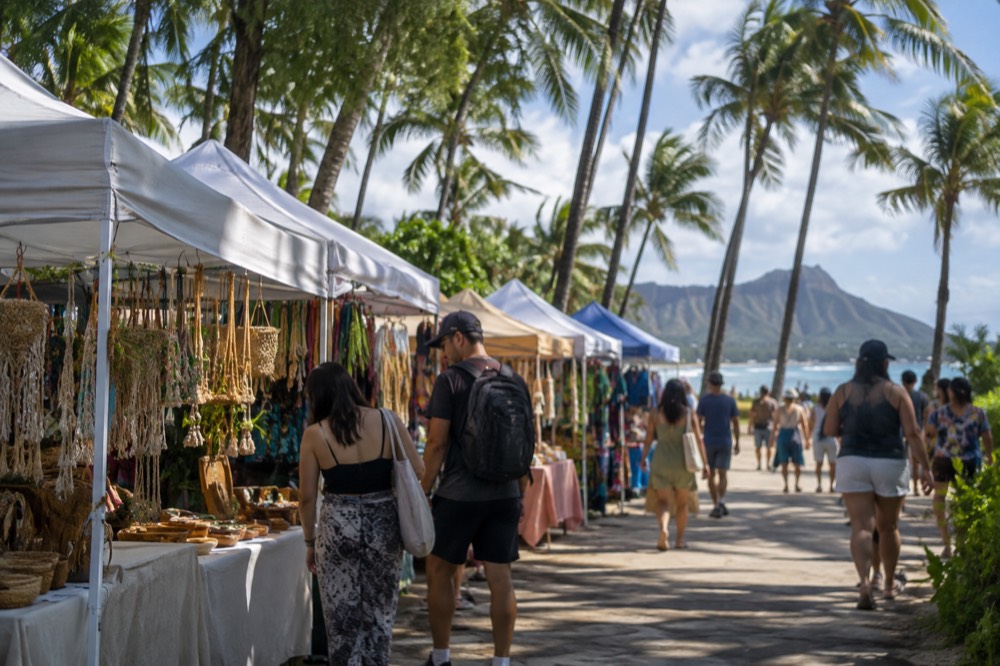
The swap meet is the most underrated of these. The City and County's Skyline page names Hālawa Aloha Stadium Station as the stop for both the Pearl Harbor memorial and the swap meet, which means you can reach it by rail: Skyline shares fares with TheBus, at $3.25 for an adult cash single ride on the bus, a $7.50 daily cap on a HOLO card, and $90 for a monthly pass. That fare structure, verified on the City's transit fares page, makes the swap meet one of the cheapest half-days on the island. Our farmers markets on Oahu guide covers the other weekly market days if you miss the stadium.
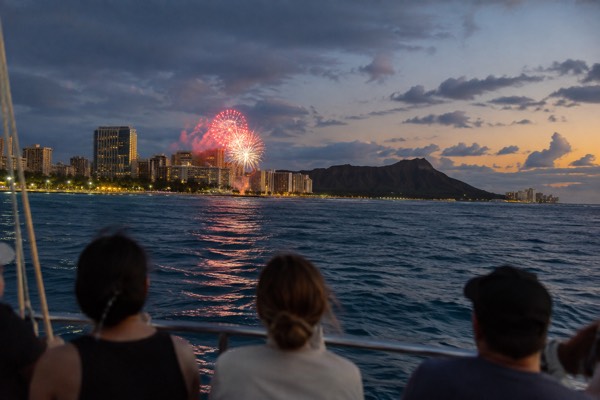
The Friday fireworks sail is a genuine calendar fixture rather than a marketing invention: the product exists as a recurring Friday departure, and it pairs the fireworks with a sunset leg. Sunset is the constraint to plan around, because Oahu sits in the tropics and the day length only swings by about 2 hours 35 minutes across the year. The US Naval Observatory data puts the latest sunset of the year around 7:17 p.m. in early July and a 5:55 p.m. sunset at the December solstice, so a "sunset sail" in winter is an afternoon activity, not an evening one.
Lūʻau shows run on their own nightly schedules, but the honest planning note is that the biggest ones book out first, so treat the day you book as part of your calendar rather than the day you attend.
Which Closure Days Shape An Oahu Itinerary?
Hanauma Bay Nature Preserve closes Mondays and Tuesdays plus Christmas and New Year's Day, Waimea Valley closes Mondays, and the Polynesian Cultural Center closes Sundays and Wednesdays, per the official pages for each. Diamond Head State Monument closes only Christmas and New Year's but requires a reservation from non-residents for both entry and parking, a rule in force since 12 May 2022. These closure days, not prices, are Oahu's real planning problem.
This is the layer most itineraries get wrong. A visitor who arrives Saturday and leaves Thursday has exactly two Hanauma Bay days available if the reservation system cooperates, and the system opens just two days ahead at 7:00 a.m. Hawaii time, phrased by the City as: Monday at 7 a.m. HST you can begin reserving a time slot for Wednesday. That is a short window, and it is why tour products that bundle transport exist at all. The rest of the planning pages sit on Oahu Travel Guide.
| Site | Closed days | Booking rule | Source status |
|---|---|---|---|
| Hanauma Bay Nature Preserve | Mondays, Tuesdays, Dec 25, Jan 1 | Reservations open 2 days ahead at 7:00 a.m. HST | Verified, City & County page |
| Diamond Head State Monument (Lēʻahi) | Christmas, New Year's | Reservation required for non-residents, entry and parking, since 12 May 2022 | Verified, DLNR page |
| Waimea Valley | Mondays | Booking link present, not stated as required | Verified, admission page |
| Polynesian Cultural Center | Sundays and Wednesdays | Advance booking recommended for show seating | Operator FAQ, unconfirmed in this pass |
| Pearl Harbor National Memorial | Thanksgiving, Christmas, New Year's | USS Arizona program reserved on recreation.gov, free with a $1 management fee | Verified, NPS and recreation.gov |
One more live item belongs on any current calendar: as of the DLNR notice dated 9 September 2026, Nuʻuanu Pali State Wayside and Kaʻena Point State Park's Mokuleʻia and Keawaʻula sections remain closed for hurricane repairs, along with Wahiawā Freshwater State Recreation Area. If a printed itinerary from before September 2026 includes the Pali Lookout, re-check it before you drive there.
What Is On In Each Oahu Season?
Winter, roughly December through March, brings humpback whales, big north-shore surf and the year's earliest sunsets; summer, June through September, flips the surf to the south shore, warms the harbour water to its August mean of 82.7°F and delivers the latest sunsets around 7:17 p.m. Spring and autumn sit between the two, with fewer visitors in February, which recorded 436,756 arrivals in 2026 against January's 527,241.
The seasonal table below is the practical version of that paragraph. Note the water temperatures are harbour readings from NOAA's Honolulu station, which run warm against open ocean off Waikīkī, so treat them as a floor rather than a precise sea figure. If you want the month-by-month detail behind it, our Oahu weather by month guide carries the full breakdown.
| Season | Ocean | Sky | Crowd note |
|---|---|---|---|
| Dec to Feb | Whales present; north and west shores hold winter surf | Sunsets from about 5:55 p.m.; latest sunrise about 7:11 a.m. in mid-January | January is the busiest month in the 2026 data so far |
| Mar to May | Whales through April; surf easing on all shores | Day length growing fast toward the June plateau | Spring break weeks lift arrivals |
| Jun to Aug | South-shore surf peaks; harbour water at its warmest, 82.7°F mean in August | Latest sunset about 7:17 p.m. in early July | Peak family travel season |
| Sep to Nov | South swell still active in September; whales return from November | Sunset creeping earlier through autumn | Quietest shoulder weeks of the year |
The crowd data deserves a sentence of its own. Oahu's visitor numbers in 2026 ran 527,241 in January, 436,756 in February and 499,197 in July, preliminary DBEDT figures show, and of that July total, 387,063 saw only Oahu. Most visitors do not island-hop, which means the calendar pressure is concentrated: the same beaches and the same reservation slots are being fought over by essentially the entire visitor population of the island.
How Do Reservation Windows Fit Into The Events Calendar?
The two reservation systems that matter are Hanauma Bay, which releases slots two days ahead at 7:00 a.m. HST and charges $25 per non-resident adult with children 12 and under free, and Diamond Head, which allows non-resident bookings up to 30 days ahead, charges $5 per person plus $10 per vehicle, and takes credit card only. Hawaii residents enter both free with ID, and residents do not need a Hanauma Bay reservation at all.
These windows behave like events because they have a start time and they can end in disappointment. The Hanauma Bay release is the tighter of the two: two days ahead means you are booking from your hotel room, not from home, and you need to be awake at 7 a.m. Hawaii time, which is 10 a.m. Pacific, 1 p.m. Eastern. Children 12 and under enter free, and the parking fee at the bay is $3 for non-residents, cash only.
Diamond Head is calmer. The 30-day window means you can book before you fly, entry is $5 per non-resident person with children 3 and under free, parking inside the crater is $10 per non-resident vehicle, and the whole thing is card only. The monument is open 6 a.m. to 6 p.m. daily with last entry at 4:30 p.m. If you would rather not manage the reservation yourself, a tour that bundles the ticket and shuttle exists for exactly this reason: Diamond Head with the ticket sorted covers it.
Where Do You Find Out What Is On During Your Dates?
The honest sources are the official reservation pages for the sites you care about, the National Weather Service surf forecast for ocean conditions, the sanctuary page for whales, and the operators' live listings for anything ticketed, because one-off festival dates change every year and no static page can carry them safely. For anything commercial, the operator's live listing is the only place with current dates, prices and availability.
Start with the layers you can verify before you travel. The NWS Honolulu surf forecast publishes Oahu by shore aspect daily, which tells you which beaches will be swimmer-friendly on your dates. The sanctuary page tells you whether whales are in season. The City's Hanauma Bay page and the DLNR's Diamond Head page hold the closure and reservation rules quoted above. Those five sources cover more of the practical calendar than any events listing does.
For the commercial layer, book by product rather than by date. A circle island tour via Byodo-In runs on a published schedule you can check against your week, and an all-inclusive attractions pass turns the question of what is open into a question of what is on the pass, which is a list you can read before you buy.
The pass option suits visitors staying a week or more who want to sample widely; the single booked day suits everyone else.
One caution belongs here: be sceptical of any third-party "Oahu events" page that prints specific festival dates without a year or a source. Event schedules shift, and a page that lists a June festival without saying which June is not a calendar, it is a copy of an older calendar.
Common Questions About The Oahu Events Calendar
Most questions about the Oahu events calendar come down to three things: which day of the week each site is closed, which season each activity runs in, and how far ahead each reservation system opens. Get those three right, Monday closures, the November-to-April whale window, and the two-day Hanauma Bay release at 7 a.m. HST, and the rest of the week plans itself around them.
What is on in Oahu every week?
The Aloha Stadium Swap Meet runs Wednesday, Saturday and Sunday, reachable by Skyline to Hālawa Aloha Stadium Station, and Waikiki has a Friday night fireworks sail. Lūʻau shows run nightly or near-nightly, and Hanauma Bay and Diamond Head run daily reservation slots apart from their closure days.
What is the best month for events on Oahu?
There is no single best month. Winter brings whales and north-shore surf, summer brings south-shore surf and the warmest harbour water, a mean of 82.7°F in August. February is the quietest month in the 2026 visitor data, at 436,756 arrivals, if fewer crowds matter more to you than any particular event.
What is closed on Mondays on Oahu?
Hanauma Bay closes Mondays and Tuesdays, and Waimea Valley closes Mondays. The Polynesian Cultural Center closes Sundays and Wednesdays. Plan Mondays for beaches, hikes and city sights that stay open, and save the closed sites for other days.
When can you see whales on Oahu?
Humpback whales pass through Hawaiian waters from November through April, per the Hawaiian Islands Humpback Whale National Marine Sanctuary, and you can sometimes see them from shore. The legal approach distance for boats is 100 yards, and that figure is law, not a guideline.
How far ahead should you book Oahu activities?
Hanauma Bay reservations open only two days ahead at 7:00 a.m. Hawaii time, so that one is booked from the island. Diamond Head non-resident reservations can be made up to 30 days ahead, and commercial tours and lūʻau shows are best booked as soon as your dates are fixed, since the biggest ones fill first.
Are there any current closures to know about?
Yes. As of the DLNR notice dated 9 September 2026, Nuʻuanu Pali State Wayside, Kaʻena Point State Park's Mokuleʻia and Keawaʻula sections, and Wahiawā Freshwater State Recreation Area are closed until further notice for hurricane repairs. Re-check any itinerary that includes the Pali Lookout before you travel.
Build your week backwards from the closure days first, then layer the weekly fixtures and the seasonal windows on top, and you will have a calendar that survives contact with the island. For the wider list of what to slot into the open days, things to do in Oahu is the place to start.