Who Owns Most Of Oahu?
A direct, sourced answer to who owns most of Oahu: how the island's land splits between state, federal, county and private hands, and what that means for your visit.
Who Owns Most Of Oahu?
No single person, company or government body owns most of Oahu. The island's land is divided among the State of Hawaii, the federal government, the City and County of Honolulu, and a small number of large private estates, ranches and trusts, with the rest held by homeowners, churches and resorts. For a visitor, the practical consequence is that the rules change sharply from one parcel to the next.
That is the honest short answer, and it is more useful than it sounds. Almost every question people actually ask about Oahu, why Kualoa's valleys cost money to enter, why Hanauma Bay needs a reservation booked two days ahead, why the USS Arizona Memorial is free but the parking is not, traces back to who holds the deed under your feet.
This article walks through the categories in plain terms, using only what can be checked against official sources, and then translates the land map into planning decisions. The state's own parks agency, the National Park Service and the City and County of Honolulu all publish their rules, and the private operators publish theirs, so the picture below is assembled from those pages rather than from the folklore that circulates in travel forums.
Who Owns Most Of Oahu?
No single owner holds most of Oahu. The island's land splits between state holdings managed by the Department of Land and Natural Resources, federal land including military installations and the Pearl Harbor National Memorial, city parks and beach parks under the City and County of Honolulu, and a small set of large private estates and ranches. Individual homeowners hold the remainder in small pieces, and no category forms a majority anyone can point to on a map.
The reason the question feels slippery is that "most" invites a single name, and Oahu does not work that way. What the island has instead is concentration: a modest number of very large holders, government and private, with the public's day-to-day experience spread across all of them in a single drive.
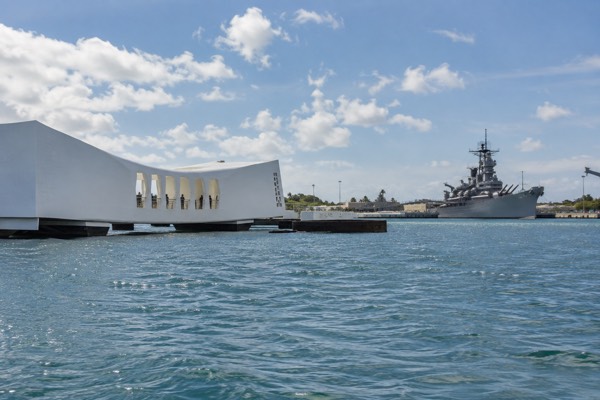
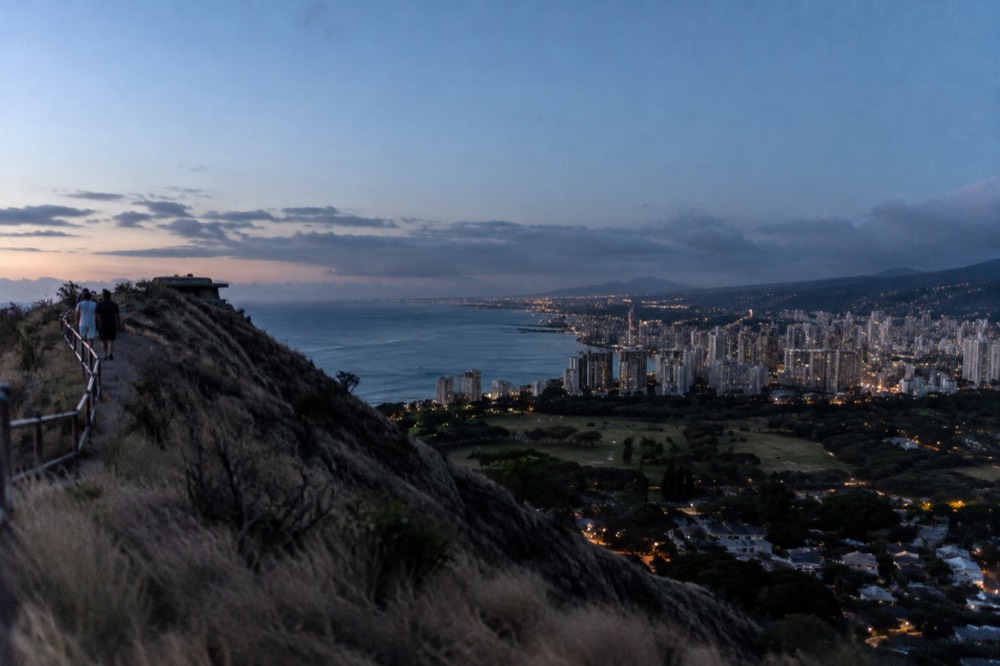
Consider what one morning on the island touches. A visitor who starts in Waikīkī is on city land at Kapiʻolani Park and Waikīkī Beach. Drive east to Hanauma Bay and you are entering a City and County nature preserve with its own fee, its own reservation system and its own closed days. Head up to Diamond Head, Lēʻahi, and the land flips to the state: a State Monument run by DLNR, with card-only payment and a reservation requirement for non-residents that has been in force since May 2022. Cross to the windward side and the valleys around Kualoa are private ranch property, closed to anyone not on a paid tour. End at Pearl Harbor and you are on federal ground, at a National Park Service site where entry is free.
That single loop crosses four different ownership regimes before lunch, and each one has its own hours, fees and booking rules. This is why so much generic Oahu advice fails: it treats the island as one place with one set of rules, when the land map is actually a patchwork.
It also explains why the honest answer avoids a tidy percentage. The research behind this site, drawn from official pages rather than secondhand summaries, supports the categories and the specific rules below, but it does not support a precise acreage league table, and publishing one would mean inventing numbers. What can be stated firmly is the shape of the answer: government land in three tiers, a few very large private holders, and everyone else in fragments.
For a reader planning a trip, the practical version of the question is not "who owns most of Oahu" but "whose rules apply where", and that has a clean answer, which the rest of this article gives. If you want to see the boundaries for yourself rather than read about them, a guided loop is the easiest way, and the most-booked circle island day covers all of them in one outing.
How Much Of Oahu Does The Government Control?
Government land on Oahu falls into three broad tiers: state parks, monuments and forest reserves managed by the Department of Land and Natural Resources; federal installations, including military bases and the Pearl Harbor National Memorial; and city parks, beach parks and preserves run by the City and County of Honolulu. Each tier sets its own hours, fees and reservation rules independently, so a rule you learn at one government site rarely transfers to the next one.
Start with the state tier, because it holds the places visitors most often picture. Diamond Head State Monument is DLNR land: $5 per non-resident person plus $10 per vehicle, credit card only, reservations mandatory for out-of-state visitors for both entry and parking, bookable up to 30 days ahead, with Hawaii residents entering free on presentation of ID. Nuʻuanu Pali State Wayside is also DLNR land, and it is currently closed: the department's notices, as of 9 September 2026, list the Pali Lookout, Kaʻena Point State Park's Mokuleʻia and Keawaʻula sections, and Wahiawā Freshwater State Recreation Area as closed until further notice following Hurricane Lowell. Anyone building an itinerary around those stops should check the DLNR notices immediately before travelling, because this list is moving.
The city tier is easy to underestimate because it includes the two places nearly every visitor touches. Waikīkī Beach and Kapiʻolani Park are City and County land, and so is Hanauma Bay Nature Preserve, which the city runs with a distinctive set of rules: closed Mondays and Tuesdays, entry allowed from 6:45 a.m. to 1:30 p.m., everyone out by 4 p.m., $25 for non-residents with children 12 and under free, and reservations opening two days ahead at 7:00 a.m. HST. Hawaii residents enter free with a local ID and do not need a reservation at all. The parking lot charges $1 for residents and $3 for everyone else, cash only.
The federal tier includes the Pearl Harbor National Memorial, where the National Park Service is the manager. The park is fee-free, and the USS Arizona Memorial program itself is free, with a $1 non-refundable management fee per ticket when reserving through the federal reservation system. Parking is $7 per day. The memorial is a war grave, and the conduct rules that follow from that, including a full prohibition on bags of any kind, are posted by the Park Service and worth reading before you go, because storage near the entrance carries a small fee whose amount the Park Service does not publish.
| Tier | Manager | Places you will actually visit | What that means for you |
|---|---|---|---|
| State | Department of Land and Natural Resources | Diamond Head (Lēʻahi), Nuʻuanu Pali State Wayside, Kaʻena Point State Park, Mānoa Falls trail access | Non-resident reservations and fees at some sites; card only at Diamond Head; check DLNR notices for closures |
| Federal | National Park Service and the Department of Defense | Pearl Harbor National Memorial, active military installations | Free park entry, $1 per-ticket reservation fee, $7 daily parking; no bags allowed at the memorial |
| City and County | Honolulu Department of Parks and Recreation | Waikīkī Beach, Kapiʻolani Park, Hanauma Bay Nature Preserve, Ala Moana Beach Park | Hanauma Bay needs a reservation two days ahead; beaches and most neighbourhood parks are free |
| Private | Estates, ranches and operators | Kualoa Ranch valleys, Polynesian Cultural Center grounds, resort frontages | Access generally means a ticket or a tour; hours and prices are set by the operator |
The table is the planning tool. Notice that none of the three government tiers recognises the others' passes, rules or reservation windows, which is why a single morning can involve a state reservation, a city reservation and a federal ticket, all booked separately.
Why Is So Much Of Oahu Private Land?
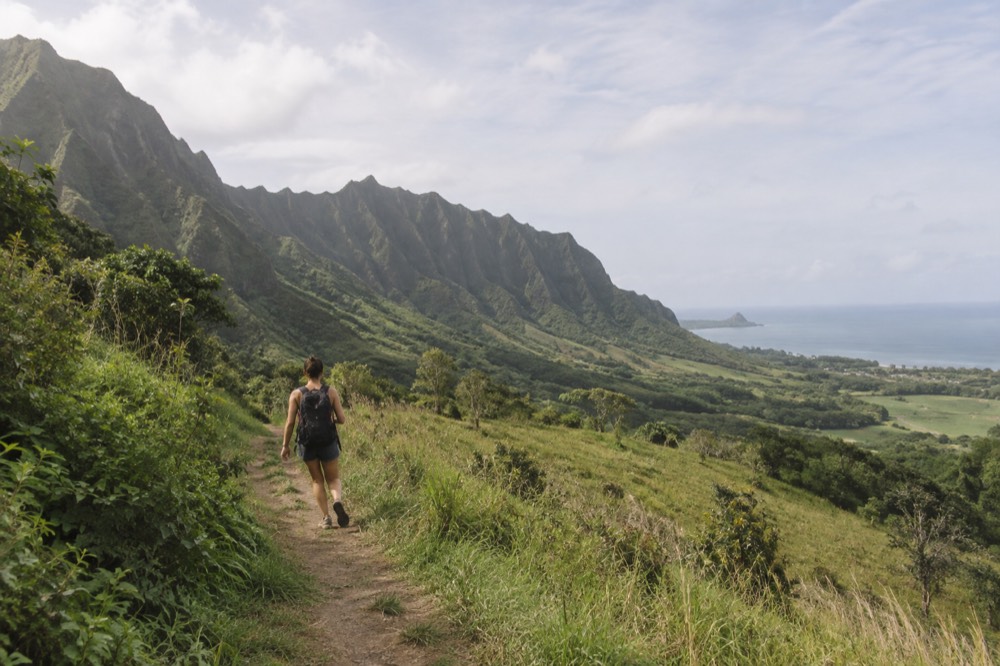
A large share of Oahu's windward and north shore land sits in private hands, and Kualoa Ranch is the clearest example: its valleys and movie locations cannot be visited except on a paid guided tour, because the land is private property. The ranch's own frequently asked questions page states this plainly, noting that only the visitor centre, shop and café are open to people not on a tour.
This is the part of the land question that most affects itineraries, and it is where a lot of online advice goes wrong. Content that promises "secret waterfall" routes or "free" access to Kualoa's valleys is describing trespass, not a loophole. The ranch is private land, it operates paid tours as the only legitimate way in, and the honest advice is to book one. The Kualoa Ranch guide on this site covers what each tour option actually gets you.
The Polynesian Cultural Center is the other big private-land example visitors encounter. Its grounds in Lāʻie are private property operated by the center itself, admission is tiered, and the center closes on Sundays and Wednesdays, so the "attraction" framing only works if you also accept that someone owns the ground and sets the terms. The same is true of resort frontages along Ko Olina and the windward coast: the beaches below the high-water line are public, but the parking, the access paths and the lagoons are managed by whoever holds the adjacent parcel.
Why does so much land sit in big private blocks? The short, honest answer is history: land tenure on Oahu was reshaped repeatedly, from the kingdom-era land divisions through nineteenth-century changes in title and into twentieth-century consolidation by estates, ranches and institutions, and the research pack behind this site does not carry verified dates for those transitions, so this article will not dress them up. What can be verified is the present: the parcels are large, the owners are few, and the access rules are the owners' rules.
For visitors, three practical consequences follow. First, private land means paid access, and the price is set by the operator, not by any park agency. Second, private land means enforced hours, because the owner's liability and operations drive the schedule. Third, private land is where tours genuinely earn their keep: a guided product is often the only legitimate way to see a place at all, which is not a marketing line but a property boundary.
If you want to cover the island's private highlights without stitching together half a dozen bookings, a circle island tour bundles the public lookouts and the private stops into one itinerary, and the circle island route via Byodo-In is the most-booked way to do exactly that. Check availability
Which Oahu Attractions Sit On Whose Land?
Every major Oahu stop can be sorted by landholder in one line: Hanauma Bay is City and County land, Diamond Head is state land, Pearl Harbor is federal land, and Kualoa Ranch and the Polynesian Cultural Center are private land. Knowing which tier you are standing on tells you the fee, the reservation window, the closed days and the conduct rules before you arrive, because each tier publishes its own and they do not match.
The table below is the quick reference. Every figure in it comes from the managing body's own page, checked for this site, and the closed days are as important as the prices: a Monday visit that pairs Hanauma Bay with Waimea Valley fails twice over, because the bay is closed Mondays and Tuesdays and the valley is closed Mondays. The wider set of guides lives on Oahu Travel Guide.
| Place | Land and manager | Non-resident cost | Reservation or booking | Closed days |
|---|---|---|---|---|
| Hanauma Bay Nature Preserve | City and County of Honolulu | $25 plus a 2.35% online service fee; children 12 and under free | Opens two days ahead at 7:00 a.m. HST; residents free, no reservation | Mondays and Tuesdays, Dec 25, Jan 1 |
| Diamond Head State Monument (Lēʻahi) | State, DLNR | $5 per person plus $10 per vehicle, card only | Required for non-residents, up to 30 days ahead | Christmas and New Year's |
| Pearl Harbor National Memorial | Federal, National Park Service | Free entry; $1 per-ticket reservation fee; $7 daily parking | Reserved through the federal reservation system | Thanksgiving, Christmas, New Year's |
| Kualoa Ranch | Private ranch land | Tour prices set by the ranch, shown on the live listing | Advance booking required or strongly advised | Christmas and New Year's |
| Polynesian Cultural Center | Private, operator-managed | Tiered admission, shown on the live listing | Advance booking recommended, especially for shows | Sundays and Wednesdays |
Two rows deserve a closer read. The Pearl Harbor row is the one where money questions cause the most confusion, because the memorial program is free while the reservation carries a $1 fee and the parking carries a $7 charge, and none of those three facts travel together in most online summaries. The Kualoa row is the one where "just show up" fails completely, because there is nothing to show up to without a tour booking: the land is private and the gate reflects that.
The deeper point is that the land map is also a rule map. A visitor who internalises one column of the table, prices, will still get caught by another, closed days, and a visitor who internalises closed days will still get caught by reservation windows. The full Things to Do in Oahu page on this site carries the current details for each stop, and it is worth checking the week you travel, especially for the state sites, where storm closures have been live since September 2026.
What Does Land Ownership Mean For Your Visit?
Land ownership on Oahu decides three things you will notice every day: what you pay, since each landholder sets its own fees; when you can go, since each tier keeps its own hours and closed days; and whether you need a booking, since reservations are handled separately by the state, the city, the federal government and each private operator. Plan by landholder, not by island, and most scheduling surprises disappear.
The single most common planning failure on Oahu is not price, it is the calendar. Hanauma Bay's reservation window opens only two days ahead at 7:00 a.m. HST, so a traveller who decides on Monday to visit on Thursday has already missed the window for Wednesday and is competing for Friday. Diamond Head's window is far friendlier, up to 30 days ahead, but the reservation is mandatory for non-residents and there are no on-site sales, a rule that dates from May 2022 and that a great deal of older content still contradicts. The federal memorial runs its own system entirely. Three bookings, three clocks, one island.
The second failure is treating private land as public. The North Shore's working ranches and the windward valleys are not backdrop; they are parcels with owners, and the respectful and legal route in is the operator's own tour. The same logic applies in reverse at the public sites: state and city land is held in trust for everyone, which is why resident discounts, kamaʻāina rates and military rates exist at Hanauma Bay, Diamond Head and Waimea Valley, and why the resident line moves faster. If you hold a Hawaii ID, bring it everywhere; if you do not, expect the non-resident rate and book accordingly.
The third failure is assuming one pass covers the island. The Go City Oahu pass bundles a large set of attractions, and for a heavy itinerary it can make sense, but it is a commercial product sitting on top of the land map, not a replacement for it: the state reservation for Diamond Head, the city reservation for Hanauma Bay and the federal ticket for the Arizona Memorial are all still their own systems. A pass can cover entries; it cannot merge the clocks.
None of this is hostile. The patchwork is the island working as designed, with each landholder answering to its own mandate, whether that is conservation, commemoration, agriculture or commerce. A visitor who books by landholder, checks the closed days and carries a card for the state sites will move through all four regimes in a single day without friction, and the Pearl Harbor planning guide plus the pages for each individual stop carry the details.
Can You See Across All These Boundaries In One Day?
Yes, and a circle island tour is the standard way to do it, because a single guided loop crosses city, state, federal and private land in one itinerary without you managing four separate bookings. The most-booked circle island day runs about six and a half hours and is the island's most-reviewed tour product; the longer hidden-gems version adds Byodo-In and runs about nine hours. Both handle the logistics that the land patchwork otherwise puts on you.
The reason this is worth saying in an article about ownership is that the patchwork is exactly what makes independent touring tiring. Every boundary crossing on Oahu tends to come with a parking question, a fee question or a booking question, and a guided loop converts all of those into one decision made once. That is not a claim that guided is better; it is an observation that the land map creates coordination work, and tours exist to absorb it.
For independent travellers the same logic applies in pieces. Pair the federal morning at Pearl Harbor with the state afternoon at Diamond Head, and you have two bookings, two payment methods and one parking fee each. Pair the city's Hanauma Bay with anything on a Monday or Tuesday and you have a dead morning. The landholder, not the distance, is the thing to plan around, and once you sort your stops by tier the itinerary almost writes itself.
Between the two loops the choice mostly comes down to time and appetite. The shorter day suits a first visit with an evening plan already in place, while the longer route trades a free afternoon for Byodo-In Temple and the quieter stops most itineraries skip. Whichever you pick, the booking itself is the only logistics you will handle that day, which is the entire point.
Common Questions About Who Owns Land On Oahu
Most questions about who owns Oahu come down to three things: which of the four land tiers a place sits in, whether that tier requires a booking, and whether the fee is set by a public agency or a private operator. State, federal, city and private land each answer those questions differently, and no single owner dominates the island, though a few large holders shape most visits. The details below cover what readers ask most.
Who owns most of Oahu?
No single owner. The island's land is split among State of Hawaii holdings managed by DLNR, federal installations including the Pearl Harbor National Memorial, City and County parks and preserves, and a small number of large private estates and ranches such as Kualoa. Individual homeowners hold the rest in small parcels, and no verified source supports naming one majority owner.
Is Waikīkī Beach public or private land?
Waikīkī Beach is public land under the City and County of Honolulu, as is Kapiʻolani Park behind it. The hotels facing the beach are private parcels, but the beach itself is city parkland, which is why access stays open and free.
Why do you have to pay to enter Kualoa Ranch?
Because Kualoa is private ranch land. The ranch's own FAQ states that its valleys and movie sites cannot be visited without a paid guided tour, and that only the visitor centre, shop and café are open to visitors not on a tour. The fee is set by the landowner, not by a park agency.
Is Diamond Head owned by the state or the city?
The state. Diamond Head State Monument, Lēʻahi, is DLNR land, which is why entry is $5 per non-resident plus $10 per vehicle, credit card only, with reservations mandatory for non-residents since May 2022. Hawaii residents enter free with state ID.
Is the USS Arizona Memorial privately owned?
No. The Pearl Harbor National Memorial is federal land managed by the National Park Service, and the Arizona Memorial program is free, with a $1 per-ticket reservation fee and $7 daily parking. It is a war grave, and the Park Service's conduct rules, including the bag prohibition, apply to everyone.
Do residents and visitors pay different amounts on the same land?
Often, yes. Hawaii residents enter Hanauma Bay free with local ID and without a reservation, enter Diamond Head free, and pay reduced kamaʻāina admission at Waimea Valley. The discounts follow the landholder's own policy, so they differ from site to site.
The land map is not trivia. It is the reason your Oahu itinerary has three booking clocks, four fee schedules and a set of closed days that do not align, and once you plan by landholder the island becomes straightforward: state sites need reservations and a card, the city's bay needs a two-day-ahead booking, the federal memorial is free but bag-free, and the private ranches and centers are simply ticketed. Get those four rules right and everything else on the island falls into place.