What Is The Hardest Golf Course On Oahu?
A direct, honest answer to which Oahu golf course plays hardest, how difficulty is actually measured, and why wind matters more than any single layout on this island.
There is no official designation for the hardest golf course on Oahu, and that is the honest starting point. No governing body ranks the island's courses by difficulty, no published list carries authority, and any article that names one course flat-out is filling a gap with an opinion dressed as a fact. What does exist is a measurement system, course rating and slope, that every rated course in the United States carries, plus one factor that overrides both on this particular island: wind.
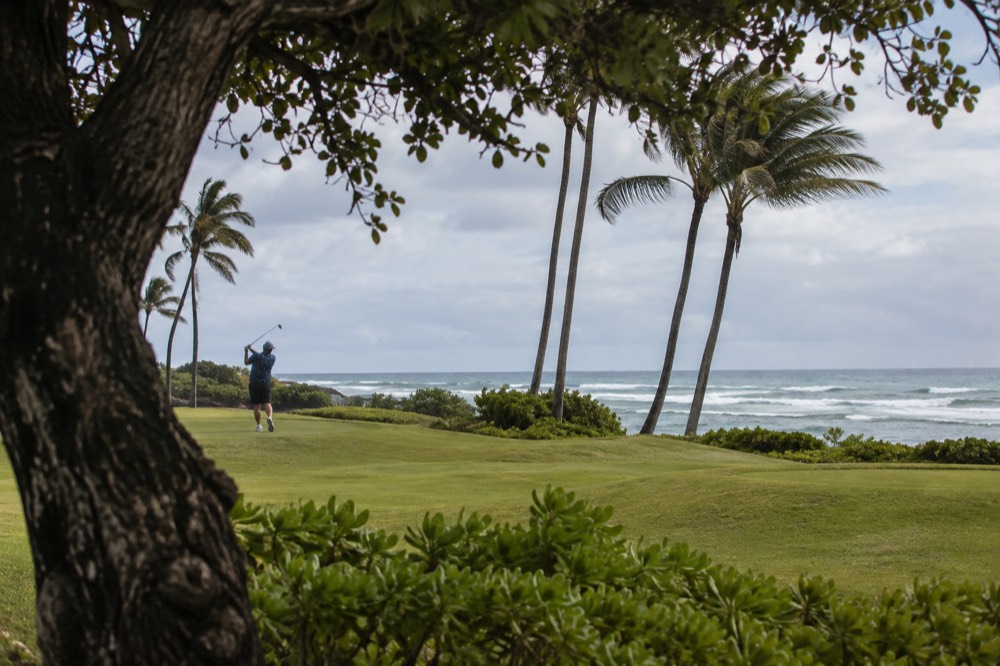
Golf on Oahu is a wind game. The trade winds blow off the Pacific onto exposed coastal layouts, a calm morning round can become a two-club wind by the turn, and a course that plays gently on a still day can batter your scorecard when the breeze is up. The hardest round you will ever have on this island is far more likely to be decided by the day's wind forecast than by which course you picked.
This guide does what a straight answer should do. It explains how difficulty is actually measured, tells you where to find the numbers for any course you are considering, and gives you the local knowledge, wind, side of the island, time of day, that the numbers cannot capture. For the wider picture of what else to do between rounds, start with Things to Do in Oahu or the planning basics at Oahu Travel Guide.
What Is The Hardest Golf Course On Oahu?
No course on Oahu holds an official title as the island's hardest, because no such title exists. Difficulty is measured by course rating and slope, numbers every rated course publishes, and those numbers shift depending on which tee markers you play. On Oahu specifically, the honest answer is that the hardest course on any given day is the most wind-exposed one, and the same layout can play two very different rounds depending on whether the trades are blowing.
If you want a defensible answer rather than a guess, do this: before you book any tee time on the island, look up the course's rating and slope from the set of tees you will actually play. Those two numbers, published as part of the USGA rating system used across the United States, are the only objective measure of how hard a course plays for a given golfer. A course with a higher rating and a higher slope from the back tees is, by definition, harder for a scratch or bogey golfer than one with lower numbers, all else equal.
The catch, and it is a real one on this island, is that ratings are calculated under normal conditions. They capture length, hazards, green complexity, forced carries and rough. They do not capture a stiff trade wind howling off the ocean at an exposed links-style stretch, and that is precisely the condition Oahu serves up regularly. Two courses with near-identical ratings can play completely differently here because one sits in a sheltered valley and the other runs along an open coastline.
So the practical answer has three parts. One: compare rating and slope across the courses you are considering, from your tees, and let the numbers do the first cut. Two: discount any course that sits fully exposed to the trades if you are not comfortable shaping shots or playing low flighted punches into wind. Three: book the morning slot. Wind on Oahu is typically lighter early and builds through the day, and an early tee time on a hard course is a genuinely different round from a noon one on the same track.
None of this means the island lacks demanding golf. It means the demand is conditional, and a good planner works with the conditions rather than against them.
How Do You Actually Measure How Hard A Golf Course Is?
Golf course difficulty in the United States is measured by two numbers: course rating and slope rating. Course rating tells a scratch golfer how many strokes they should need on that course from those tees, so a rating sitting well above par signals a stern test. Slope rating describes how much harder the course plays for a bogey golfer than for a scratch player, and a higher slope punishes weaker players disproportionately.
These numbers matter because they turn a vague argument into a comparable one. Suppose you are choosing between two Oahu courses and one carries a noticeably higher slope from the middle tees. The higher slope course will hurt you more for every missed fairway, every short-sided approach and every three putt, because hazards and forced carries that a strong player handles easily are the exact things that wreck a mid-handicap card.
Where do you find these numbers? Every rated course publishes them, usually on the club's own website, on its scorecard, and in the tee time booking flow. If a course does not publish a rating at all, treat that as information: unrated or lightly rated layouts tend to be casual resort or municipal nine hole tracks, not championship tests, and you can plan accordingly.
A useful habit, wherever you play on the island, is to read the numbers from the tees that match your real game, not the tees your ego picks. The gap between the back tees and the forward tees on the same course can be enormous, and the hardest course on Oahu from the tips can be a pleasant walk from the middle markers. Difficulty is not a property of the course alone. It is a property of the course and the tees and the player, combined.
| Measurement | What it tells you | How to use it |
|---|---|---|
| Course rating | Expected score for a scratch golfer from those tees | Compare against par: a rating well above par signals a stern test |
| Slope rating | How much harder the course plays for a bogey golfer than for a scratch player | A slope well above the standard midpoint starts to bite mid handicaps |
| Yardage from your tees | Raw length | Matters less than rating, but long courses with wind play even longer |
| Wind exposure | Not in the rating at all | The single biggest swing factor on Oahu; check the forecast, not just the scorecard |
The last row is the one that most visiting golfers miss, and it is the row that this island writes in bold.
Why Does Wind Decide Your Score On Oahu?
The trade winds are the dominant difficulty factor on Oahu golf, and they are not included in any course rating. A steady trade wind changes club selection by one to three clubs, turns a flat green into a puzzle, and makes any hole playing into the breeze dramatically longer than its carded yardage. Exposed coastal holes suffer most; sheltered valley holes suffer least, and the morning forecast tells you more about your likely score than the scorecard does.
This is the part of the answer that a generic golf article will not give you, because it is specific to how this island sits in the Pacific. The prevailing trades arrive from the east and northeast, which means holes oriented into that flow play long and holes running with it play short and firm. A par four that is a comfortable mid iron approach on a still day becomes a long iron or a layup when the wind is up, and the golfer who keeps firing at pins regardless of breeze will card a number that has nothing to do with their ability.
The professional move is not to fight the wind but to plan for it. Play the ball lower. Take one more club than the yardage says into breeze and one less downwind, then adjust again if the gusts are inconsistent. On crosswind holes, aim well away from trouble and let the wind bring the ball back, accepting that a long putt beats a splash. None of this is exotic technique; it is just the discipline that exposed island golf rewards and calm inland golf never teaches.
Time of day matters as much as direction. Early mornings on Oahu are more often still, and the breeze typically builds through the morning and into the afternoon. If you are playing one of the island's more exposed layouts and you want its easiest version, take the first available tee time. If you want the full examination, book the afternoon and bring your ball flight control.
Which Side Of Oahu Should You Play Golf On?
The leeward south and west sides of Oahu are drier, firmer and typically play faster; the windward east side is wetter, lusher and softer underfoot, which adds difficulty for players who rely on run on the fairways. The north shore sits in between and carries the most variable wind exposure. There is no wrong side for golf, but the sides play differently enough that your home course habits may translate better to one than the others.
The rainfall split behind this is one of the sharpest microclimate contrasts anywhere in golf, and it is fully documented rather than folklore. The official 1991 to 2020 climate normals put Honolulu airport at 16.41 inches of rain a year, while the Lyon Arboretum station in Mānoa, roughly five miles inland, records 150.96 inches, and every single month at the Mānoa station is wetter than the airport's wettest month. A course on the dry leeward plain and a course in a windward valley are playing different sports in terms of how the ground receives a golf ball.
Firm and fast is generally friendlier to the travelling golfer, with one exception: firm greens reject approach shots that land short of the flag, so a high soft ball flight is a genuine advantage on the leeward side. Soft and lush is friendlier to the player who lands the ball on the green and stops it quickly, but it punishes the low running links shots that work so well into wind. If you know your own ball flight, pick the side that rewards it.
| Side of the island | Typical character | What it means for your round |
|---|---|---|
| South, around Honolulu and Waikīkī | Drier, most convenient to stay-and-play | Firm conditions; plan approach shots to land on the green, not short |
| West, toward Ko Olina and Waiʻanae | The driest stretch of the island | Fast, firm turf; the wind here can also be a factor on open stretches |
| Windward east, Kailua to Kāneʻohe | Wettest, greenest terrain | Softer fairways, less run; carries matter more than roll |
| North shore, around Haleʻiwa and Turtle Bay | Variable, exposed coastline | The most condition dependent golf on the island; check the wind and surf forecast |
If you are staying in Waikīkī and want the rest of your group to have a full day while you play, the Waikīkī neighborhood guide covers what is walkable from the resorts, and the North Shore Oahu guide is the one to read if your round is up that way.
Planning to stay near the course you want to play? Book a hotel in Oahu here.
What Should You Bring For A Round On Oahu?
Pack for sun, wind and humidity rather than for a Scottish links or a desert resort. That means a wide brim hat and reef safe sunscreen, a rain sleeve in your bag even on a dry side, extra balls on any exposed coastal course, and a glove strategy for humid afternoons. The single most useful item is the one nobody thinks of: a towel, because humid air and sweaty grips change your ball striking more than most golfers notice.
Sun first, because it is not a gentle sun. Oahu sits deep in the tropics and the UV is intense even on a cloudy morning; a four hour round without protection will end your golfing week, not just your round. Reapply sunscreen at the turn, and do not rely on a cap alone to protect your neck and ears.
Wind and rain second. Even on the leeward side, a passing shower can arrive off the ocean with little warning, and a lightweight rain jacket in the bag costs nothing to carry. On the windward side it is close to mandatory. The trades also do things to umbrellas that make them mostly decorative here; a jacket is the better tool.
Balls third. An exposed course with crosswinds eats golf balls at a rate that surprises visitors, and a sleeve you brought for a calm resort round will not survive a breezy day on an open layout. Bring more than you think you need, especially if the forecast shows a stiff trade.
Is Golf On Oahu Expensive Compared To Other Activities?
Green fees on the island's resort courses generally sit well above the cost of most other paid activities a visitor books, while municipal and off peak options exist at the lower end, and exact prices change often enough that you should check each club's live listing rather than trust a number printed in an article. The honest planning frame: budget golf like a tour, not like a beach day.
Resort golf in a visitor destination carries resort pricing, and Oahu is no exception. What the fee buys varies: some of it is the course, some of it is views and condition, and some of it is simply the market. Because rates move with season, day of week and time of day, the same course can be dramatically cheaper on a weekday morning than a weekend afternoon, and twilight rates after mid afternoon can cut the cost substantially for golfers happy to finish near sunset.
The comparison worth making is against the island's other big ticket items. A round of golf competes for your day against luaus, boat trips, helicopter flights and guided island tours, and if you are travelling with non golfers, that comparison becomes a household negotiation. One clean solution many families land on: the golfer takes the morning tee time, everyone else takes a guided excursion, and the group reunites for the afternoon.
That is exactly the gap the island's full day circle tours fill. The most booked option runs a guided loop of the whole island, windward coast, North Shore and lookouts included, which pairs neatly with a morning round because it covers in one day what a self driver would need two or three days to see. If you want to see how the two halves of a split day fit together, the 1 day Oahu itinerary is built around exactly that kind of time budgeting.
Common Questions About Golfing On Oahu
Most questions about golf on Oahu come down to three things: which course, which tee time, and what the wind is doing. The course question has no single official answer, because difficulty is measured by rating and slope rather than by title, and the numbers move with the tees you choose. The tee time question answers itself: mornings are calmer and afternoons are breezier, and the wind decides the score.
What is the hardest golf course on Oahu?
There is no official hardest course on the island. Difficulty is measured by course rating and slope, which every rated course publishes for each set of tees, and on Oahu the deciding factor is usually wind exposure rather than the layout itself. Compare ratings from the tees you will play, then discount heavily exposed courses on windy days.
Does wind really matter that much for a high handicapper?
More than for a low handicapper, in relative terms. A strong player can flight the ball down and shape it both ways; a higher handicapper loses distance into wind, misses greens short and watches crosswinds widen every miss. On a breezy day, moving up a set of tees is the smartest adjustment a mid or high handicapper can make.
When is the calmest time of day to play golf on Oahu?
Early morning, typically. The trades tend to be lightest around sunrise and build through the day, with the stiffest breezes in the afternoon. If you want the easiest version of any course on the island, take the first tee time of the day and expect the back nine to play harder than the front.
Which side of the island has the driest golf?
The south and west sides. The official climate normals put Honolulu airport at 16.41 inches of rain a year against 150.96 inches at the Mānoa Lyon Arboretum station just five miles inland, so the leeward side plays firm and fast while windward terrain stays soft and lush.
Should I book a tee time in advance for an Oahu trip?
Yes, especially for resort courses and weekend mornings. Resort tee times on a visitor island fill first at the most desirable hours, and the cheapest rates, weekday mornings and twilight slots, are also the ones that require planning to catch. Book direct with the club and check the cancellation terms before you commit.
Is golf worth it if the rest of my group does not play?
It can be, if you split the day deliberately. A morning round paired with a guided afternoon activity for the rest of the group gives everyone a full day, and the island's circle tours are built for exactly that: one guided loop covers the windward coast, North Shore and lookouts while you are on the course.
The short version of everything above: pick your course by rating and slope from your tees, pick your side of the island by the conditions your ball flight suits, and pick your tee time by the wind forecast rather than the price. Do those three things and the hardest course on Oahu becomes a fair fight instead of a beating, whatever the scorecard says at the end of it.