What Is The Biggest Military Base On Oahu?
A direct, sourced answer to which military installation is the largest on Oahu, what that means for visitors, and which military sites you can actually see.
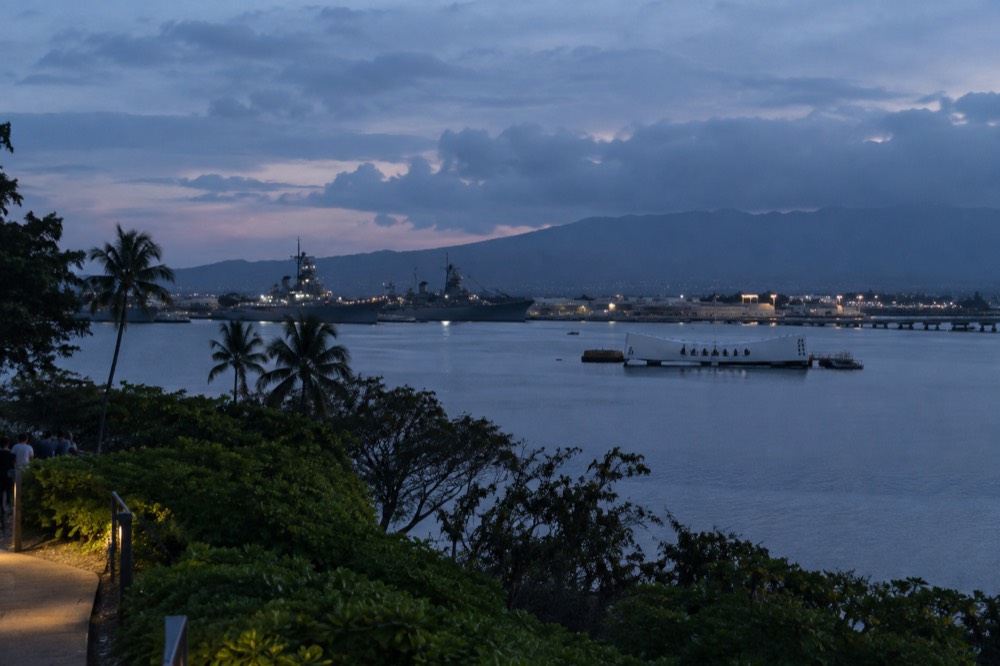
The biggest military installation on Oʻahu is Joint Base Pearl Harbor-Hickam, the combined United States Navy and Air Force base that wraps around Puʻuloa, the waterway better known to visitors as Pearl Harbor. It is the headquarters of the Pacific Fleet and the largest employer on the island, and its footprint stretches from the harbor itself across the former Hickam Air Force Base fields beside Honolulu's airport. Most of it is closed to the public, but the Pearl Harbor National Memorial on its edge is one of the most visited places in Hawaiʻi.
That single base, however, is only one piece of a much larger military presence. Oʻahu hosts Army, Navy, Marine Corps, Air Force and Coast Guard installations across the island, and the defense footprint shapes everything from traffic to which beaches have parking. This article answers the question directly, then covers what the bases actually are, which parts a visitor can see, and how the military presence affects an ordinary trip. The short version for planning purposes: you will interact with the bases mainly through Pearl Harbor's historic sites, a few viewpoints, and some very good military discounts at attractions.
What Is The Biggest Military Base On Oahu?
Joint Base Pearl Harbor-Hickam is the largest military installation on Oʻahu and the largest single employer on the island. It combines the historic naval base at Pearl Harbor with the former Hickam Air Force Base, which sits directly beside Daniel K. Inouye International Airport. The base hosts the US Pacific Fleet headquarters and is closed to general public access, though the Pearl Harbor National Memorial visitor area on its shoreline is open daily.
The base was formed by merging the Navy's Pearl Harbor Naval Station and the Air Force's Hickam base into a single joint installation, which is why the name now runs the two together. For a visitor, the practical geography matters more than the command structure. The base sits immediately west of downtown Honolulu, between the airport and the harbor, and its fence lines are visible from the freeway, from the Skyline rail line and from several lookouts.
What makes it "biggest" is not just land. Pearl Harbor-Hickam concentrates the largest concentration of military jobs, family housing, ship berths and aircraft aprons on the island in one contiguous complex. The harbor itself is a drowned river valley with deep-water channels, which is exactly why the Navy built there in the first place, and why the base has grown around it ever since.
If your reason for asking is a visit, the part you can access is the Pearl Harbor and USS Arizona Memorial historic site, which sits on the harbor's shoreline and is run by the National Park Service. The rest of the base, the working piers, the shipyard and the airfield, are off limits, and that is not a formality: these are active military facilities.
Can You Visit Pearl Harbor Without Any Military Connection?
Yes, anyone can visit. The Pearl Harbor National Memorial, including the USS Arizona Memorial program, is open to the general public with no military affiliation required, and the park itself is free to enter. The Arizona Memorial boat program is also free, though tickets are distributed through recreation.gov with a $1 non-refundable management fee per ticket. The visitor center is open 7 a.m. to 5 p.m. daily except Thanksgiving, Christmas and New Year's.
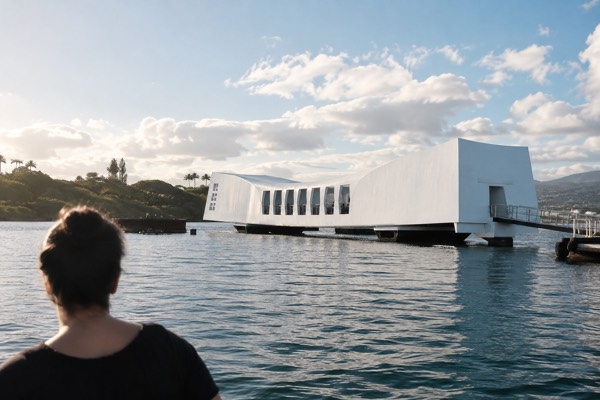
The distinction that confuses people is between the historic sites and the working base. The National Park Service operates the memorial grounds, the museum galleries and the boat ride out to the white structure that spans the sunken battleship. That is public space. Beyond a fence line, the Navy continues its ordinary operations, and you will see ships moving in the channel while you stand at the shore.
Two practical rules from the National Park Service are worth knowing before you go. Bags of any kind, including backpacks, purses and camera bags, are prohibited, and storage is available near the entrance for a small fee. Parking is $7 per day, paid by mobile app or QR code. Plan for those two details and the visit is straightforward.
The memorial itself deserves plain words. The USS Arizona is a war grave: the sailors and Marines lost in the attack remain in the ship, and the shrine room at the far end is a place where the Park Service asks for silence. It is not an attraction in the amusement sense, and the site's own framing treats it accordingly. Visitors consistently describe the boat program as the most affecting hour of their trip.
The other historic vessels nearby, the USS Missouri Battleship Museum and the USS Bowfin Submarine Museum, are separately ticketed and sit within the same visitor area, so a full day at Pearl Harbor is easy to build without ever crossing into the restricted base.
What Other Major Military Bases Are On Oahu?
Oʻahu's other large installations are Schofield Barracks and Wheeler Army Airfield in the island's central plain, Marine Corps Base Hawaiʻi at Kāneʻohe Bay on the windward coast, Fort Shafter in Honolulu, and Camp H. M. Smith above ʻAiea. Schofield Barracks is the largest Army post on the island, while the Kāneʻohe base occupies the entire Mōkapu Peninsula. All of them are closed to the public except for controlled access points.
Schofield Barracks sits in the Wahiawā area, ringed by the fields and ridges of central Oʻahu. It is an Army post large enough to function as a small town, with its own housing, schools and training ranges stretching toward the Waianae mountains. Wheeler Army Airfield, directly adjacent, shares the area and handles Army aviation. If you drive the interior of the island, you will pass their fences; you will not enter them.
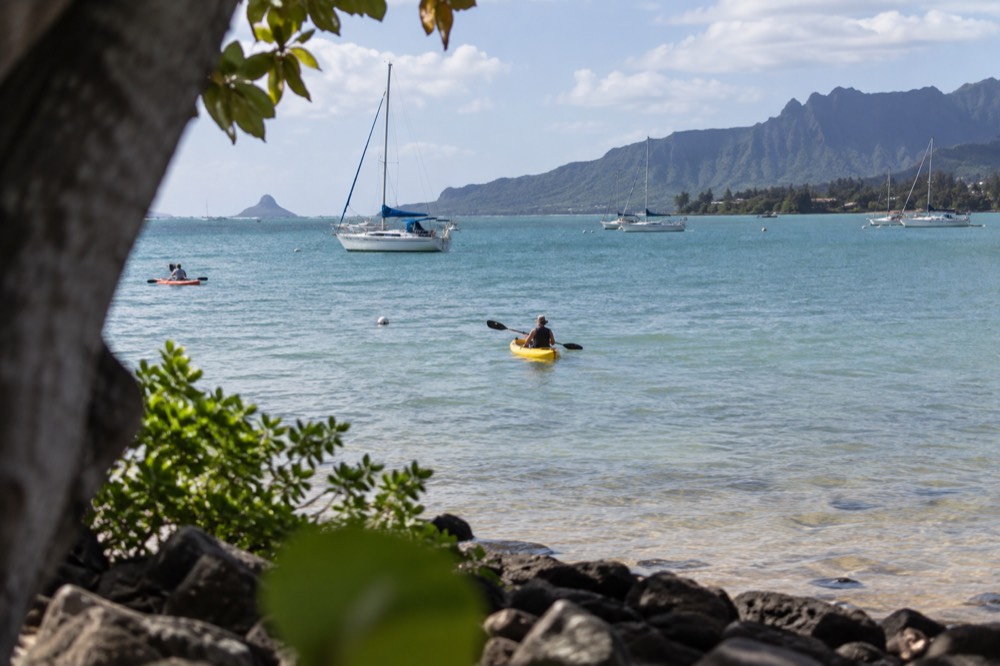
Marine Corps Base Hawaiʻi occupies the Mōkapu Peninsula on the windward side, jutting into Kāneʻohe Bay. Its runway and low buildings are visible from several points around the bay, and the peninsula's presence is why a stretch of that coastline is not public beach. Fort Shafter, in Honolulu proper, is the Army's Pacific command headquarters, and Camp H. M. Smith, on a ridge above ʻAiea, serves as a Marine Corps headquarters post.
There are smaller facilities as well: Coast Guard Sector Honolulu, various reserve centers, and medical facilities including Tripler Army Medical Center, the pink building that dominates the ridge west of Honolulu and is one of the most recognizable military structures in the Pacific. None of these are tourist stops, and the honest answer to "can we get a look inside" is no.
For a visitor, the significance is mostly atmospheric and logistical. Roughly speaking, the military presence is woven through the whole island rather than confined to one corner, which is why you can be at a beach and hear distant aircraft, or find a road suddenly bounded by a fence and a guard post.
Do Military Members Get Discounts At Oahu Attractions?
Yes, and the discounts are substantial. US military members and dependents with military ID enter Hanauma Bay Nature Preserve free without a reservation, and Waimea Valley charges military and kamaʻāina visitors a sharply reduced rate, $10 for adults against the standard $26. Many commercial tour operators also offer military rates, though these vary by product and are shown on the operator's live listing rather than advertised in advance.
The pattern across the island's official attractions is that military ID is treated much like a Hawaii resident ID. At Hanauma Bay, the city's own rules state that US military and dependents enter free with military ID, and unlike non-residents, they do not need the online reservation. At Waimea Valley, the military and kamaʻāina rate card covers every ticket tier, including children at $6 against the standard $18.
Here is how the main verified discounts stack up:
| Attraction | Standard adult price | Military / kamaʻāina adult price | What you need |
|---|---|---|---|
| Hanauma Bay Nature Preserve | $25 plus online service fee | Free | Military ID at entry, no reservation needed |
| Waimea Valley | $26 | $10 | Military ID at admission |
| Waimea Valley, child 4–12 | $18 | $6 | Military ID at admission |
| Diamond Head State Monument | $5 per person, reservation required | Free for Hawaii residents only | Hawaii driver's licence or State ID |
Note the last row carefully. Diamond Head's free entry applies to Hawaii residents with a Hawaii ID, not to military members generally, and the non-resident reservation requirement applies to anyone without that ID. Out-of-state military stationed in Hawaii hold a different ID, and the state park system's published rule keys on Hawaii residency, so check your own ID type before assuming.
Commercial tour discounts are a separate matter. Some operators run military rates on their listings, some do not, and the only reliable way to know is to look at the listing for the specific product on the day you book. Treat any discount you find as a bonus rather than a planning assumption.
How Does The Military Presence Affect Getting Around Oahu?
The main effect visitors notice is transit and traffic. Skyline, Honolulu's rail line, names Hālawa Aloha Stadium Station as the stop for Pearl Harbor, and the line now reaches the airport with bus transfers onward to Waikīkī, which has no rail station. Fares are shared with TheBus: $3.25 cash for a single bus ride, a $7.50 daily cap on a HOLO card, and $90 for a monthly pass.
The rail detail is genuinely useful for a Pearl Harbor day. The station names published by the city's transportation department list Hālawa Aloha Stadium Station as the stop for the Pearl Harbor memorial and visitor centre, and also for the Aloha Stadium Swap Meet, which runs Wednesday, Saturday and Sunday. From the airport end of the line, bus transfers connect onward: the W Line toward Waikīkī, the A Line toward downtown, and the U Line toward the University of Hawaiʻi at Mānoa.
The fare structure is shared between the two systems, which makes a mixed rail-and-bus day simple. A HOLO card costs $2, charges $3.00 for a two-hour pass with unlimited transfers, and stops charging at $7.50 per day no matter how many rides you take. Children five and under ride free with a paying rider.
The congestion effect is less pleasant but worth knowing. The bases in the central plain, Schofield and Wheeler, sit astride the main corridors connecting the leeward and windward sides, and shift changes put real traffic on roads that have no alternatives. If your itinerary has you crossing the island in the early morning or late afternoon, expect the drive to take longer than the map suggests.
There is also a subtle effect on the visitor economy. A large share of Oʻahu's population is connected to the military one way or another, either as service members, dependents, civilian employees or veterans. That is part of why the island's attractions are set up to handle both visitors and local military families, and why the kamaʻāina and military rate cards sit side by side on the same admission pages.
Which Military-Connected Sites Can You Actually See On Oahu?
The publicly accessible military-connected sites are the Pearl Harbor historic sites, the USS Arizona Memorial, USS Missouri, USS Bowfin, and the National Memorial Cemetery of the Pacific at Pūowaina, the crater Honolulu calls Punchbowl. All are open to the general public. The working bases, Schofield, Wheeler, Mōkapu, Fort Shafter and the interior of Pearl Harbor-Hickam itself, are not, and there is no tour that gets you inside them.
The Pearl Harbor sites cluster in one walkable visitor area, so they combine naturally into a single day. The Arizona Memorial program takes about 45 minutes including the boat ride, and the park service distributes tickets through recreation.gov. The Missouri and Bowfin are separate museums with their own tickets, and each needs an hour or two to do properly. Arrive early, and remember the no-bags rule applies to the whole site.
Pūowaina, the National Memorial Cemetery of the Pacific, sits in an extinct volcanic crater above downtown Honolulu and is open to visitors who drive or walk its grounds. It is a cemetery, first and always, and the appropriate register is quiet: the courts of graves, the memorial columns and the view down over the city are moving rather than entertaining. There is no fee and no ticket, just the expectation of respect.
Beyond those, your encounters with the military Oʻahu are incidental: a ship visible from a shoreline, aircraft overhead, a guard gate you drive past. Some of the best photo angles over Pearl Harbor's harbor come from public roads and lookouts rather than from inside anything, and those are the honest options.
If you want the island's military and historic geography to make sense in one day, a guided circle-island tour is the efficient way to see how the pieces fit together, from the windward coast past the Mōkapu Peninsula to the central plain and back down to Pearl Harbor.
For travelers building a fuller itinerary, the circle-island route that includes Byodo-In Temple covers the windward side's cultural stops along with the coastal scenery, and pairs well with a separate half-day reserved for Pearl Harbor on its own.
Common Questions About Military Bases On Oahu
Most questions about Oʻahu's military bases come down to three things: which base is largest, whether the public can get in, and how the military presence changes a visit. Joint Base Pearl Harbor-Hickam is the largest, the working bases are closed, and the public side of military Oʻahu is concentrated at Pearl Harbor's historic sites and Pūowaina. Military ID discounts are generous at city and state attractions.
What is the biggest military base on Oahu?
Joint Base Pearl Harbor-Hickam, the combined Navy and Air Force installation around Pearl Harbor, is the largest military base on Oʻahu and the island's largest single employer. It merges the historic naval base with the former Hickam Air Force Base next to the airport. The public can visit the Pearl Harbor National Memorial on its shoreline but not the working base.
Can tourists visit Pearl Harbor?
Yes. The Pearl Harbor National Memorial is open to everyone, with no military connection required. Park entry is free, the USS Arizona Memorial program is free with a $1 per-ticket management fee on recreation.gov, and parking is $7 per day. Bags of any kind are prohibited, with paid storage available near the entrance.
Is Schofield Barracks bigger than Pearl Harbor?
Schofield Barracks is the largest Army post on Oʻahu and covers a large area of the central plain around Wahiawā, but Joint Base Pearl Harbor-Hickam is generally regarded as the island's largest military installation overall, combining the naval base, shipyard and airfield in one contiguous complex and employing more people than any other site.
Can you drive onto a military base on Oahu with a visitor pass?
Not as an ordinary tourist. The installations require valid military or Department of Defense credentials for entry, and there is no public tour of the working bases. The publicly accessible military-connected sites are the Pearl Harbor historic area and the National Memorial Cemetery of the Pacific at Pūowaina.
Do veterans get the military discounts at Oahu attractions?
The verified published discounts at Hanauma Bay and Waimea Valley are stated for US military and dependents with military ID. Policies for veterans vary by attraction and are not stated on the official admission pages, so check with each site directly before counting on a discount.
Does the military presence affect traffic on Oahu?
Yes. The bases in the central plain sit on the main cross-island corridors, and shift changes add real congestion in the early morning and late afternoon. Skyline rail offers an alternative for the airport-to-Pearl-Harbor side of the island, with a $7.50 daily fare cap on a HOLO card shared with TheBus.
The military Oʻahu and the visitor Oʻahu overlap at exactly one place, the shoreline of Pearl Harbor, and that is where nearly every meaningful military sight on the island is concentrated. Plan a half-day there, use the official reservation channels for the Arizona Memorial program, and treat the rest of the bases as the working landscape they are, something you drive past with a bit more understanding of what the island actually is. For more on building the rest of the trip, see the Oahu Travel Guide homepage and the 1 day Oahu itinerary if Pearl Harbor is one stop on a bigger circuit.