Is 3 Full Days In Oahu Enough? A Realistic Three-Day Plan
A realistic answer to whether three full days is enough for Oahu, with a day-by-day plan built around reservation deadlines, closure status and what is genuinely worth skipping.
Three full days is enough for a satisfying first visit to Oahu if you accept two trade-offs: you will see the island's signature sights rather than all of them, and you will need to lock in reservations before you fly. Oʻahu took 5,679,047 visitors by air in 2025, preliminary DBEDT figures show, and the island's most in-demand sites ration entry on fixed schedules. A short trip does not fail for lack of time. It fails when the Hanauma Bay slot, the Diamond Head reservation or the Pearl Harbor ticket was never booked.
This page is a realistic plan, not a wish list. It assumes you actually have three full days, meaning you are on the island the night before day one and you fly out the morning after day three. If your "three days" includes arrival and departure flights, you really have two, and the plan below needs trimming. The difference between those two situations is an entire hike, an entire beach afternoon, or an entire island region.
Is 3 Full Days In Oahu Enough?
Three full days is enough for Pearl Harbor, one major hike, a circle-island or North Shore day, and one lūʻau, which is a complete first trip. It is not enough to add a second beach region, a Hanauma Bay morning and a Kualoa Ranch tour without something giving. The honest answer is yes for a sampler visit, no for a checklist visit, and reservations decide which one you get.
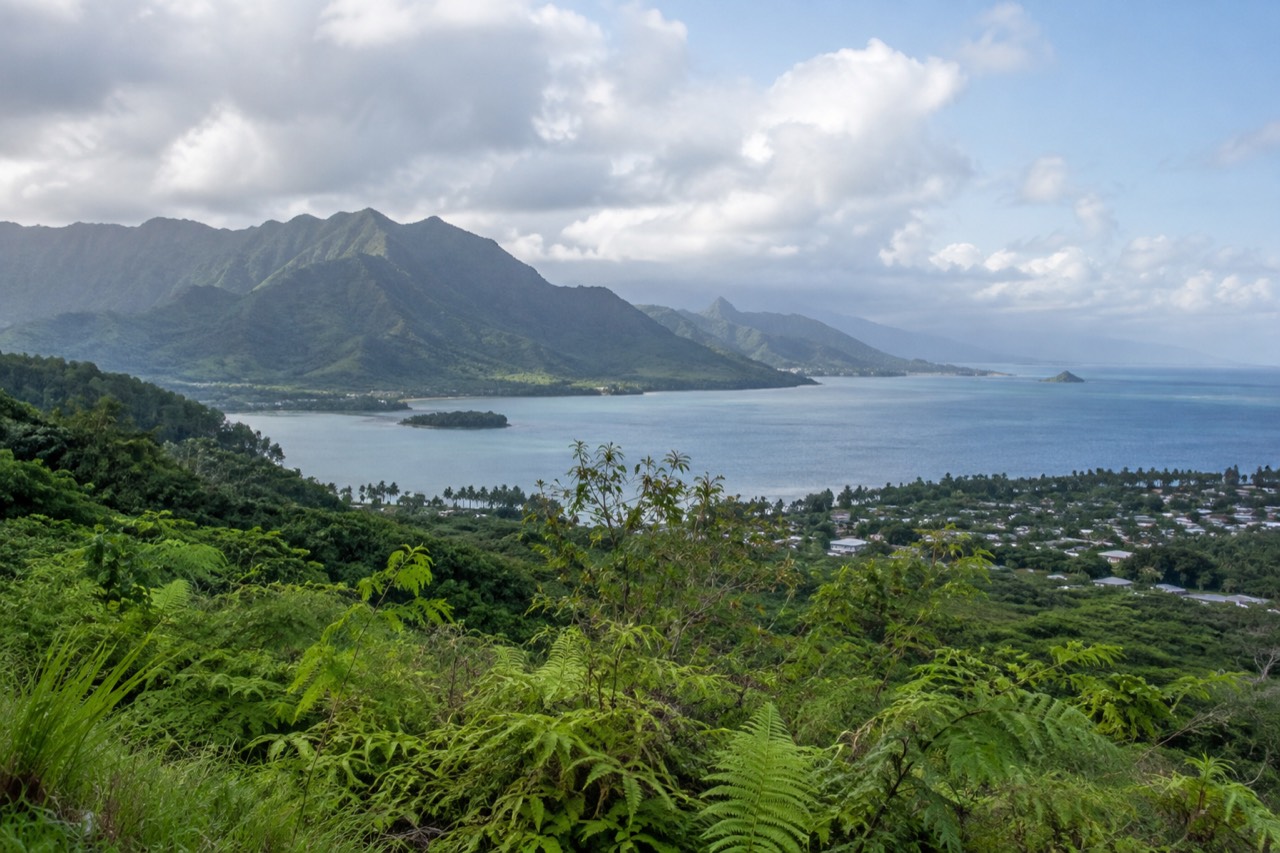
The island is smaller than its reputation suggests, but it is not small in the way a city is small. The things first-time visitors want are spread around the perimeter: Pearl Harbor and downtown Honolulu to the south, Waikīkī on the south shore, the windward coast and Kāneʻohe to the east, the North Shore at the top.
Grouping is the whole skill. A morning at Pearl Harbor pairs with an afternoon downtown, because they sit close together. A windward coast day pairs Kāneʻohe with Kailua and the Mākapuʻu lighthouse trail, all on one side of the island. A North Shore day pairs Waimea Valley with Haleʻiwa town and the beaches between them. What does not work is zigzagging: a North Shore morning, a Hanauma Bay afternoon and a lūʻau at night is three good ideas arranged into one exhausting day.
There is also a closure reality as of this writing. The Nuʻuanu Pali Lookout and Kaʻena Point State Park are closed until further notice following Hurricane Lowell, per a DLNR State Parks notice dated 9 September 2026. Two of the island's best-known free viewpoints are off the table, and older itineraries you find online still include them. Check the DLNR notices the week you travel, because this changes.
For a fuller rundown of what the island offers, our Things to Do in Oahu page is the complete index, and it is worth scanning before you commit to a plan.
What Can You Realistically See In Three Days On Oahu?
A realistic three-day trip covers one anchor per half-day: Pearl Harbor, a major hike, one beach or snorkel session, one circle-island or North Shore day, and one evening event such as a lūʻau. That is five anchors across six half-days, with the rest spent eating, swimming and recovering. Plans promising eight anchors in three days produce a trip you remember as a commute.
The reservation system is the part of Oahu planning that surprises people. This is not a place where you turn up and pay at the gate for the popular sites, and the deadlines below are what actually decide which anchors are possible on your dates.
| Site | What you must do in advance | The deadline that matters |
|---|---|---|
| Hanauma Bay Nature Preserve | Reserve online; entry is $25 for non-residents plus a 2.35% service fee, children 12 and under free | Slots open two days ahead at 7:00 a.m. HST. Closed Mondays and Tuesdays |
| Diamond Head State Monument (Lēʻahi) | Reservation required for non-residents, for entry and parking; $5 per person plus $10 per vehicle, card only | Bookable up to 30 days ahead; no on-site sales, a rule in force since 12 May 2022 |
| USS Arizona Memorial program | Reserve on recreation.gov; the program itself is free, with a $1 non-refundable management fee per ticket | The release schedule is not published in a source we can verify, so book the moment your dates are fixed |
| Waimea Valley | Advance booking available; adult admission is $26 | Closed Mondays, open 9 a.m. to 4 p.m. |
| Polynesian Cultural Center | Advance booking strongly advised for lūʻau packages | Closed Sundays and Wednesdays |
Read that table twice before building an itinerary, because two of the five entries have fixed closed days. If your three days run Monday to Wednesday, Hanauma Bay is only possible on Wednesday, and Waimea Valley is only possible on Tuesday and Wednesday. The closed days, not your energy level, are the hard constraint.
The other constraint is the bag policy at Pearl Harbor. Bags of essentially every kind are prohibited at the USS Arizona Memorial, and storage exists near the entrance for a small fee whose amount is not published in any official source we hold. Travel light on your Pearl Harbor morning and the problem disappears entirely.
Our full Pearl Harbor and USS Arizona Memorial guide covers the ticket mechanics in detail. The short version for a three-day trip: reserve the earliest program you can, go in the morning, and leave the afternoon for downtown Honolulu and ʻIolani Palace, which are minutes away by comparison.
How Should You Pace Day One, Day Two And Day Three?
Day one should stay close to your base: Waikīkī, Diamond Head early, and downtown Honolulu or Pearl Harbor in the afternoon. Day two is the circle-island or windward day, covering the coast east or the North Shore. Day three is the flexible day, used for Hanauma Bay, a second hike, or whatever the first two days washed out, with a lūʻau as the closing evening.
A Waikīkī base keeps day one simple. Book a Waikīkī hotel here.
The reasoning behind that order is simple. Day one is jet lag day, and it should contain things that forgive tardiness: a beach, a walk, a museum. Diamond Head forgives nothing after the last entry time, which is 4:30 p.m. with last reservation at 4:00 p.m., so if the hike happens on day one it happens early. The trail is popular at sunrise for exactly this reason, and the park opens at 6:00 a.m.
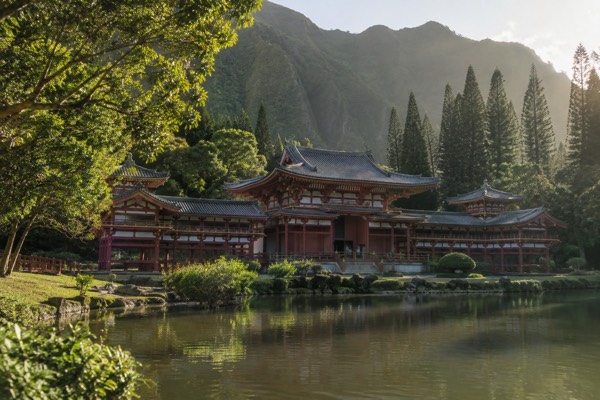
Day two is the day the island's shape rewards. A guided circle-island tour turns the whole perimeter into one decision instead of six, which is why we recommend it on short trips. The most-booked option, a full-day grand circle island tour operated by Star of Honolulu Cruises and Events, runs about six and a half hours and reaches Haleʻiwa town on the North Shore. A slower alternative is the Hidden Gems circle tour run by Go Tours Hawaii, about nine hours, which adds the Byodo-In Temple in Kāneʻohe. Nine hours is a commitment; on a three-day trip it is a defensible one, because it compresses a region you would otherwise need a car and a full day to reach.
Day three is deliberately loose. If Hanauma Bay is on your list, remember the two-day-ahead rule: you book it at 7:00 a.m. HST on the day before the day before. From the mainland that means setting an alarm, because 7:00 a.m. in Honolulu is 10:00 a.m. Pacific and 1:00 p.m. Eastern. Slots for the good morning entry windows go quickly. If you miss them, day three becomes a Kailua beach day or a Mānoa Falls morning, and both are fine outcomes.
The lūʻau question deserves its own sentence: book it before you fly, not when you arrive. Oahu's established lūʻau operations sell out on peak evenings, and on a three-day trip you only have three candidate nights. Our best lūʻau on Oahu comparison walks through the trade-offs between the major options, including the Polynesian Cultural Center packages, which are a full-day commitment on their own given the center's hours.
What Should You Skip If You Only Have Three Days?
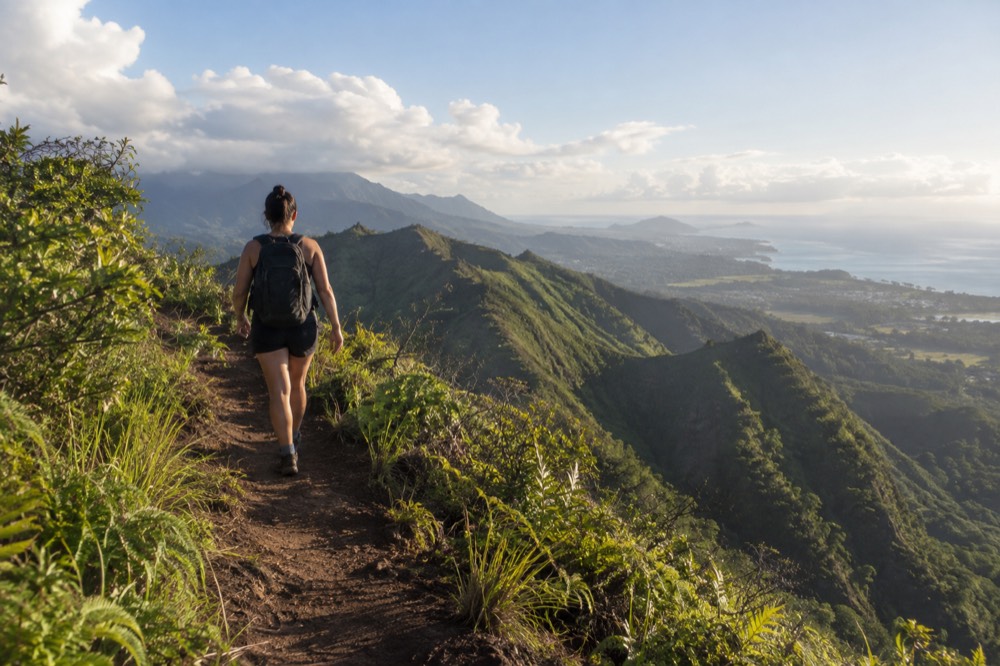
On a three-day trip, skip anything requiring a second visit to the same region, all but one Koʻolau ridge hike, and any plan pairing the North Shore with the windward coast in one day. Skip Kaʻena Point and the Nuʻuanu Pali Lookout for now, because both are closed for storm repairs under the September 2026 DLNR notice. Skipping is the mechanism that makes three days feel sufficient.
The hardest skip for most visitors is the second beach region. Kailua and Lanikai on the windward side, and Waikīkī on the south shore, are different experiences, and the temptation is to do both on consecutive days. On a week-long trip, do both. In three days, pick the one that matches what you want from a beach: calm water and a laid-back town scene points you windward, walkable convenience points you to Waikīkī. Our Kailua guide and Waikīkī neighborhood guide lay out the difference in detail.
The second skip is stacking paid tours. Kualoa Ranch alone offers several tours across its private valleys, and the valleys cannot be visited without a paid guided tour, because the land is private. A three-day trip supports one Kualoa experience, not three. The same arithmetic applies to the island's adventure layer: one zipline or one ATV tour, chosen honestly, beats a sampler of everything that leaves you driving all afternoon. Everything else covered here is indexed on Oahu Travel Guide.
The third skip is subtler: skip any itinerary that lists the Pali Lookout as a five-minute photo stop. It is closed. Older blog posts and printed guides still route visitors there, and arriving at a locked gate after Hurricane Lowell's damage is a small but real way a tight trip loses an hour. The DLNR notices page is the authoritative source for reopenings.
One thing not to skip: the USS Arizona Memorial program, if history matters to you at all. It is free apart from the $1 management fee, it is short, and it is the one site on the island where the emotional weight is not recreational. Treat it as the anchor of whichever day it falls on, and plan the rest of that day around it rather than squeezing it between shopping stops.
Do You Need A Car For A Three-Day Oahu Trip?
You do not need a car for all three days, but you need one for one of them, or a seat on a circle-island tour that substitutes for it. TheBus and Skyline share fares, $3.25 for a single cash bus ride or a $7.50 daily cap on a HOLO card, covering Honolulu and the airport corridor well. The windward coast and North Shore are where transit thins and a car earns its cost.
The transit numbers are worth knowing precisely because they are good. A HOLO card costs $2 to obtain, taps on both TheBus and Skyline, and caps at $7.50 per day, so a visitor riding four times a day pays no more than someone riding twice. A 7-day pass at $45 exists but does not pay off on a three-day trip; the daily cap is the better product for you. Children 5 and under ride free with a paying adult.
Skyline now reaches the airport, with a named Lelepaua Daniel K. Inouye International Airport station, but there is no Waikīkī station, so a transfer to a bus line is required for the final leg. For a three-day visitor staying in Waikīkī, the practical read is this: rail is useful for the airport and the Pearl Harbor direction, via the Hālawa Aloha Stadium station, and buses cover the rest of the urban core.
For the one day you go east or north, the decision is between renting a car for 24 hours and taking a guided circle-island tour. The tour wins on a short trip more often than people expect, because it converts driving hours into commentary and removes parking from your day entirely, and parking is a genuine cost and hassle across the island. Our do you need a car on Oahu and Oahu parking guide pages go deeper on the trade-offs than a three-day decision needs.
Which Tours Are Worth The Money On A Short Trip?
On a three-day budget of time, the tours worth paying for are the ones that solve a logistics problem: a circle-island day that removes driving and parking, a Pearl Harbor half-day that removes the ticket scramble, and one experience tour such as a zipline or snorkel boat chosen for the thing you most want to do. Tours that duplicate what transit already covers are the weakest buys.
The Pearl Harbor half-day is the clearest case. The Salute to Pearl Harbor tour run by E Noa Tours lasts about five hours and handles the transportation from Waikīkī, which matters because the memorial sits at the end of a transit transfer and the bag policy makes arriving unprepared costly in time. A half-day format leaves your afternoon intact for downtown, which is the correct pairing.
The circle-island options are the other strong buy, and the two we feature serve different travelers. The Star of Honolulu grand circle tour is the efficient version, about six and a half hours. The Go Tours Hawaii Hidden Gems version runs about nine hours and reaches the Byodo-In Temple, a quiet, non-Disneyesque stop in Kāneʻohe that rewards the longer day. Pick one, not both; they cover overlapping ground.
Common Questions About Three Days On Oahu
Most questions about a three-day Oahu trip come down to three things: whether the reservations were made in time, whether the plan groups the island by region instead of zigzagging, and whether the traveler accepted that a sampler trip means skipping a second region. The itineraries that fail rarely fail on hours. They fail on a missed Hanauma Bay release at 7:00 a.m. HST two days out, or a lūʻau left to chance.
Is 3 full days in Oahu enough?
Yes, for a first visit built around Pearl Harbor, one major hike, one circle-island or North Shore day and one lūʻau. It is not enough for a checklist trip covering every region, and it only works if reservations for Hanauma Bay, Diamond Head and the USS Arizona Memorial program are secured before or immediately after you book flights.
What should I book before I fly to Oahu?
Book the USS Arizona Memorial program on recreation.gov, your Diamond Head entry reservation, your lūʻau evening, and any guided tour such as a circle-island day. Hanauma Bay cannot be booked far ahead: its slots open two days before your visit date at 7:00 a.m. HST, so that one is an alarm-clock booking from wherever you are.
Which day should I do the North Shore?
Make it your dedicated circle-island or windward day, usually day two, and do not pair it with anything on the opposite side of the island the same day. If you want to watch surf rather than swim, winter is when the north-facing shore carries its biggest swell, while the south shore is the calmer summer option.
Is Oahu too crowded for a short trip?
Oʻahu received 5,679,047 visitors by air in 2025, preliminary state figures show, down about 2% on 2024, and most of that volume concentrates in Waikīkī and a handful of famous sites. A three-day plan that includes one windward or North Shore day escapes the densest zones entirely, and starting Diamond Head at opening spreads the crowds out further.
Can I do Pearl Harbor and Diamond Head on the same day?
Yes, and they pair well, but the order matters. Reserve the earliest USS Arizona Memorial program you can, hike Diamond Head first at opening if your program time allows, and remember that bags are prohibited at the memorial with paid storage near the entrance. Downtown Honolulu sits between the two and fills the middle of the day naturally.
What if a storm closes something on my list?
Check the DLNR State Parks notices the week you travel. As of the 9 September 2026 notice, the Nuʻuanu Pali Lookout, Kaʻena Point and Wahiawā Freshwater remain closed for Hurricane Lowell repairs while the rest of Oahu's state parks have reopened. Storm-related reservation refunds are processed automatically and take four to six weeks.
Three days on Oahu, paced honestly, delivers a trip that feels complete rather than compressed. Book the anchors, group the island by region, skip the second beach coast without guilt, and the island will feel bigger on day three than it did on day one.