Day Trip From Oahu To Big Island: The Route, The Stops And How Long The Day Really Is
Yes, you can fly from Oahu to Big Island and back in a single day, and people do it, but the day is longer and thinner than most itineraries admit. Here is what the route really involves, what fits in the hours you actually have, and when the honest answer is to stay put.
Short answer
An Oahu to Big Island day trip means two interisland flights the same day, an early start and a late return, and realistically one or two destinations on Big Island rather than the whole island. It works for a single must-see, not for a tour of the island.
Oʻahu took 5,679,047 visitors by air in 2025, preliminary DBEDT figures show, and most of them, 387,063 of the 499,197 who arrived in July 2026 alone, saw only this island and flew home. The island-hoppers are the minority, and the smallest subgroup of all is the one attempting the most ambitious version: a day trip from Oahu to Big Island, there and back before bed. It is doable. It is also the single most commonly mis-planned day on a Hawaii itinerary, because the distances involved are bigger than the map suggests and the day is shorter than the brochure implies.
This guide lays out what the day actually looks like, what fits in it, what it costs beyond the airfare, and when the better call is to spend the day on Oahu instead. The short version: a Big Island day trip is a tool for one specific must-see, not a way to "do" a second island.
What Does A Day Trip From Oahu To Big Island Actually Involve?
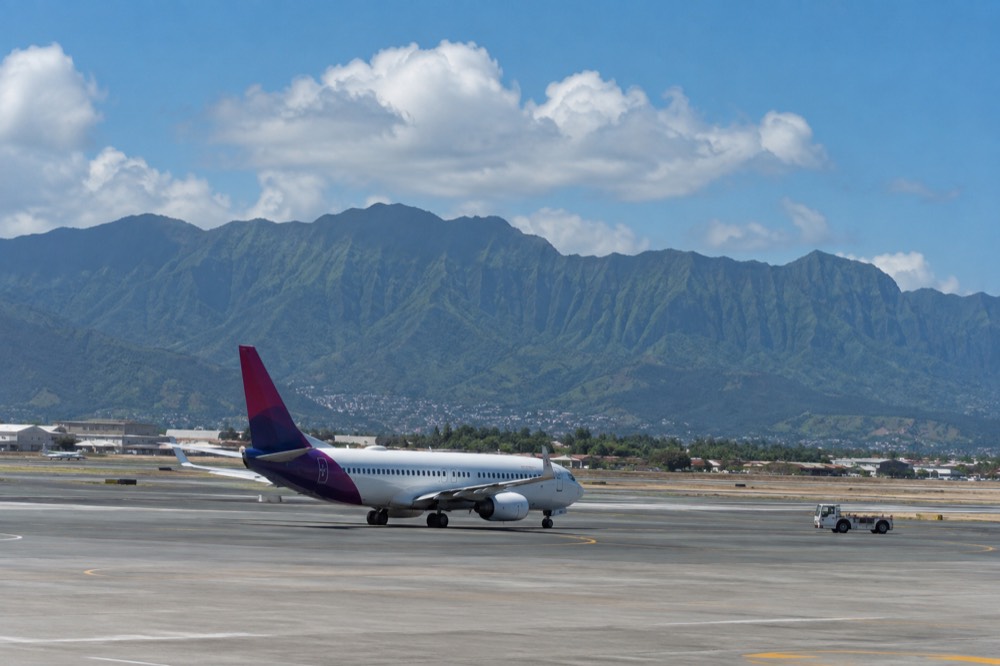
An Oahu to Big Island day trip means two interisland flights in one day: an early-morning departure from Honolulu and a late-evening return, roughly 100 miles each way. In practice you trade an entire day of Oahu time for six to eight usable hours on Big Island, and the day starts before sunrise and ends close to midnight. That is the honest shape of it.
The flights leave from Daniel K. Inouye International Airport in Honolulu, the same airport you arrived at, and land on Big Island at one of two airports: Kona on the leeward west side, or Hilo on the windward east side. Which one you pick is the single biggest decision of the day, because the two sides of Big Island are not close to each other, and the things people fly over to see are split between them. Kona is the side with the Kona coffee country and the leeward coastal resorts. Hilo is the side with the rain, the waterfalls and the gateway to Hawaiʻi Volcanoes National Park, which is roughly its own half-day from either airport.
The arithmetic that kills most day-trip plans is not the flying. It is the airport overhead on both ends, twice. Interisland terminals in Hawaii run like any other US airport: you want to be at the gate with time to spare, bags are not always free, and the security line at 6 a.m. is full of people who had the same idea you did. Budget a full hour of airport process on each side of each flight, plus the drive to and from each airport, and the "quick hop" quietly consumes four to five hours of your day before you have seen anything.
There is also the weather variable. The channel between the islands is one of the windiest stretches of water in Hawaii, and interisland flights are more prone to bump and to short delays than mainland routes. A day trip has zero slack: if the morning flight runs an hour late, the whole plan compresses, and if the evening flight is cancelled, you are buying a hotel room at midnight prices. Anyone attempting this should look at the first flight out and the last flight back, not the convenient ones in the middle.
How Do You Get From Oahu To Big Island?
You fly. There is no ferry between Oahu and Big Island, and there never has been in the modern era; the channel is too wide, too rough and too deep for a scheduled service. Two airlines operate the interisland route from Honolulu, both with multiple daily departures to both Kona and Hilo, and fares move with demand the way mainland domestic fares do.
The route is a genuine domestic flight, not a ten-minute puddle jump. Honolulu to Kona and Honolulu to Hilo are both around 40 to 50 minutes in the air, on the sort of narrow-body and regional aircraft the interisland fleet uses. The practical planning details, what the fares look like, how bags work and how the two airlines compare, are covered in our interisland flights from Oahu guide, which is the deeper dive on this exact question.
One Oahu-side detail worth knowing: the airport is now on the rail map. Skyline, Honolulu's elevated rail line, includes a Lelepaua Daniel K. Inouye International Airport station, with bus transfers onward. If you are staying near a rail or transfer point and do not want to pay for airport parking or a pre-dawn taxi, the train is a real option for the outbound leg, though there is no Skyline station in Waikīkī, so a transfer is required. Fares are shared with TheBus: a HOLO card day caps at $7.50, and the card itself costs $2.
A note on the other direction of thinking: if the reason you are considering the flight is a vague sense that you "should see another island", it is worth reading how an Oahu day trip compares to the same idea aimed at Maui, which is a shorter commitment. Our day trip from Oahu to Maui planner covers the closer, cheaper version of the island-hop itch, and some travellers who read both decide Maui is the better single-day hop and Big Island deserves an overnight.
What Can You Realistically See On Big Island In One Day?
Realistically, one anchor destination plus one short stop, not a circuit. Fly into Hilo for Hawaiʻi Volcanoes National Park and the east-side waterfalls, or fly into Kona for coffee country and a coastal stop; trying to combine both sides means spending most of your day driving between them. Six to eight usable hours on the ground is the honest budget.
The two airports sit on opposite sides of a very large island, and the road between them is a multi-hour drive across the saddle between Mauna Kea and Mauna Loa. A day-tripper who lands at Kona and drives to Volcanoes has spent the heart of the day in a car. So the first planning rule is: choose your anchor.
| If your must-see is... | Fly into | What the day looks like | Honest fit |
|---|---|---|---|
| Hawaiʻi Volcanoes National Park | Hilo | Airport to the park, a few hours inside, one waterfall or town stop on the way back | Good fit, full day |
| Kona coffee country | Kona | A couple of farm visits, a coastal lunch, an easy afternoon | Comfortable fit |
| Mauna Kea summit area | Kona or Hilo | Long drives at altitude, tour-dependent, timing conflicts with evening flights | Poor fit for a day trip |
| Both sides of the island | Either | Most of the day driving the saddle | Does not fit |
| "Whatever's best" | Neither | This is the traveller who should stay on Oahu | Rethink the day |
The second rule is that Big Island's headline experiences have their own schedules. Volcanoes is a full national park with its own entry line and its own driving distances between features; you cannot "pop in". The summit roads on Mauna Kea are high-altitude, partly restricted and generally visited with a tour operator, and the best summit hours, sunset and after, collide exactly with the time you need to be back at the airport. Night manta snorkels off Kona run at dusk and after dark, which again fights the return flight. A day trip selects for the daytime, drive-up, walk-around experiences, and that is fine, it just needs to be chosen deliberately.
Third rule: build the plan backwards from the return flight, not forwards from the arrival. Know the airport you must reach, the time you must be there, and the drive from your last stop. Big Island traffic is nothing like a mainland city, but its roads are two-lane in most places, and an accident on the one highway can add an hour without warning. The day should end with you near the airport with time to spare, not racing the last check-in.
Is A Big Island Day Trip Better Than Staying Overnight?
For most travellers, no. An overnight on Big Island, even a single one, buys you the sunset-to-sunrise hours a day trip structurally cannot use, lets you see the volcano glow after dark and the manta boats, and removes the two-airport overhead from one of your days. The day trip only wins when you have exactly one daytime must-see and a fixed hotel on Oahu.
The comparison is not close once you lay it out. A day trip spends roughly five hours of the day on airport process and flying to deliver six to eight hours on the ground. An overnight spends the same five hours but delivers a full day plus an evening, and the evening is where Big Island's signature experiences live: the manta snorkel, the summit sunset, the lava-viewing hours if conditions allow. The cost difference is one hotel night plus one fewer dinner, against which you get double the island time. The wider set of guides lives on Oahu Travel Guide.
| Question | Day trip | One overnight |
|---|---|---|
| Hours on Big Island | 6 to 8 | 20 to 24 |
| Airport overhead | Twice in one day | Twice across two days |
| Evening experiences (mantas, summit, after-dark viewing) | Mostly impossible | Yes |
| Hotel cost | None | One night |
| Stress level | High, zero slack | Normal |
| Best for | One fixed daytime must-see | Anyone genuinely curious about the island |
The exception is real, though. If your trip is a family gathering or a conference pinned to a Waikīkī hotel, if you have a non-refundable Oahu stay, and if there is one thing on Big Island you will genuinely regret missing, the day trip is a rational purchase. Just go in knowing what it is: a long, early, expensive day that delivers one thing well and nothing else.
What Does The Day Cost Beyond The Flights?
Beyond airfare, the real costs are a rental car or tours on Big Island, park or attraction entries, meals, and the two airport runs on Oahu. Interisland fares swing widely with demand, so no honest guide can quote a stable ticket price; the reliable statement is that two same-day fares booked close in, plus a day of car and entries, lands this firmly among the most expensive single days of a typical Oahu trip.
The airfare is the number people obsess over and the one nobody can honestly print, because interisland pricing behaves like domestic airline pricing: cheap weeks out on a Tuesday, painful the week of. What is stable is the structure of the other costs. A one-day car rental on Big Island, picked up and returned at the same airport, is the standard play and is priced as a full day regardless of how many hours you hold it. Park entry at Hawaiʻi Volcanoes is charged per vehicle or per person depending on how you enter, and it is a US national park, so an America the Beautiful pass applies if you carry one.
| Cost line | What to expect | Notes |
|---|---|---|
| Two interisland fares | Varies with demand; check the airlines | Same-day out-and-back is usually the expensive pattern |
| Big Island rental car, one day | Full-day rate plus fuel | Book the airport counter in advance |
| National park entry | Standard NPS per-vehicle/per-person rates | Annual pass applies |
| Meals | Two on the ground, plus airport food | Hilo and Kona both have good local plate-lunch options |
| Oahu airport transfers | Parking, taxi, or a $7.50 HOLO day cap if rail-reachable | No Waikīkī Skyline station; transfer needed |
One Oahu-side cost note that catches visitors: the transient accommodations tax rose from 10.25% to 11.00% on 1 January 2026 under Act 96, and it now also applies to cruise-ship fares. It does not apply to a day trip, since you are not renting accommodation, but if you decide to convert the day trip into an overnight, that tax is in the room rate. It is a tax on the existing TAT, not a separate fee collected at the airport, despite how it is often described.
What Should You Do Instead If The Flights Don't Work?
If the flight timing, cost or weather kills the Big Island plan, spend the day circling Oahu instead, because a full circle-island day delivers more variety per hour than any interisland hop. A guided tour from Waikīkī covers the windward coast, the North Shore and Haleʻiwa in one sweep with zero driving and zero airports, and Oʻahu's own sights are the reason most visitors never leave this island in the first place.
This is not a consolation prize. The most-booked circle island day runs about six and a half hours, picks up in Waikīkī, and covers the ground most people imagine when they picture Hawaii: the Koʻolau cliffs, the North Shore surf towns, Haleʻiwa, the lookouts. It is the same length as the usable hours of a Big Island day trip, with none of the airport overhead, and it is the tour most first-time visitors end up rating as the best day of their trip.
If your instinct was "see more of Hawaii than one island", the deeper fix is often "see more of the island you are on". The full rundown of what that includes is on our Things to Do in Oahu page, which is the site's master list, and the best Oahu day trips guide ranks the day trips that do not involve a flight at all.
For a shorter, cheaper version of the same idea, a half-day scenic tour built around seven lookouts covers the photographic highlights of the south and east coasts in three to four hours, which leaves the afternoon free. It suits travellers who have a luau or a dinner cruise booked and cannot surrender a whole day.
And if the whole day is open, the Byodo-In route is the richer circle: a nine-hour hidden-gems tour that includes the temple at Kāneʻohe and the windward side's quieter stops. It is the closest thing Oahu has to a second island, a green, rainy, temple-and-valley world twenty minutes from the high-rises.
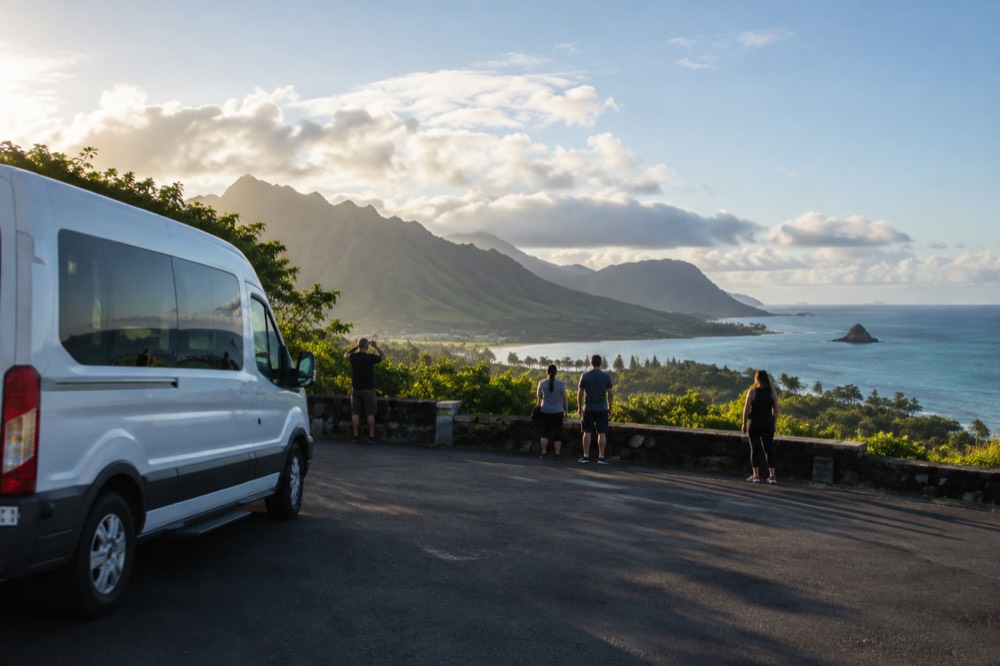
One planning fact that makes the stay-on-Oahu case quietly stronger: this island's weather is not uniform. The official climate normals put Honolulu airport at 16.41 inches of rain a year, while the Lyon Arboretum station in Mānoa, five miles inland, records 150.96 inches. A rainy morning in Waikīkī can be a sunny morning on the leeward coast, or the reverse, and a day spent on Oahu can be re-routed around the weather in a way a booked flight cannot. The same runs true of surf: north-facing shores peak in winter and south-facing in summer, so there is always a calm side of the island, a flexibility a fixed interisland booking does not give you.
If those three tours all sound like variations on one idea, that is because they are, deliberately: each is a different length and depth of the same circle-island spine, so the choice is really about how much of your day you want to give. The full-day tours take in Haleʻiwa and the North Shore; the half-day lookouts run stays south and east. Whichever you pick, you spend the day seeing rather than transiting, which is the entire argument this guide has been building against the interisland hop.
Common Questions About Oahu To Big Island Day Trips
Most questions about this day trip come down to three things: whether the flying is worth it, whether one side of Big Island is enough, and what happens if a flight goes wrong. The honest answers are that the flying is only worth it for one fixed must-see, that one side is all a day trip can hold, and that a disrupted evening flight means an unplanned overnight. Everything below expands on those three points.
Is a day trip from Oahu to Big Island worth it?
Only if there is one specific thing on Big Island you will genuinely regret missing, such as Volcanoes National Park. As a general "see a second island" idea it is poor value: you spend five hours on airports and flying for six to eight hours on the ground, and you miss the after-dark experiences that define the island. An overnight, or a full day spent on Oahu, beats it for most travellers.
How long is the flight from Oahu to Big Island?
The flight itself is roughly 40 to 50 minutes from Honolulu to either Kona or Hilo. The full process is much longer: airport arrival, security and boarding on both ends, twice in one day, realistically adds four to five hours of overhead to the day. Plan the day around the overhead, not the flight time.
Should I fly into Kona or Hilo for a day trip?
Let your must-see decide. Volcanoes National Park and the east-side waterfalls pair with Hilo; Kona coffee country and the leeward coast pair with Kona. Do not try to combine both sides, the drive between them eats most of a day. If you have no must-see, that is a sign the day trip is the wrong plan.
Can you visit Hawaiʻi Volcanoes National Park on a day trip from Oahu?
Yes, and it is the single most common reason people attempt the trip. Fly into Hilo, drive to the park, allow several hours inside, and build the whole day backwards from your return flight. What you cannot do is the after-dark viewing hours, which is the main argument for the overnight version instead.
Is there a ferry from Oahu to Big Island?
No. There is no ferry service between any of the main Hawaiian islands for passengers, and the channel between Oahu and Big Island is far too wide and rough for one. Flying is the only option, and the interisland flights from Honolulu are the practical route.
What happens if my return flight is cancelled?
You buy a hotel room near the airport, usually at last-minute prices, and fly back the next morning. This is the day trip's real risk: it has zero slack, and interisland flights do get delayed and cancelled in bad weather. Travel insurance that covers trip interruption, or at minimum a flexible return fare, is worth having on this specific day.
The day trip from Oahu to Big Island is a legitimate plan for one kind of traveller: the person with a single, named must-see and a fixed base on Oahu. For everyone else, the honest recommendation is the one the visitor numbers already tell, that most people who come to Oahu never leave it and do not run out of island, and that a full day spent circling this one, from the North Shore to the windward temples, is the version of the ambitious day that most people actually remember.